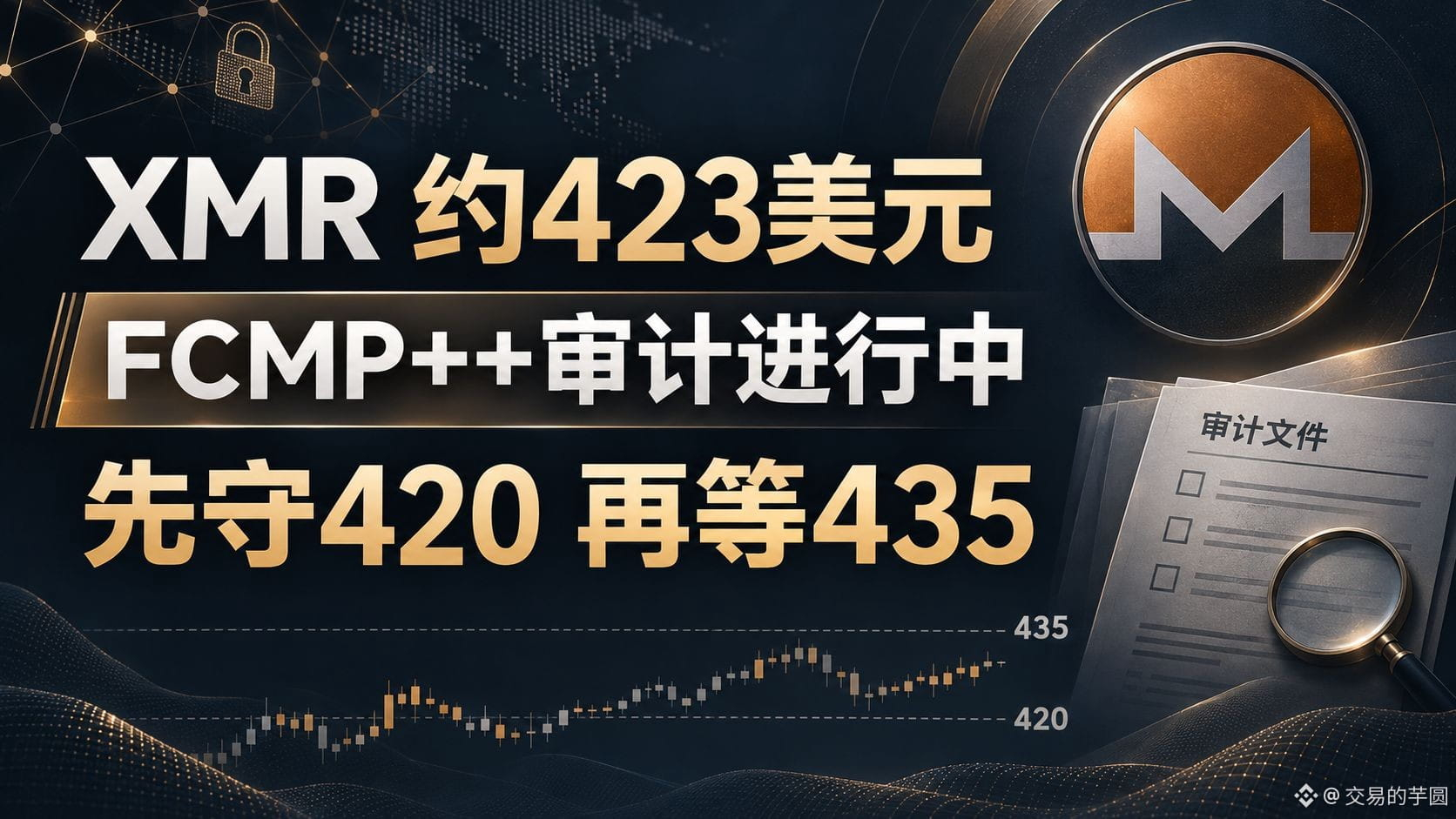
XMR pulls back from 435 to around 423 | FCMP++ audit still in progress | Protect capital first, then wait for channels to stabilize
My stance is to keep watching and not misread development funding as meaning the privacy upgrade is complete. Today I checked Binance Square’s Trending Topics and Most Searched sections, as well as the official Binance News, Research, and OTC accounts, and found no trending hashtags directly related to XMR, so I’m not adding unrelated hot topics. In my previous post, I wrote about the risk to loan collateral ahead of KuCoin’s delisting. This time, I’m looking at the Monero project’s own code review status and using actual prices to test my earlier plan.
The “Work in Progress” section of the Monero Community Crowdfunding System still lists the FCMP++ integration audit: the project was proposed by j-berman, has a fundraising target of 500 XMR, and shows 56 contributors, but all three stages are marked incomplete (0/3). The proposal divides the work into three parts: cryptographic implementation, Curve Tree construction, and consensus integration. Its goal is to have the integration code entering the Monero codebase independently reviewed. It’s important to distinguish “funding has gone to a project in progress” from “the audit report is complete.” The current page lists neither completion dates for the three stages nor a final audit conclusion, so we can’t say FCMP++ has passed its audit, let alone that it’s live on mainnet. The latest official Monero client release I could find on the project blog is still the minor 0.18.5.4 update from October; it is not an activation announcement for this upgrade either.
Why does this matter for XMR? If a privacy protocol upgrade moves forward in the future, users will care about whether transaction privacy and on-chain verification can work together safely, while exchanges will care about the costs of integrating wallets, nodes, and deposits and withdrawals. Audit progress and integration quality can affect how much the market is willing to pay in anticipation of “future features,” but the audit page itself won’t create immediate buying pressure. In particular, KuCoin’s official schedule still says it will suspend four XMR spot pairs at 08:00 UTC on November 30. The risk of reduced trading channels and development progress are two different things; neither cancels out the other. Going forward, we should separately verify audit milestones, mainnet announcements, and the actual deposit and withdrawal status on exchanges.
The price has already reminded me to temper my optimism. XMR/USD on Kraken is currently around $423.36, with a rolling high of $444.98 and a low of $402.67. The condition I set in my previous post—“consider it if the price gets above 445 on the four-hour chart”—has not been met as of this check, so I haven’t claimed a trade or profit. A move from around 435 at the time to around 423 only shows that short-term support remains weak; this drop alone isn’t enough to conclude that the cause was the KuCoin announcement. If the price next breaks below 420 and spreads widen across other venues, I’ll prioritize checking liquidity rather than trying to call the bottom.
If I were trading this myself, I wouldn’t enter now. I’d only consider a conditional spot long, with a position capped at 0.3% of total assets and no leverage. I’d wait until withdrawals and quotes remain normal on other major trading channels after KuCoin’s suspension, and until the four-hour close gets back above $435 and a retest holds $428, before considering an entry. I’d take half off at the first target of $448 and close the rest at the second target of $460. After entering, I’d stop out and close any remaining position immediately if the price falls below $418. If it loses $420 before I enter, the plan is void. If an audit update reveals critical issues or withdrawals are actually disrupted, I’ll immediately drop the bullish view and won’t add to the position to rescue an old plan.
#XMR
This is solely my personal market observation and does not constitute investment advice.