

What is happening with World Liberty Financial is no longer just a temporary dip in the price of a cryptocurrency. It has become a crisis of confidence worth examining, especially after a series of financial moves raised investors’ concerns and prompted questions about liquidity, debt, and asset management.
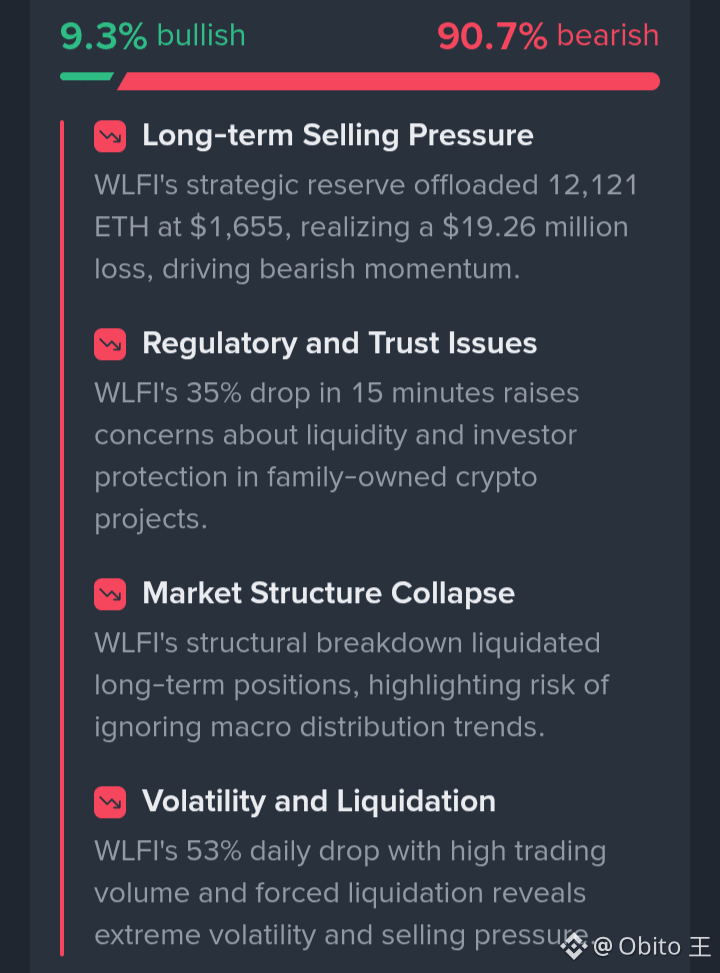
WLFI suffered a sharp collapse within hours, reaching more than 50% in some reports and hitting record lows amid a wave of liquidations of long positions and heavy losses for traders who entered hoping for a rebound.
But the most controversial event was the movement of a wallet linked to the project’s strategic reserve: Ethereum-related assets worth around $20 million were sold and converted into USDC and USD1. Some blockchain analyses estimated the loss at about $19.26 million compared with the original purchase price.
And this raises a question that cannot be ignored: Why liquidate assets of this size at a steep loss while the token is under intense pressure?
It did not stop at the sale. Other activity linked to the Dolomite protocol also came to light, raising questions about the use of WLFI as collateral for borrowing, the scale of financial liabilities, and the available liquidity—especially given earlier reports of large loans backed by billions of WLFI tokens.
In a more troubling development, the project’s USD1 stablecoin came under intense pressure and temporarily lost its peg to the dollar, falling below $0.95 in some trades before recovering much of its dollar peg.
There were also reports that about 24.6 million USD1 was withdrawn from the Dolomite protocol, with a large portion transferred to an address linked to the Gate exchange. This raised concerns about the liquidity available within the protocol. However, there is no conclusive evidence that these funds represent an exit from the project or that the transfers are directly connected to the wallet involved in the earlier sale.
The real problem is not a red candle or a 50% drop, but several factors converging at once: assets sold at a loss, a sharp decline in the token’s price, widespread liquidations, temporary disruption to the stablecoin, and large financial movements that still require comprehensive official clarification.
For now, it is impossible to conclude that the project is collapsing, and the allegations circulating cannot be treated as established facts. But what has happened is enough to raise the risk level to one that should not be ignored.
In the world of crypto, trust may matter more than price. When questions arise about liquidity, collateral, and transparency, a price rebound alone is not enough to restore confidence.
WLFI may rebound strongly after this collapse, and we may see a new wave of speculation. But a rebound does not necessarily mean the crisis is over or that investors are out of danger.
The most important question now is: Is this merely a passing liquidity crisis that will be contained, or are markets beginning to expose risks that were hidden behind the hype and promises?
At times like these, courage does not mean buying the dip; it means understanding what is happening before risking money you cannot afford to lose.