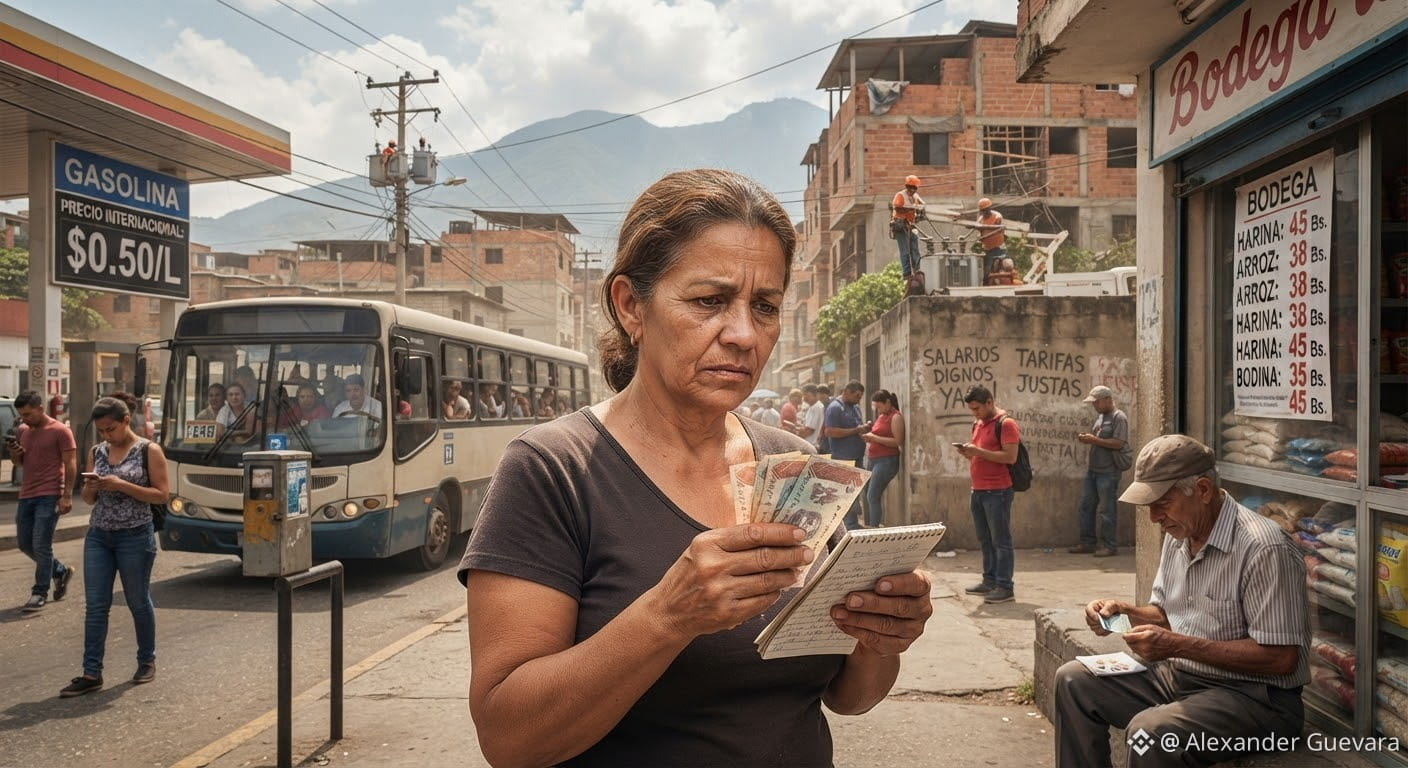
Liberalizing electricity, fuel, gas, and transportation rates without addressing wages and pensions could create a prolonged conflict across the country. The former is necessary, but the latter is essential to achieving long-term balance.
Uncertainty in Venezuela centers on the contrast between signs of economic growth and the fragility of everyday well-being.
Although GDP growth is projected and reform and investment plans are announced, doubts persist about the country’s political direction, legal certainty, and the institutions’ real ability to sustain stability.
Economically, the country faces high inflation, pressure on the exchange rate, and a significant lag in purchasing power, with wages and pensions insufficient to meet the cost of living. These challenges are compounded by failures in public services such as electricity, as well as the effects of external shocks and natural disasters that drive up operating costs and limit investment.
For households and businesses, this combination means having to operate with short-term horizons: prioritizing liquidity, protecting income from the loss of the currency’s value, and adjusting consumption or expansion decisions in response to regulatory and price changes. Essentially, uncertainty in Venezuela stems not only from a lack of economic activity, but also from the disconnect between aggregate growth and the stability of incomes, services, and the rules of the game.
#venezuela #Macro #economy #macroeconomy #macroeconomic $BTC $BZ $CL