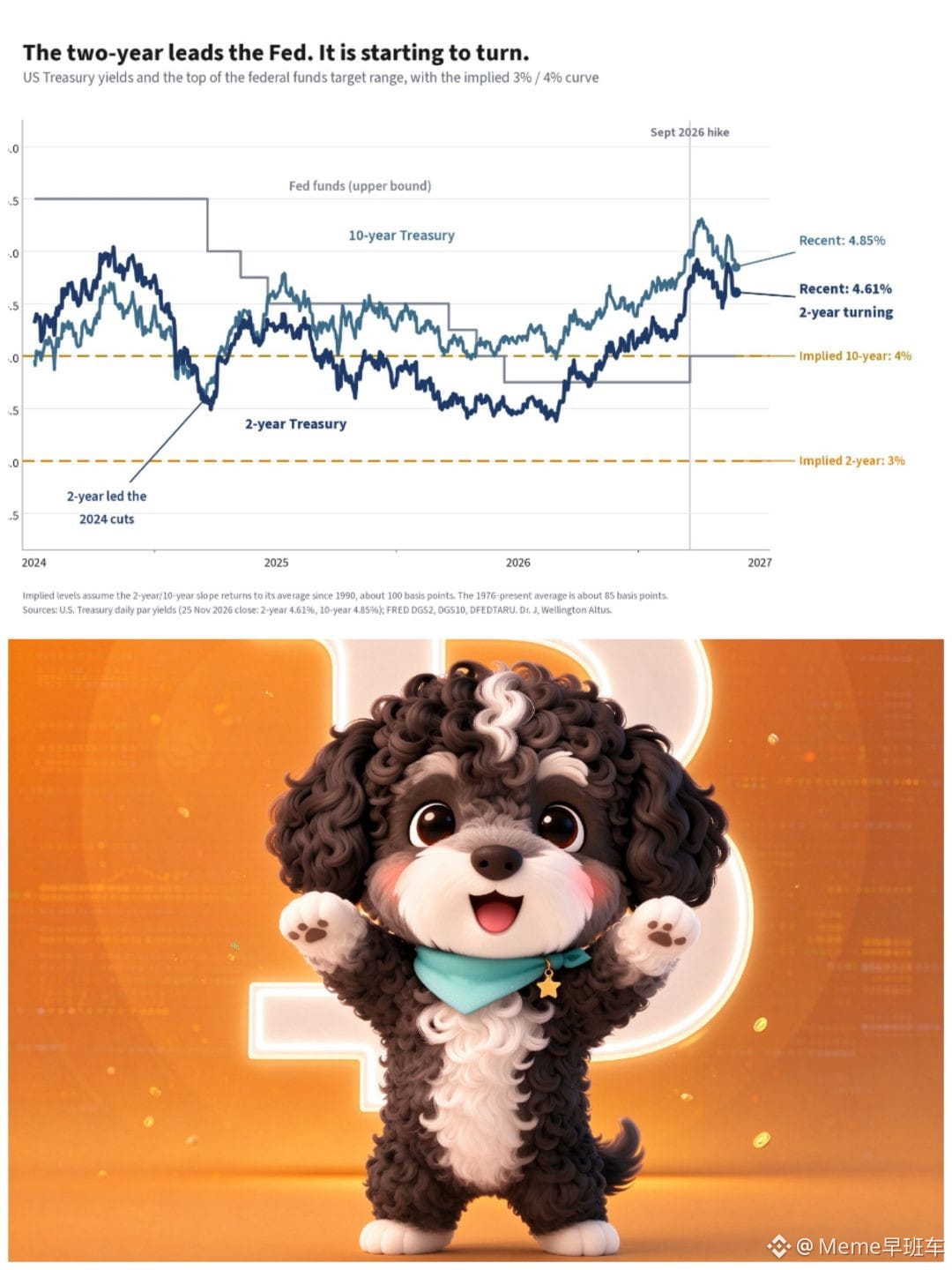
The Fed’s decision to keep raising rates amid an energy supply shock runs counter to the principle of distinguishing supply disruptions and not tightening blindly in response to supply-driven inflation.
There is a very important historical pattern: the 2-year U.S. Treasury yield often signals a turn in the policy rate in advance. Market moves in 2007, 2019, and 2024 all confirmed this. The 2-year yield has now fallen from a peak of 4.92% to 4.61%, while the 10-year yield is at 4.85%, leaving the yield curve spread at just 24 basis points—well below its long-term average. If inflation continues to ease, a reasonable midpoint would be around 4% for the 10-year yield and 3% for the 2-year yield.
The changes in the energy market are also clear: WTI has fallen from 114 to 82, Brent from 138 to 92, and crack spreads have continued to narrow. Saudi Arabia’s increased output and cuts to its prices for Asia closely resemble its 2014 push to capture market share. The market expects month-over-month CPI to turn negative after the December meeting.
Commodity trends are now influencing credit markets. The policy rate will most likely follow the direction of the 2-year Treasury yield, and the Fed is broadly expected to pivot to rate cuts.$BTC
#币安区块链周进化由你 #BTC一周4度跌破6万美元