Last lesson was about margin; this one is about the stop-loss I promised you. A lesson I learned the hard way: I set my stop-loss too tight, got wicked out, and then the price went right back up.
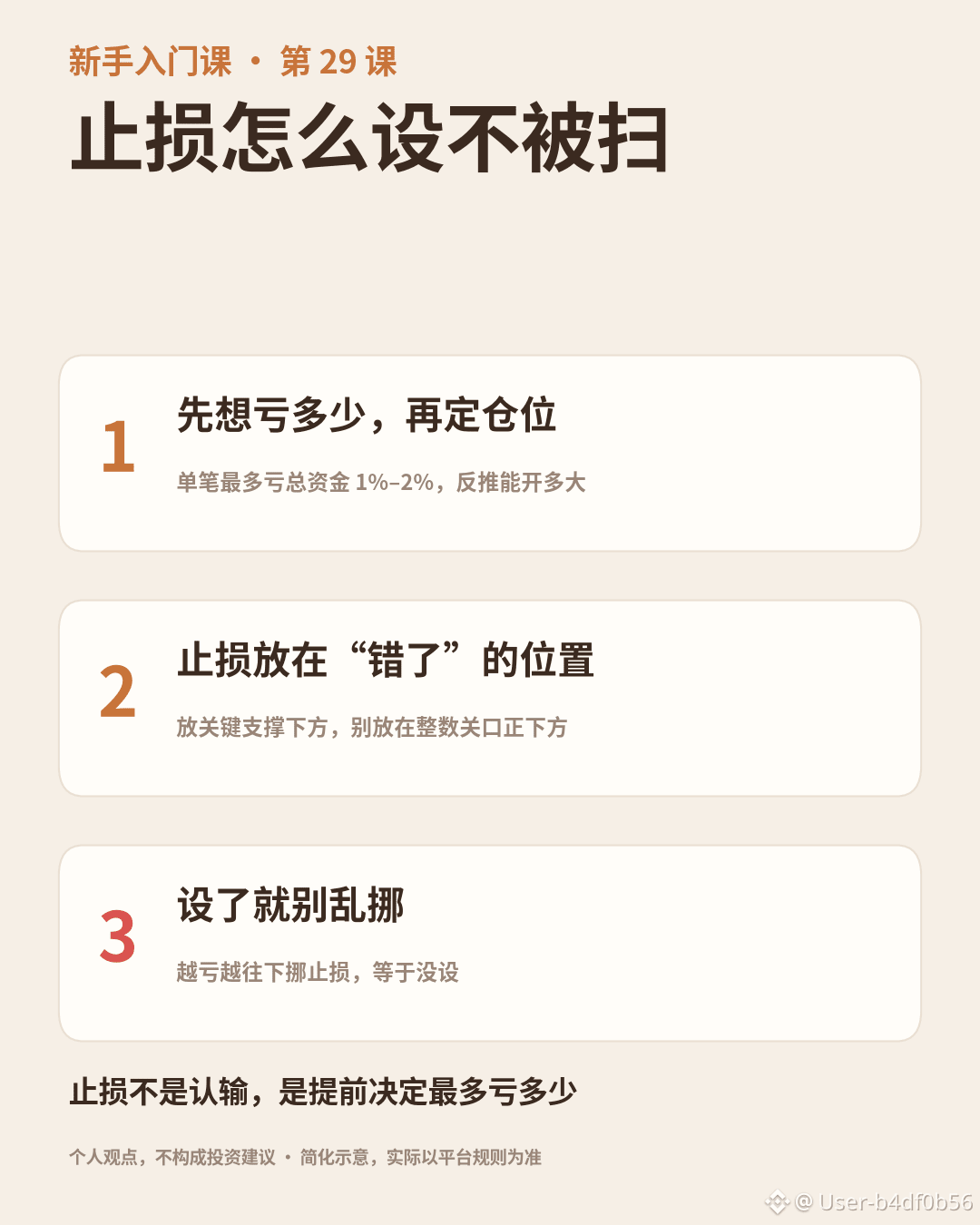
Beginner Course, Lesson 29. Three things:
1. Decide how much you’re willing to lose before setting your position size: risk no more than 1%–2% of your total funds on a single trade, then work backward to figure out how large a position you can open.
2. Place your stop-loss where it means “I was wrong”—for example, below a key support level. Don’t put it right below a round number like 60,000; that’s where stops are most likely to get swept.
3. Once it’s set, don’t move it lower. Moving it lower as your losses grow is the same as not setting one at all.
$BTC is now just above 59,000, right near 60,000, and $ETH is also moving sideways. At levels like these, it’s especially important to think carefully about your stop-loss.
How do you usually set your stop-loss? Reply in the comments: A) 1%–2% / B) Around 5% / C) I never set one.
Follow me for more in the beginner series. Next lesson: how to read trading volume.
#新手入门 #比特币 #风险管理 #止损
These are my personal views and do not constitute investment advice. This post may earn creator rewards on the platform.