#美国战略比特币储备法案上众议院议程 🔥 300,000 bitcoins to be locked up for 20 years—but the bill doesn’t make the government buy a single one
On November 24, the U.S. House Financial Services Committee formally submitted its report on the American Reserves Modernization Act of 2026 (H.R. 8957). The bill was then placed on the House Union Calendar as No. 789, making it eligible for a vote by the full House. No vote date has been announced. The bill would enshrine a Strategic Bitcoin Reserve in federal law: the Treasury must establish a Strategic Bitcoin Reserve and a separate digital asset reserve within 180 days of the law taking effect, and agencies must report their holdings within 60 days. Bitcoin in the reserve could not be sold, exchanged, or pledged as collateral for 20 years after the law takes effect. After that lockup period, the Treasury could propose selling no more than 10% every two years.
This isn’t starting from scratch. On March 6, 2025, Trump established a Strategic Bitcoin Reserve by executive order, but a future president could overturn an executive order; putting it into law would make it stick. The bill was introduced on May 21 by Republican Representative Nick Begich of Alaska and has 23 cosponsors, only one of whom is a Democrat: Jared Golden of Maine. On September 16, the committee advanced it on a party-line vote of 28 to 21.
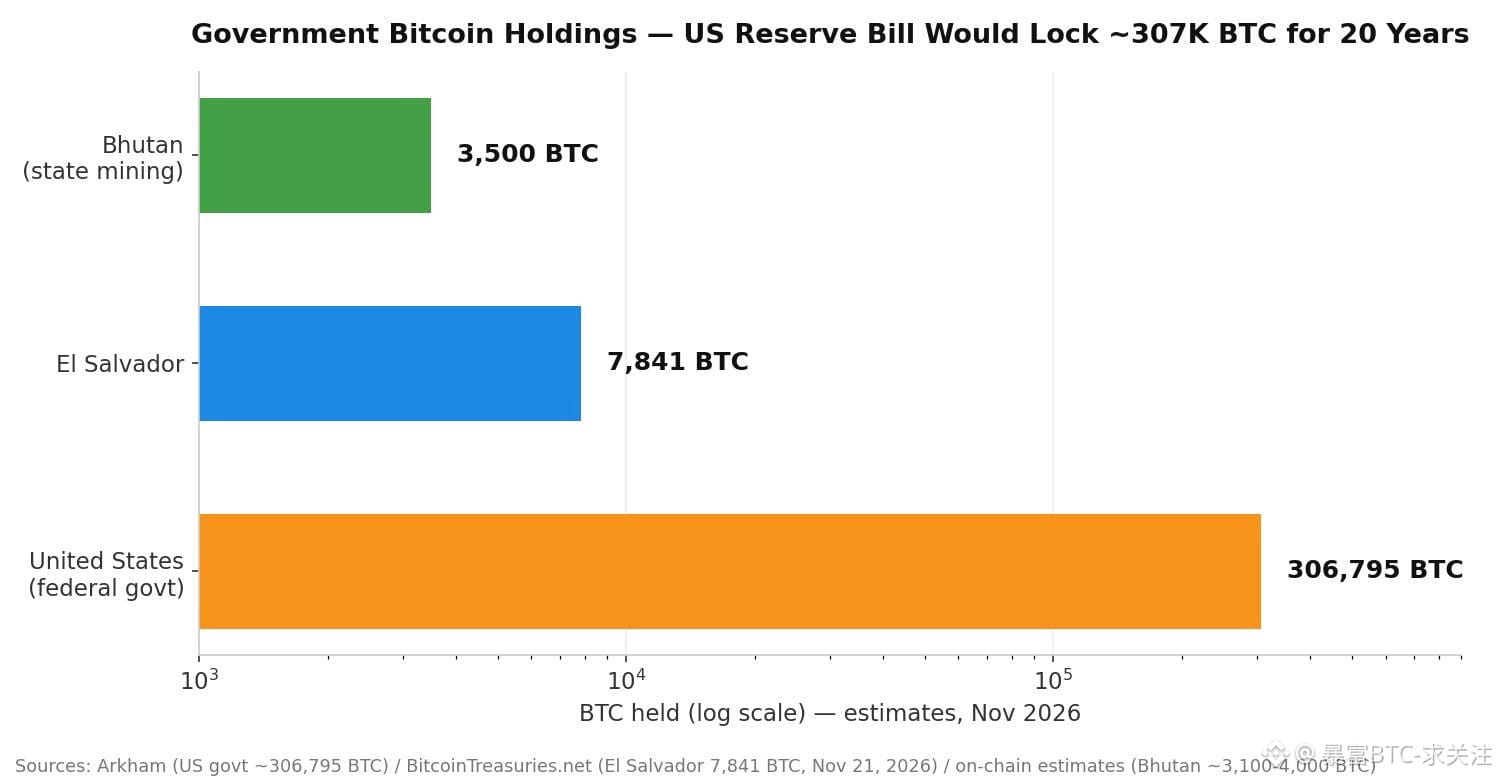
But the most important point is buried in the revisions to the amendments. The original bill left open a way to buy bitcoin without new appropriations—using Fed remittances and revaluing Federal Reserve gold certificates to raise funds. The committee’s substitute amendment removed that entire section, and Section 9 states explicitly that the act does not authorize borrowing, financing, pledging digital assets as collateral, raising taxes, or deficit spending to buy bitcoin. In other words, this is a “hold-and-lockup bill,” not a “buy-bitcoin bill”: the roughly 307,000 bitcoins held by the government (about $18.85 billion, according to Arkham on-chain data) would be locked in a vault for 20 years, but the bill does not have the government buy a single additional coin. The “sovereign money coming in” scenario that markets had previously priced in has been cut out entirely. The bill also requires the Treasury to conduct an inventory of assets and provide proof of reserves—particularly because the White House has yet to publish an official audited ledger, and estimates of the government’s holdings vary from 198,000 to 328,000 bitcoins.
This isn’t an isolated development: New Hampshire led the way in May 2025 by passing a law allowing the state treasury to invest up to 5% of its funds in bitcoin; Texas established a state Strategic Bitcoin Reserve in June 2025 and made its first purchase on November 20, buying $5 million worth of BlackRock’s IBIT; as of November 21, El Salvador held about 7,841 bitcoins; and Bhutan has accumulated roughly 3,100 to 4,000 through hydropower mining. Governments used to seize and auction bitcoin. Now they’re starting to pass laws to lock it up and accumulate it.
My view has two parts: over the medium to long term, this is genuinely positive for the supply side—if 307,000 bitcoins worth nearly $19 billion are locked up by law for 20 years, that effectively removes one of the largest potential sources of selling pressure from the market. In the short term, don’t expect this news to drive prices higher: the bill doesn’t authorize bitcoin purchases, no vote has been scheduled, and Democrats won both chambers of Congress three weeks ago, leaving little time in the current Congress. Bitcoin is currently trading near $59,200, down 3.86% over 24 hours, with initial support at $58,700 and strong resistance at $62,300. One reminder: being placed on the calendar doesn’t mean the bill has passed. It must clear three hurdles—the House, the Senate, and the president’s signature. The government’s bitcoin holdings still have no official audited figure; 307,000 is Arkham’s on-chain estimate, not the Treasury’s ledger. The government not selling bitcoin doesn’t mean it intends to buy bitcoin—the 20-year lockup puts the supply in a vault, but whether the key turns will depend on whether the House schedules a vote. $BTC