Three hardware wallets were implanted with data-stealing components, and the reseller network was cut by 80%—can a sealed box still prove it hasn’t been tampered with?
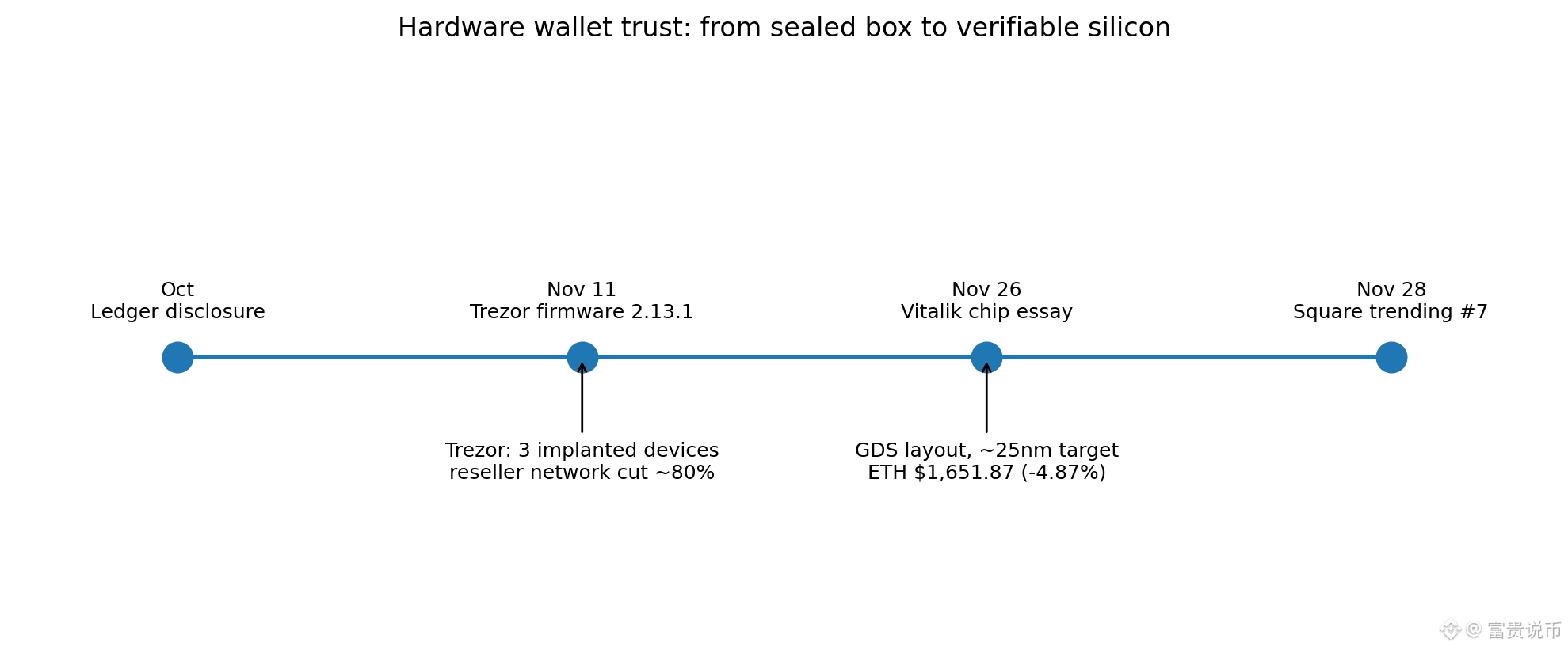
On November 26, Vitalik reworked the old saying: “Not your silicon, not your keys.” The context is specific: in October, Ledger said devices sold by reseller CryptoBilis had been implanted with malicious components that could steal recovery phrases and transmit them over cellular networks. In November, Trezor found three tampered devices through the same channel. On November 11, it released firmware 2.13.1 to block data theft and cut its reseller network by about 80%.
Supporters of open hardware say that publishing Verilog isn’t enough: the GDS files describing the chip’s physical geometry must also be made public so independent researchers can compare the design with the physical device. Vitalik believes that manufacturing at around 25 nm is an achievable goal for open hardware. Even if secure hardware delivers only about one-tenth the efficiency of high-performance chips, that’s sufficient for tasks like signing.
Skeptics say that PDKs from advanced foundries are subject to licensing and confidentiality agreements, and that detecting tampering at the doping level may require destructive testing—something ordinary users simply can’t verify. Making the design public doesn’t mean every retail device has been inspected.
My take: this is not a short-term buy signal for $ETH —the November 28, 09:34 UTC snapshot showed a price of about $1,651.87, down 4.87%. What it really changes is the standard of trust for self-custody: going forward, it won’t be enough to trust the brand and the shrink-wrap; we’ll need to know whether the design can be independently reviewed and whether the supply chain is traceable. In the short term, stick to official channels and firmware updates, and don’t mistake “open-source software” for “hardware that hasn’t been tampered with.”
When you buy a hardware wallet, do you trust the brand’s reputation more, or a verifiable design? Follow me—this is where I check before looking at the markets each day.
#VitalikWantsWalletChipDesignsOpened #硬件钱包 #Ethereum
For informational purposes only; this is not investment advice.