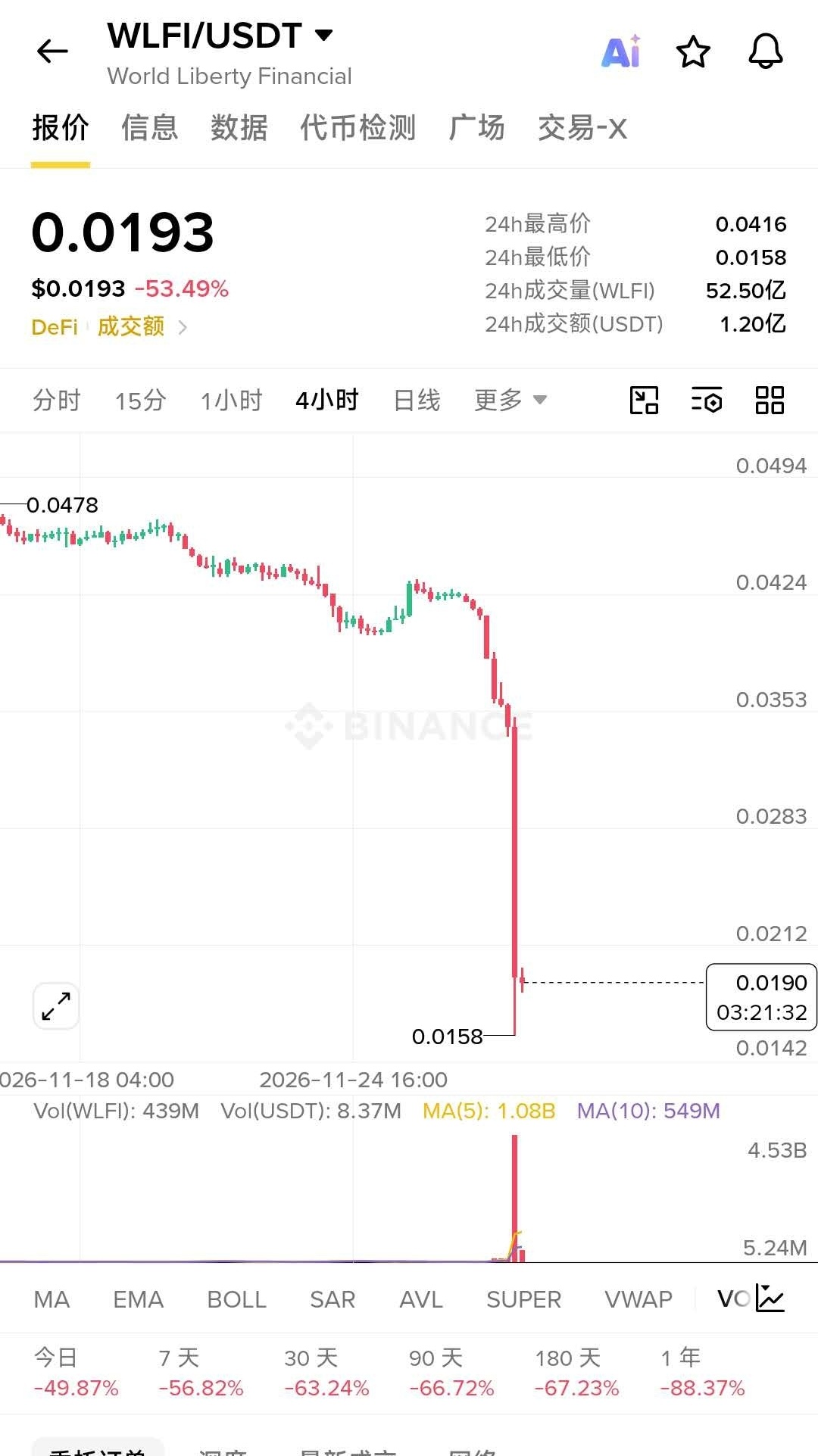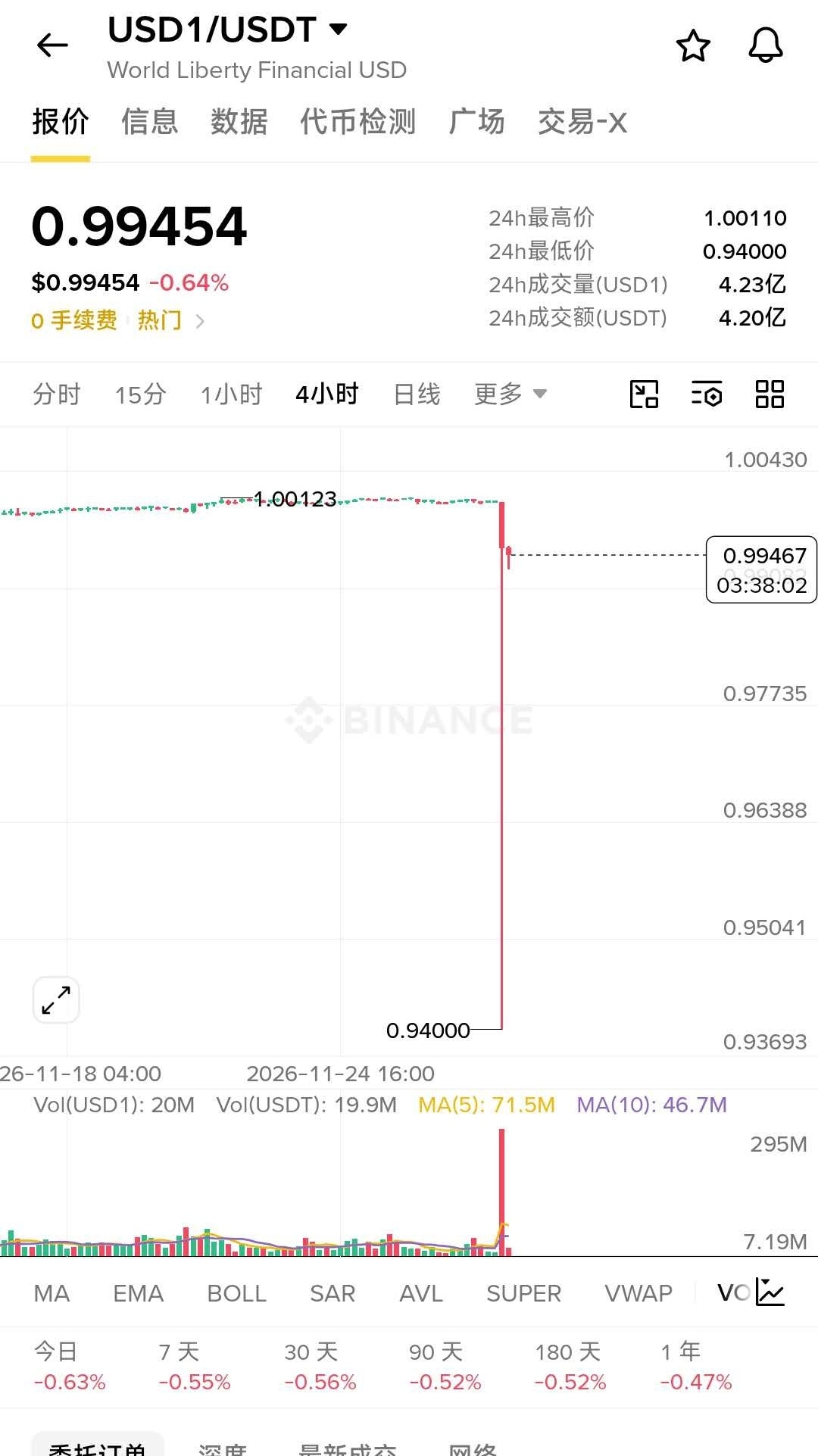

Another troubling episode has hit the crypto market today: WLFI has plunged sharply, and its stablecoin USD1 has visibly depegged. The market is beginning to worry that the two could trigger a death spiral similar to UST and LUNA.
But I think we need to look at this from separate angles.
WLFI’s plunge doesn’t mean USD1 is bound to collapse, and USD1’s depeg doesn’t mean it is already insolvent. What we really need to watch out for is the contagion between the two through liquidity, leverage, and market confidence.
I. First, let’s revisit UST and LUNA: What is a true death spiral?
When it comes to stablecoin death spirals, we can’t ignore the 2022 collapse of UST and LUNA.
At the time, UST used an algorithmic mechanism to maintain its $1 peg, adjusting supply and demand through conversions between UST and LUNA.
Simply put: when UST fell below $1, holders could burn UST through the protocol in exchange for $1 worth of LUNA.
But when large amounts of capital panic-sell UST, the system has to keep minting LUNA to meet conversion demand.
The result: UST falls → more LUNA is minted → LUNA’s supply expands and its price crashes → market confidence collapses further → more people sell UST.
Ultimately, this creates a self-reinforcing death spiral, and both tokens collapse in turn.
The core of the UST and LUNA death spiral was algorithmic interdependence, supply expansion, and a collapse in confidence.
II. USD1 and UST Use Completely Different Mechanisms
This is the most important point in the whole matter.
USD1 is not a stablecoin like UST, which maintained its price through an algorithm and a conversion mechanism with a related token.
USD1 is a fiat-reserve-backed stablecoin issued by BitGo, which also provides custody for its associated reserves.
Its publicly disclosed reserve assets mainly include:
- U.S. dollar cash and deposits
- Short-term U.S. Treasury securities
- U.S. government money market funds
It is important to emphasize:
USD1’s reserve assets are not the WLFI token, nor does USD1 rely on WLFI’s price to maintain its $1 peg.
According to the project’s disclosures, USD1 uses a reserve-backed model and provides reserve attestations and redemption channels for eligible holders.
This means:
Even if WLFI’s price falls sharply, USD1 will not automatically trigger the issuance of WLFI due to its algorithmic design, nor will the two tokens be mechanically linked through a conversion mechanism as UST and LUNA were.
Therefore, in terms of its underlying mechanism:
USD1 does not have the kind of structural death spiral that UST and LUNA had.
But that doesn’t mean USD1 is risk-free!
III. The Real Risk: How Could a WLFI Crash Affect USD1?
Although the two are not mechanically linked by an algorithm, they are connected through the project’s brand, funds, and market confidence.
There is a historical risk case worth paying close attention to.
Previously, a WLFI affiliate reportedly used approximately 5 billion WLFI tokens as collateral to borrow about $75 million in stablecoins from Dolomite.
Why does this matter?
Because as WLFI’s price continues to fall, the collateral’s dollar value shrinks as well.
If the collateral ratio continues to deteriorate, this could lead to margin calls, debt repayment, or even forced liquidation.
Once large-scale liquidations occur, they could trigger three cascading effects:
1. Increased selling pressure on WLFI: As collateral is liquidated, the market’s ability to absorb it declines, and the price could continue to fall.
2. Increased risk of bad debt for the protocol: If liquidation proceeds are insufficient to cover the debt, the lending protocol could incur bad debt.
3. Strain on pools related to USD1: If USD1 or USDC depositors become concerned about the protocol’s solvency, they could withdraw funds en masse.
Note that risk in Dolomite’s lending pools does not mean USD1’s reserves themselves are deficient. The two must be distinguished.
IV. The Risk Transmission Chain That Truly Warrants Attention
If market panic continues to spread, it could create a cycle like this:
WLFI continues to plunge
↓
Risk increases for Dolomite collateral positions
↓
Liquidation pressure and concerns about protocol bad debt increase
↓
The market begins to question the project’s overall credibility
↓
USD1 holders sell off en masse on the secondary market
↓
USD1 liquidity declines and its depeg widens
↓
Market confidence is further undermined
↓
WLFI and USD1 come under renewed pressure.
This is what I believe warrants attention.
This is not an algorithm-driven death spiral like UST’s, but a reflexive risk formed by the mutually reinforcing effects of leverage, liquidity, and brand credibility risks.
The two mechanisms are different, but both could ultimately cause a severe crisis of market confidence.
V. Four Key Indicators to Watch Next
To determine whether this turmoil will escalate further, it’s not enough to look only at WLFI’s price. We also need to watch the following:
1. BitGo reserve attestations
Are USD1’s reserves consistently sufficient? Are the reserve assets genuine and transparent? Have there been any unusual changes?
2. USD1 redemption channels
Can eligible holders redeem their USD1 as stipulated? Have there been any delays or restrictions on redemptions?
This is an important indicator for determining whether a stablecoin is truly experiencing a crisis of confidence.
3. Dolomite collateral positions
Are WLFI collateral positions nearing liquidation thresholds? Have any forced liquidations occurred? Has any actual bad debt been incurred?
4. USD1 secondary-market liquidity
Can USD1 return to around $1? Is there sufficient depth in the major trading pools? Have bid-ask spreads widened?
VI. Final Summary
In my view, this event should not be explained by simply applying the logic of the UST and LUNA collapse.
UST’s problem was a fatal flaw in its underlying algorithmic mechanism. Once panic set in, the system itself accelerated the collapse.
USD1’s issues are primarily centered on confidence in its reserves, its ability to process redemptions, secondary-market liquidity, and risk transmission from WLFI-linked borrowing positions.
The biggest difference between the two is:
UST faced a mechanism-driven death spiral, while USD1 faces risks involving leverage, liquidity, and confidence.
If USD1’s reserves are genuine and independent, and redemption channels remain open, it has a basic safety margin that distinguishes it from algorithmic stablecoins.
But if reserves later prove insufficient, redemptions are blocked, lending pools incur bad debt, and the depeg persists, then the issue would no longer be simple market panic; it could develop into a genuine crisis of confidence.$WLFI
#WLFI #USD1 #BitGo #Dolomite #Stablecoins #Cryptocurrency