
Can stolen money really be frozen and recovered? Tether has frozen all of the approximately $1.55 million taken from Fluidkey
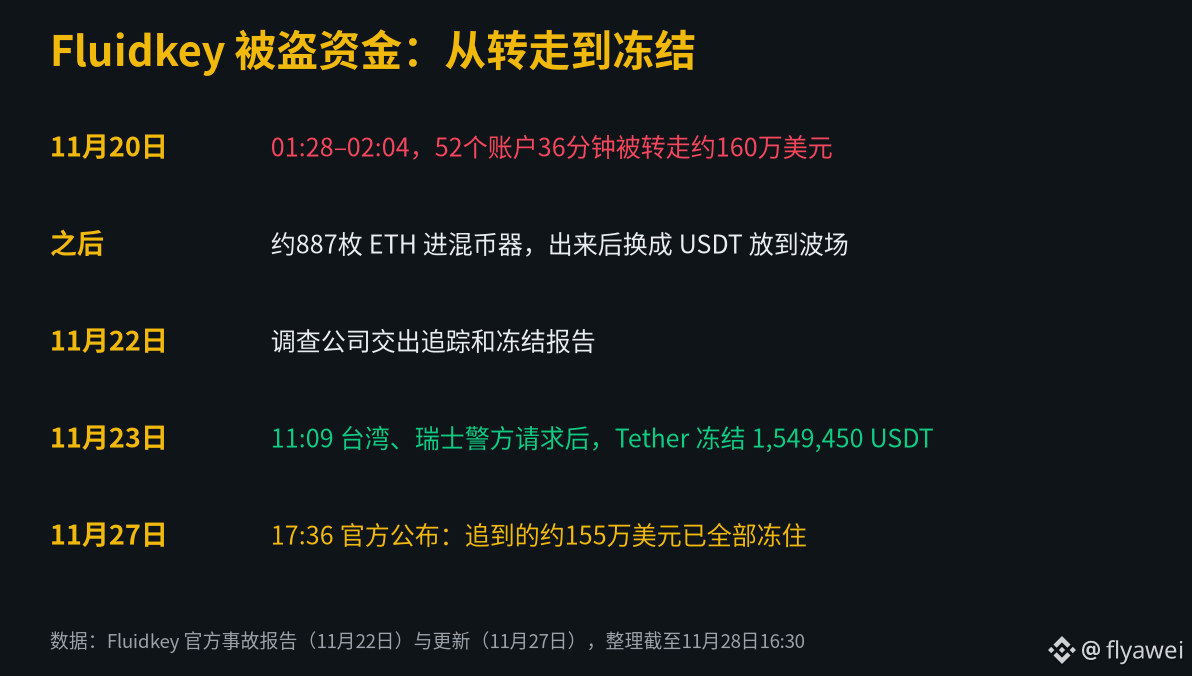
According to the official incident report and on-chain records, between 01:28 and 02:04 on November 20, approximately $1.6 million was taken from 52 accounts belonging to privacy wallet Fluidkey in just 36 minutes.
The attacker then converted the funds to ETH, sending about 887 ETH through a mixer. It looked as though the trail had gone cold.
What’s even more unusual is that after the funds came out of the mixer, they were converted to USDT and moved onto the Tron network. The investigation firm hired to handle the case traced both the incoming and outgoing transactions and submitted a freezing report on November 22.
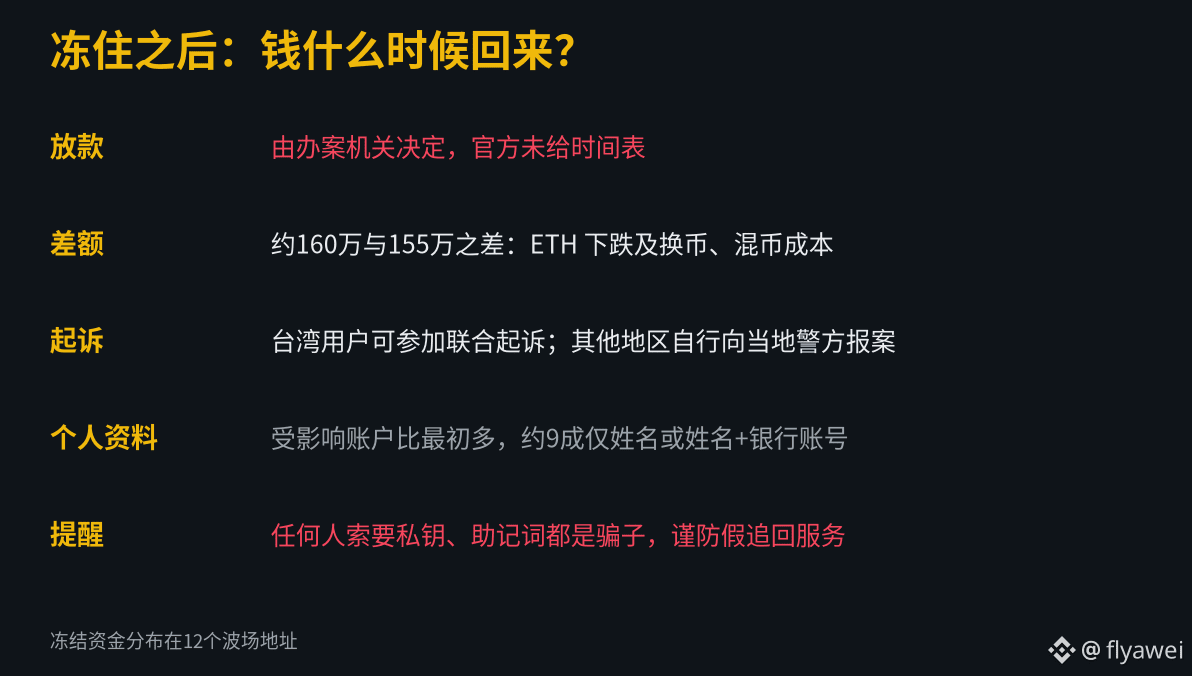
At 11:09 on November 23, following requests from police in Taiwan and Switzerland, Tether froze all 1,549,450 USDT that had been traced, spread across 12 addresses. The news wasn’t made public until 17:36 on November 27.
In other words, most of the stolen funds haven’t disappeared. The official explanation for the difference from the original $1.6 million is that ETH’s price fell while the funds were held, along with the costs of conversion and mixing.
The key thing to be wary of is that a freeze doesn’t mean the money has been returned. The authorities handling the case will decide whether to release the funds, and no timeline has been given. This means the victims may have to wait a long time.
An official review of the logs also found that more accounts had their personal information exposed than initially reported. About 90% involved only a name, or a name and bank account number.
My take is that mixers can only obscure one part of the trail. Next, scammers will almost certainly pose as recovery services. Anyone asking you for your private key or seed phrase is a scammer.
If you’re new to crypto, it’s best to watch and learn before taking action. If you buy crypto, buy only $BTC