Bitcoin took Thanksgiving off — literally. On Nov 26, the network went 98 minutes and 19 seconds without mining a single block, the longest gap since July and the 69th longest since 2011. Anyone broadcasting right after block 977,697 waited over 90 minutes for a first confirmation, whatever the fee.
Here's the twist: the very next day, mining difficulty jumped 7.61% to 145.09 trillion — reversing much of the 9.1% relief cut from Nov 14. The network demanded more work per block just as miners are switching machines off. Hashrate has contracted 8% year over year — the first annual decline since China's 2021 ban — and hashprice sits near an all-time low. Daily revenue per petahash fell to $29.36 on Nov 23.
Foundry USA eventually mined block 977,698, packing 3,723 transactions and collecting just 0.1562 $BTC in fees. The next retarget is already projected at -4.62%.
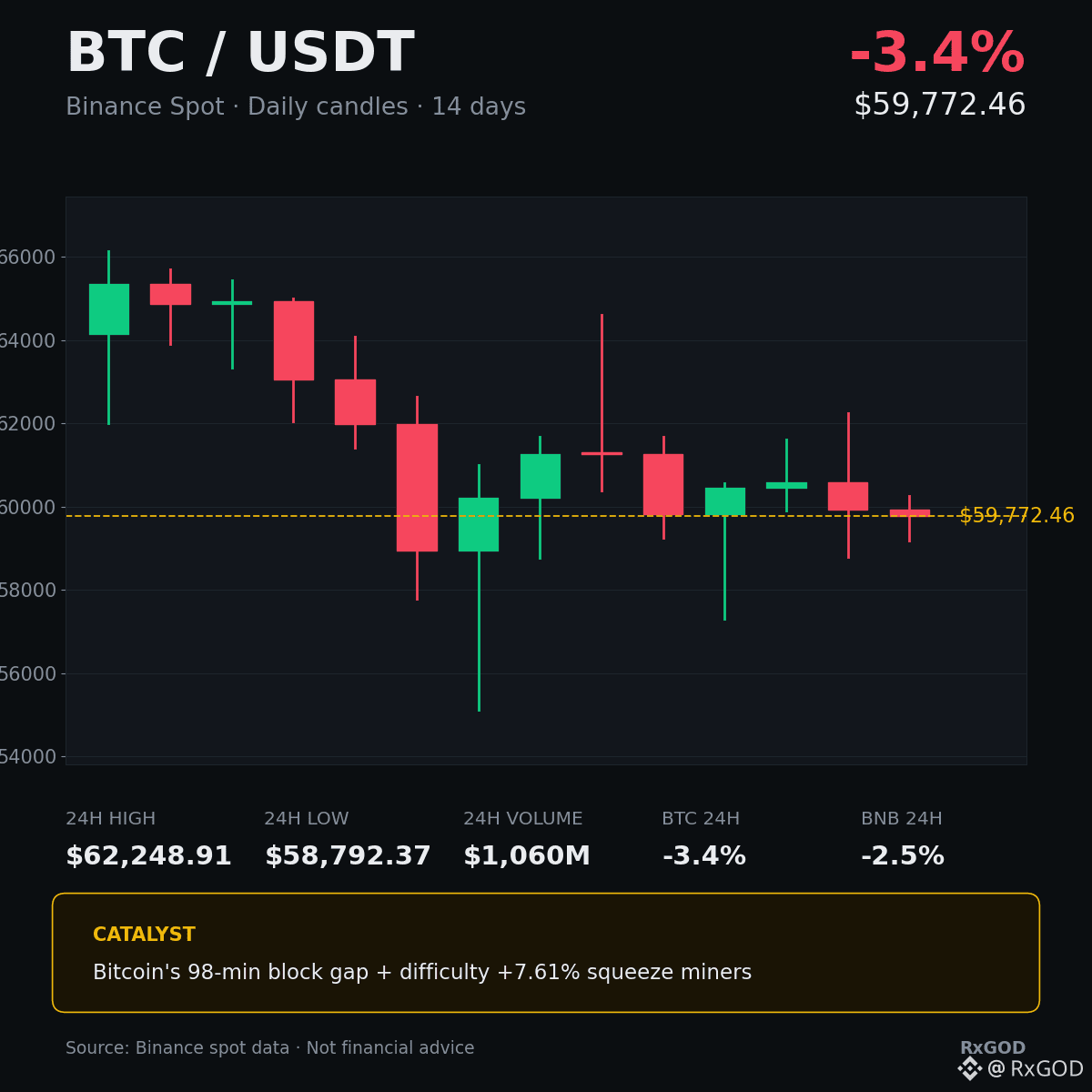
$BTC trades at $59,772, down 3.4% in 24 hours and 26% in a month, at 42% of its 14-day range ($55,130–$66,132), with Fear & Greed stuck at 10 — Extreme Fear.
Honest caveat: one long gap is statistics, not a broken chain. Blocks arrive randomly, and the expected wait stays ~10 minutes even after 90 minutes of silence. The real signal is miner economics, not the clock.
So is this just harmless variance — or an early warning that miners are capitulating? If hashrate keeps sliding, does the next difficulty cut come in time? What's your read?
Not financial advice — DYOR.
#Bitcoin #BitcoinMining #ExtremeFear #CryptoNews