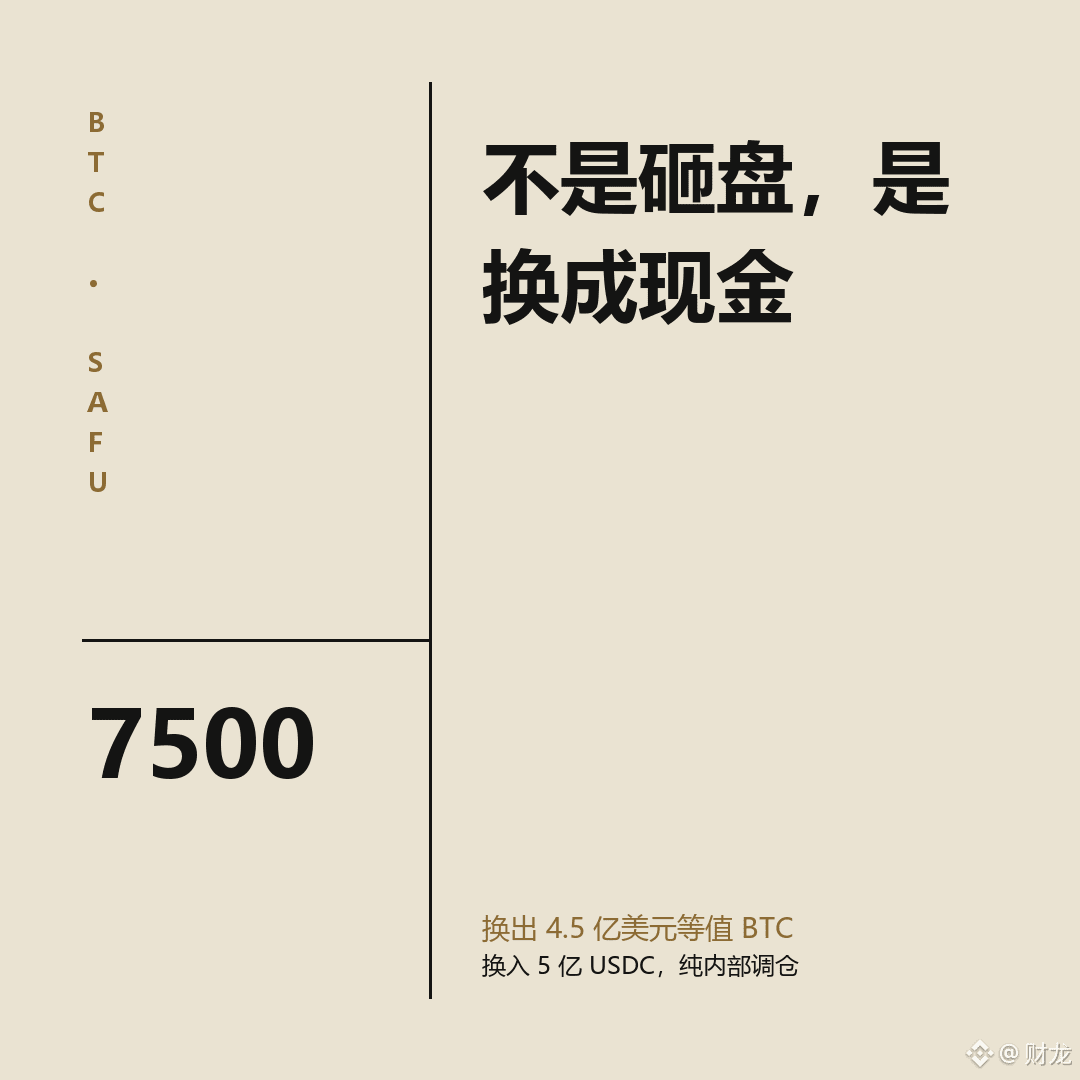

At 2 p.m., Binance made an announcement: 7,500 $BTC were moved from SAFU back into its own treasury. My first reaction was that they were going to sell, too—but after reading the original, I realized it was the opposite.
The announcement said this was an internal reallocation, and the coins wouldn’t be traded on the market. The reason was to meet regulatory requirements, and they also added 500 million USDC. At just under $60,000 each, those coins are worth about $450 million—roughly the same as $500 million. It’s just a switch from an asset whose price can rise or fall to cash with a fixed value.
An insurance cushion needs to be ready to pay out immediately when something goes wrong. No matter how valuable the coins are, they have to be sold for cash first. Today, WLFI’s reserve wallet is swapping ETH for cash; Binance is just moving funds around on its own books, not through the order book.
I’ll keep an eye on which address those coins end up in. If they sit in the treasury, the move holds up. If they show up on an exchange inflow leaderboard, I’ll reassess.
#SAFU