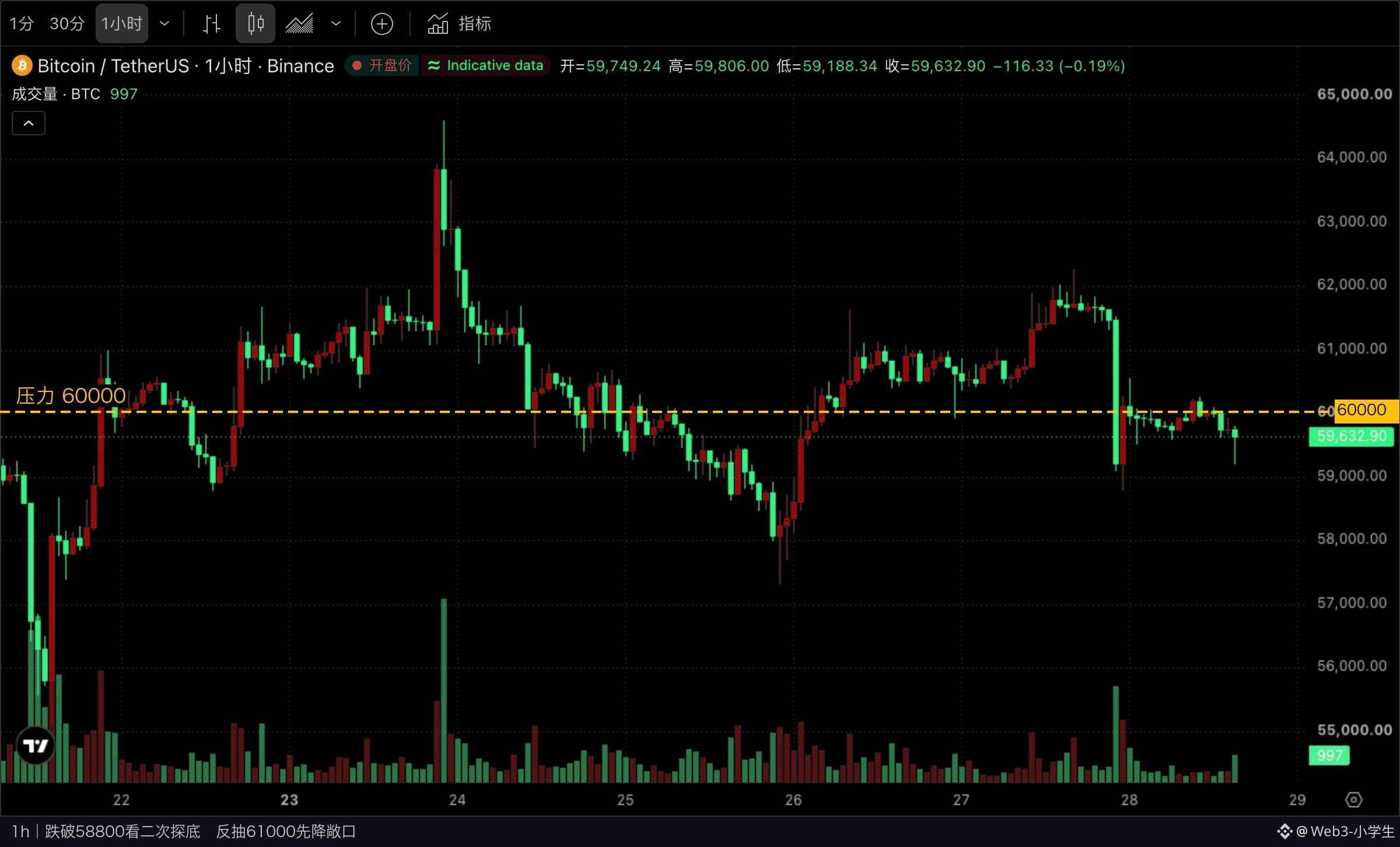
U.S. stocks gained another 500 points overnight, while Bitcoin fell below $60,000 at the same time.
Risk appetite is back, but crypto wasn’t on the list of places people were actually putting money into.
All the money went to U.S. stocks.
It was a lively scene over there. U.S. markets traded for only half a day after Thanksgiving, but the Nasdaq rose 2.31%, the Philadelphia Semiconductor Index climbed 4.69%, and Tesla gained more than 5%. Not a single one of the Philadelphia Semiconductor Index’s 30 constituents fell.
Anthropic jumped 11% in a day, returning above its $83 issue price. The VIX volatility index surged to 35.89 last week, then fell by 30% this week to around 24.
The mood is entirely positive.
But the money isn’t flowing this way. The cost basis line that analyst Darkfost is watching is still at $79,100. This is the third time in this bear market that Bitcoin has reached it, and it hasn’t broken through on any of those attempts. $BTC is currently at $59,698, 24.5% below that level.
Put simply, people who entered the market this cycle are still sitting on average losses of around 25%. Every time the price rebounds to that level, a group of people rush to break even, creating layer upon layer of selling pressure. Money isn’t stupid. No one wants to be the one left holding the bag.
I paused when I saw this. Global stock indexes are rising, and gold and silver are rebounding too, with silver up more than 5% in a day. The only ones heading down are $ETH and $SOL , falling 4.66% and 2.5%, respectively. The money really is back—but it’s going into AI and precious metals, not crypto.
Why should the same money go to U.S. stocks first?
This isn’t panic. It’s being left behind.
Nearly 100,000 traders were liquidated in the past 24 hours. Deribit’s $6.8 billion Bitcoin options just expired. The most crowded strike was $70,000, but the settlement price came in at $61,600, rendering most of the high-strike calls worthless. U.S. spot Bitcoin ETFs saw net outflows of $5.39 billion this month.
The Federal Reserve enters its pre-meeting blackout period on Saturday. Markets are pricing in a more than 99% chance of a rate hike in December. Holding assets that pay no interest has a high opportunity cost, so money is even more inclined to flow toward places that pay dividends.
No one knows whether this wave of money will return to crypto.
If you’re holding spot, keep an eye on the $60,000 level. A break below $58,800 would mean a second test of the lows, so don’t rush to buy more. If you’re using leverage, reduce your exposure if it rebounds to $61,000. There are $536 million in short positions waiting to be liquidated above that level, and a squeeze could happen quickly. If you’re on the sidelines, don’t chase—wait until it holds above the cost basis line for a couple of days before deciding.
The VIX is back at 24, while Bitcoin is still below $60,000. When those two numbers line up, then we can say the market is truly back.