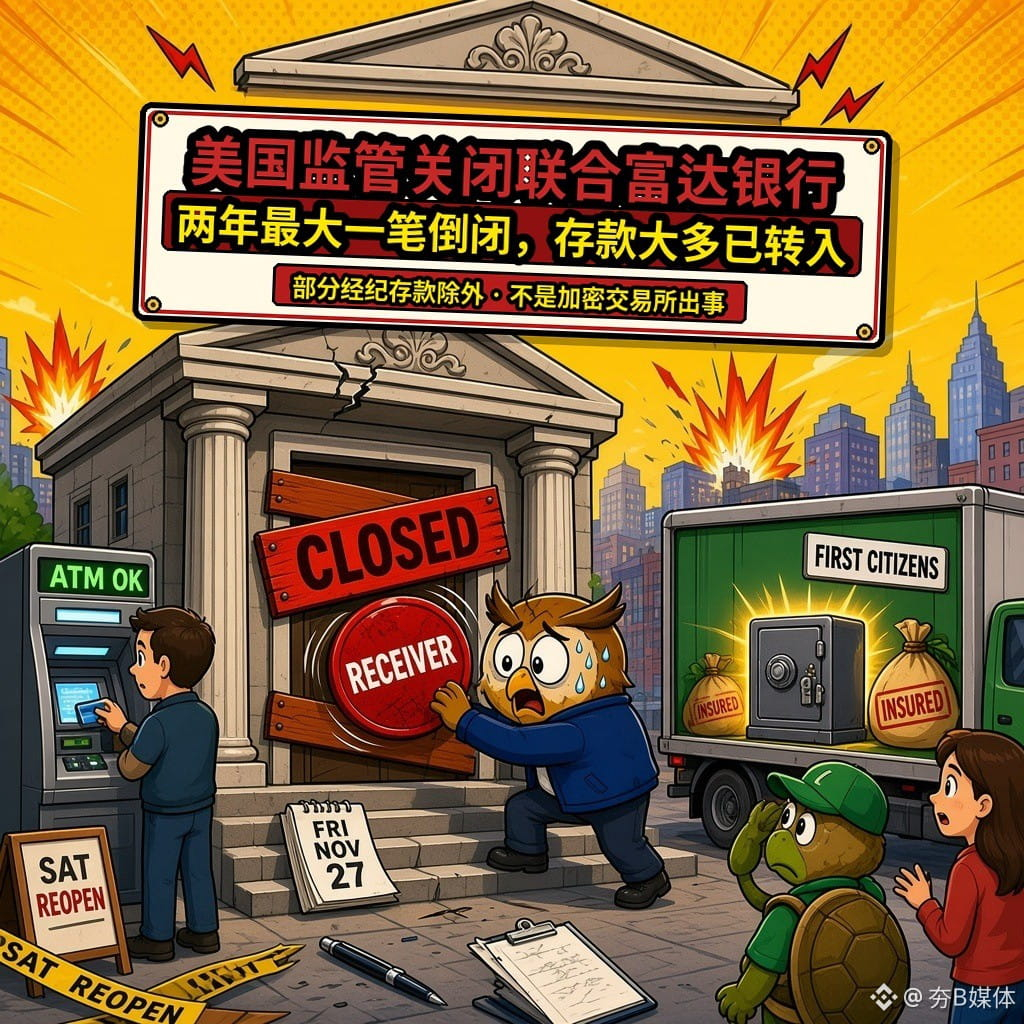
U.S. regulators shut down United Fidelity Bank: biggest bank failure in two years, most deposits transferred to First Citizens Bank
The Office of the Comptroller of the Currency (OCC) shut down United Fidelity Bank in Indiana on November 27 (Friday in the U.S.) and appointed the Federal Deposit Insurance Corporation (FDIC) as receiver. Reuters called it the biggest U.S. bank failure in two years. It was a regional bank, not the asset management company Fidelity.
As of September 30 this year, the bank had about $5.9 billion in total assets and about $5.4 billion in deposits. The OCC said it was unsafe and unsound and might be unable to meet depositors’ needs in the ordinary course of business; the FDIC estimates the Deposit Insurance Fund will incur costs of about $1.83 billion. First Citizens Bank is taking over—the same bank that took over most of Silicon Valley Bank’s operations after its collapse in 2023.
Who is affected: customers at the bank’s 22 branches in Indiana, Illinois, Florida, Colorado, and the U.S. Virgin Islands. The FDIC said most deposits have been transferred to First Citizens Bank, and funds and deposit insurance remain in effect. Customers can continue using checks, ATMs, and debit cards over the weekend. Some brokered deposits are not included in the transfer. Branches scheduled to open on Saturday, as well as the remaining branches on Monday, will reopen under the First Citizens Bank name.
This was not a crypto exchange failure, and there is no official information indicating a chain-reaction bank run. Don’t automatically describe it as “another Silicon Valley Bank.” The next things to watch are what happens to brokered deposits that were not transferred and how markets react after trading opens next week.
Are you more concerned about whether depositors’ funds have been transferred, or how financial stocks will perform when markets open next week?
This is not investment advice.
Sources: Office of the Comptroller of the Currency, Federal Deposit Insurance Corporation, Reuters · 2026-11-28 Hong Kong time
#夯B媒体 #美国银行 #FDIC #U.S.Regulators