
Where is the selling pressure on gold coming from?
Russia has cut its holdings for 10 consecutive months; Saudi Arabia and Tether are also under scrutiny
Recent selling pressure in the gold market is coming not only from investors taking profits, but also from some official holders continuing to reduce their holdings.
Russia has been selling for the longest
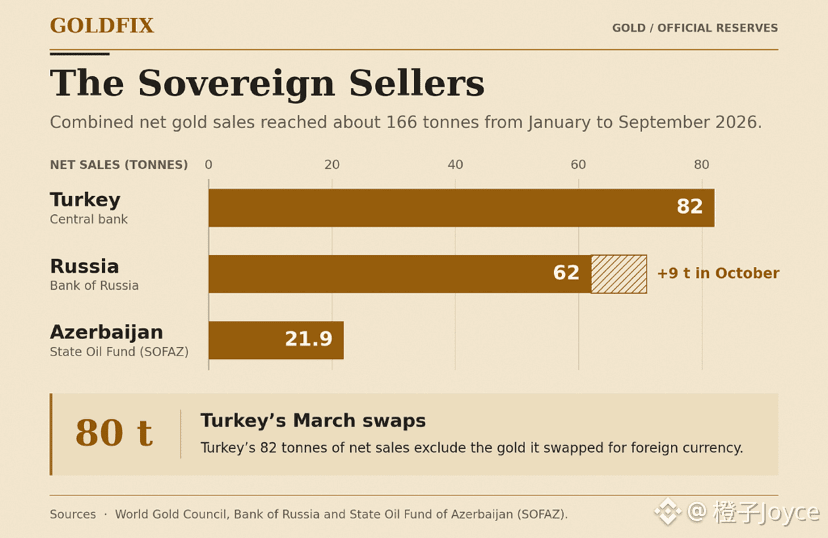
From January to October, its holdings fell by about 72 tonnes in total, marking 10 consecutive months of decline. The Bank of Russia’s gold sales are primarily aimed at meeting fiscal financing needs, rather than being a one-off adjustment.
Turkey’s reductions were concentrated in March
It was a net seller of about 70 tonnes in the first quarter, and another 80 tonnes of gold was used in FX swaps. By June, the volume of outstanding swaps had fallen to about 60 tonnes. In the second quarter, direct net sales were just 4 tonnes, indicating that Turkey is not engaged in sustained, large-scale selling.
Azerbaijan’s move looks more like rebalancing
It sold 21.9 tonnes in the first quarter because rising gold prices pushed gold’s share above the portfolio limit. Holdings then remained stable at 178.1 tonnes for the following six months.
Tether has not engaged in large-scale selling
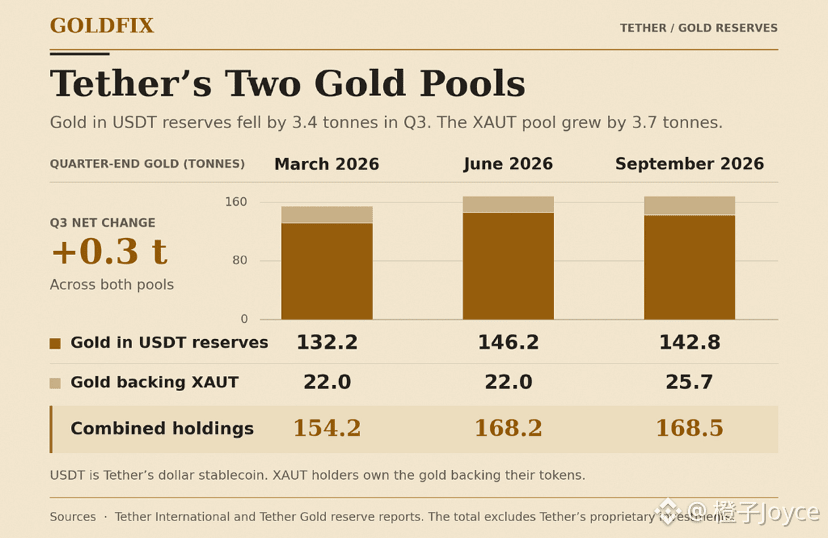
From June to September, the amount of gold held in vaults backing USDT reserves fell by 3.4 tonnes, but the amount in vaults backing XAUT rose by 3.7 tonnes. Overall, holdings edged up from 168.2 tonnes to 168.5 tonnes.
The real shift at the margin is on the demand side
What deserves closer attention is not Tether selling, but the sharp slowdown in its pace of accumulation. Gold has lost an important source of marginal demand, as Tether has gone from buying 14 tonnes in a quarter to barely adding to its holdings recently.
Conclusion:
Russia is a persistent seller, while Turkey and Azerbaijan have acted more periodically. Tether, meanwhile, has not been shown to be engaging in “large-scale selling.” The pressure on gold going forward is more likely to come from the combined effect of official-sector reductions and cooling marginal buying.
$XAU
#GoldIsBeingConsistentlySoldByMultipleCountries