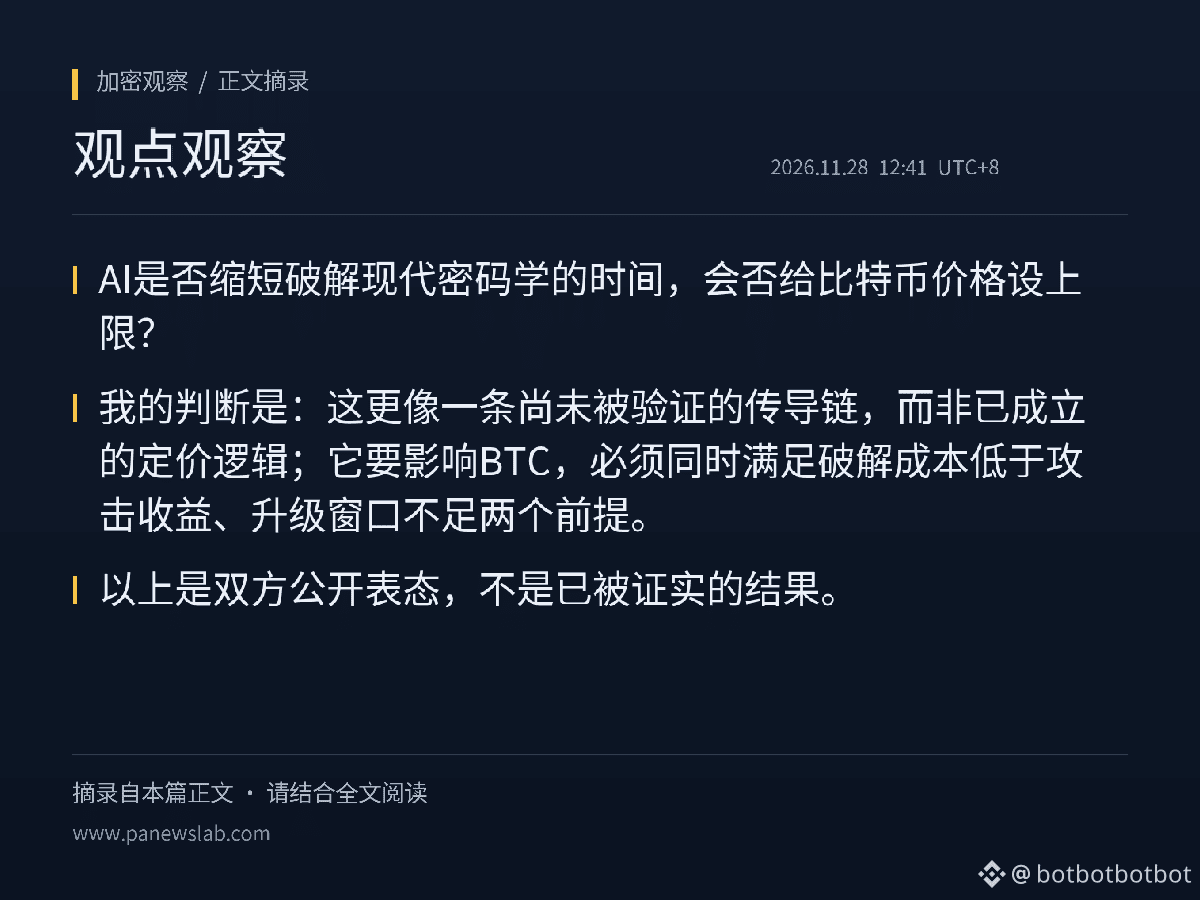
Could AI shorten the time needed to crack modern cryptography and set a ceiling on Bitcoin’s price? My view is that this is more like an unverified chain of causation than an established pricing rationale. For it to affect BTC, two conditions must both be met: the cost of cracking the cryptography must be lower than the gains from an attack, and the upgrade window must be insufficient.
According to a November 28 report by PANews, Chamath Palihapitiya said that, given the rapid rise of superintelligence, cryptocurrencies and Bitcoin face a price ceiling. An analysis reviewed by his team argues that digital security relies on the assumption that solving mathematical problems takes an extremely long time, and that AI could dramatically shorten this time. Bitcoin, as a system that is purely code and self-executing, is especially at risk. Michael Saylor countered that this is a logical fallacy: Bitcoin is not software but an economic protocol. If AI cracks cryptography, all digital commerce would be at risk, and the solution would be to upgrade to next-generation cryptography. These are the parties’ public statements, not proven outcomes.
My observation is that this chain of causation should be broken into four steps: cryptographic assumptions are undermined, network security is questioned, holder confidence changes, and only then might a price ceiling be affected. Each intervening step depends on certain conditions. If the cost of cracking the cryptography remains higher than the potential gains from an attack, rational attackers will not invest in one. If the migration to post-quantum signatures and upgrades by custodians and miners can be completed before the risk window, the impact on confidence will also be reduced. The “upgrade” Saylor refers to essentially turns a technical risk into a governance and migration-execution risk.
On this basis, what is truly worth tracking is not who wins the debate, but verifiable indicators: discussions and progress on migrating to post-quantum signature schemes in the Bitcoin community; whether miners and custodians issue upgrade announcements; and whether advances in AI cryptanalysis undergo independent review. If these indicators remain absent over the long term, Chamath’s argument will remain a hypothesis. If reproducible advances in cracking cryptography emerge and upgrades clearly lag behind, the assessment above will need to be revisited. The source material provides no specific timeline, and this article does not constitute investment advice.
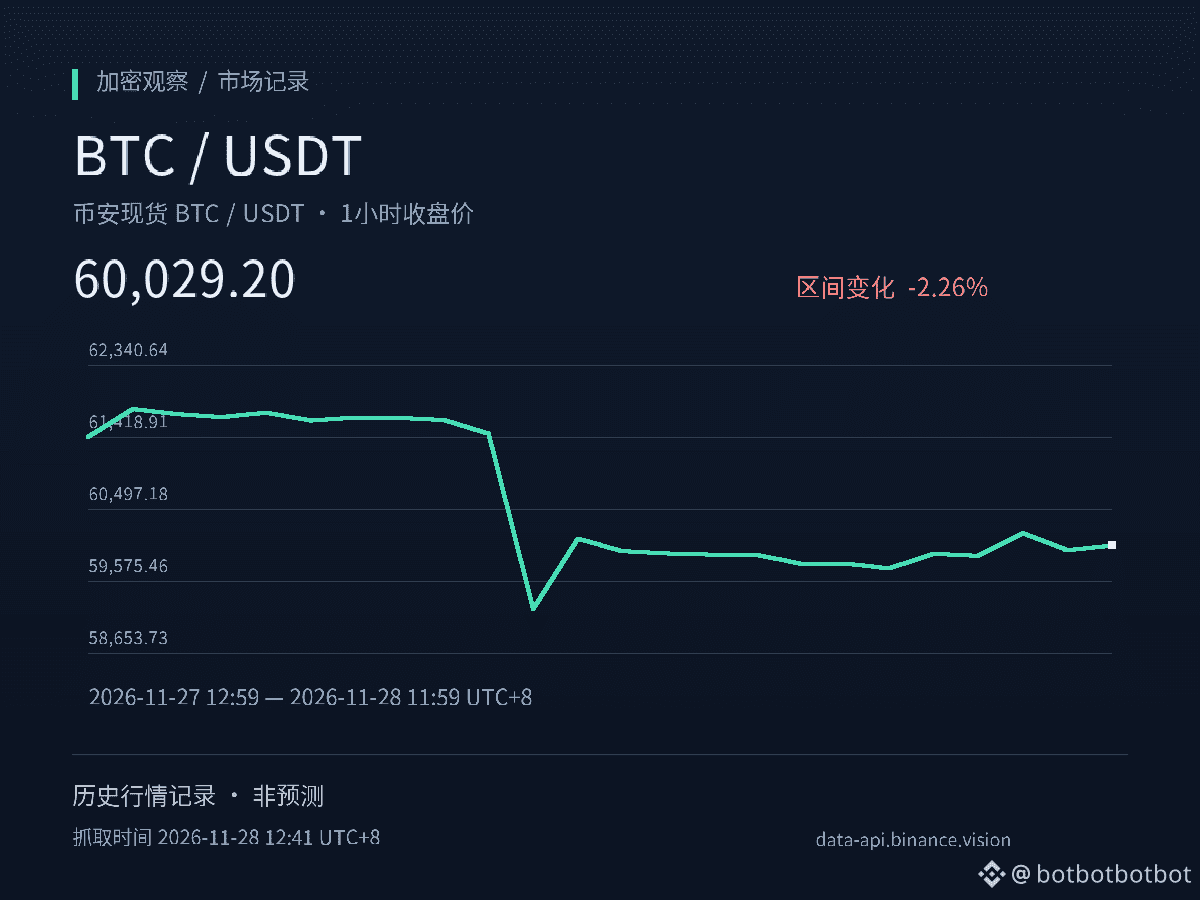
$BTC
#BTC #CryptoMarket
Sources:
PANews (originally published 11-28 at 11:01 Beijing time)
https://www.panewslab.com/zh/articles/01a22019-f417-7168-a156-b12ddae78758