
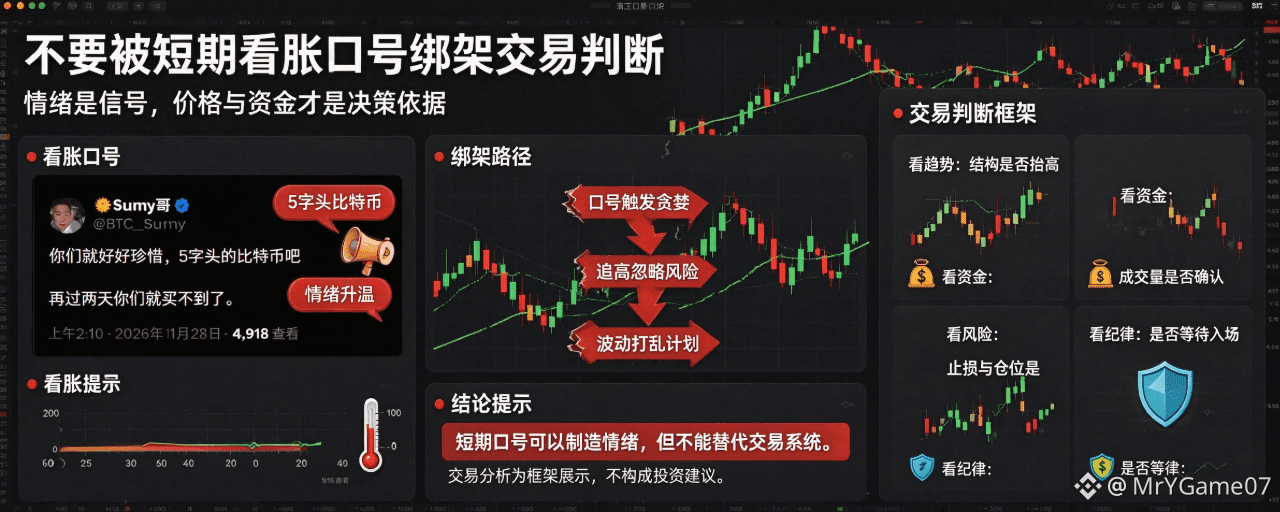


Early this morning, I saw a blogger on social media urge everyone to cherish Bitcoin in the $50,000 range, saying it would be impossible to buy at that price in just a couple of days. This kind of highly inflammatory bullish rhetoric appears like clockwork whenever the market experiences sharp volatility. But when faced with actual price action and data, we need to cut through the fog of emotion and examine the market’s current position, trading dynamics, and the underlying trends in the Bitcoin ecosystem with a rational perspective.
Let’s start with the most obvious feature of the market: its price structure. Since November, Bitcoin has undergone an exceptionally severe correction, falling more than 20% in a single month and making it one of the worst-performing Novembers in its history. The price slid from its highs, reaching a low of around $57,000 on November 25. It then managed a modest rebound, aided by short covering during the thin liquidity of the U.S. stock market holiday period, and climbed back above the $60,000 mark. Technically, the $57,800–$58,700 range coincides with a key Fibonacci retracement level and an important weekly support zone. This rebound is driven more by a technical recovery after oversold conditions and short positions being closed than by a large influx of new spot capital. At the macro level, risk assets remain under pressure amid stickier-than-expected inflation and market concerns that monetary policy will tighten further in December. So whether the $50,000 range marks a historic bottom or is a bull trap in the middle of a decline cannot be decided with a slogan. We need to watch whether Bitcoin can establish a firm footing above $60,000 on the weekly chart and assess the strength of genuine spot buying.
In an extremely volatile market full of conflicting views, the core lesson of trading can be summed up in four words: respect liquidity. Many retail traders lose money during the violent swings between bull and bear markets because they mistake social media sentiment for a trading signal. When the price falls to $57,000, panic sellers cut their losses and exit; when it rebounds just above $60,000, they hear people shouting, “Buy now or you’ll miss your chance!” and can’t resist chasing the rally with their entire position. During holidays, when trading is thin and liquidity is scarce, the market can easily make sharp, sudden moves in either direction, and liquidations on both sides are commonplace. Experienced traders don’t try to predict whether a certain price will disappear forever two days from now; they develop a clear strategy for how to respond. If you believe in Bitcoin’s long-term value, gradually accumulating spot positions through dollar-cost averaging in the $58,000–$60,000 support zone is far safer than blindly using leverage to bet on a one-way move. Always keep enough funds in reserve in case the market, amid extreme sentiment, tests deeper support levels again.
Setting short-term price speculation aside, if we look at the underlying research trends in the Bitcoin ecosystem, we can see that the industry is undergoing profound structural change. In the past, people studying Bitcoin focused only on halving cycles and straightforward spot trading. Today, asset issuance protocols on the Bitcoin network and the Layer 2 scaling ecosystem have built up tens of billions of dollars in decentralized finance total value locked. Daily active on-chain addresses have remained steady at over 600,000, while on-chain settlement and native financial applications continue to show remarkable resilience. At the same time, the deep involvement of traditional financial institutions and publicly listed companies has fully tied Bitcoin’s pricing dynamics to global macroeconomic interest-rate cycles and ETF fund flows. This means that future research into Bitcoin must not only focus on native on-chain staking, cross-chain interoperability, and technological breakthroughs in Layer 2 networks, but also track capital flows in traditional financial markets and changes in regulatory policy.
There is never a shortage of voices stirring up anxiety and euphoria in the market; what’s in short supply is the discipline to think independently. Bitcoin in the $50,000 range is certainly attractive in terms of value, but until the clouds of macroeconomic tightening have fully cleared, staying calm, managing your position, and understanding the trend are what will keep you in the game when the next real wave arrives.