
Did AI help hackers break into an accounting platform? Cryptio was breached, and the attacker tried to move funds using customers' exchange API keys.
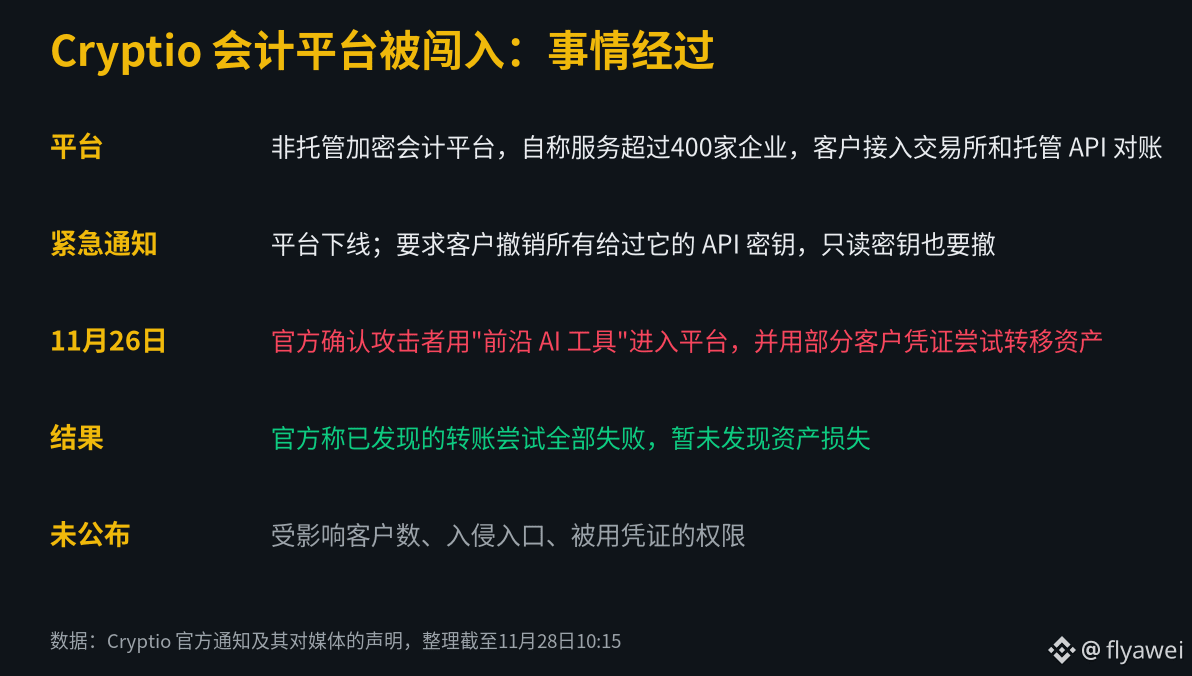
According to the official statement, the crypto accounting platform Cryptio was breached by an external attacker. It serves more than 400 businesses, and customers connect API keys from exchanges and custodial accounts for reconciliation.
The first sign was an urgent notice Cryptio posted on LinkedIn: the platform had been taken offline, and customers were told to go to the exchange or custodian where they had issued the keys and revoke all API keys they had given Cryptio, including read-only keys.
Later, on November 26, Cryptio admitted to the media that the attacker used what it called "cutting-edge AI tools" to get into the platform and also used some customer credentials to try to move assets.
In other words, the hacker had already made it to the doorstep of customers' exchange accounts, but had not yet pushed the door open.
The company said that all transfer attempts discovered so far failed, no asset losses were found, an external incident response team has been brought in to investigate, and the relevant credentials were invalidated together with exchanges and custodians. The number of affected customers and the entry point of the intrusion have not yet been disclosed.
What is most concerning here is that the company warned customers who had enabled trading or withdrawal permissions on their keys that their funds may be at risk. This means that many people, for the sake of convenience, grant third-party tools overly broad API permissions, which in practice are like spare keys kept at someone else's house.
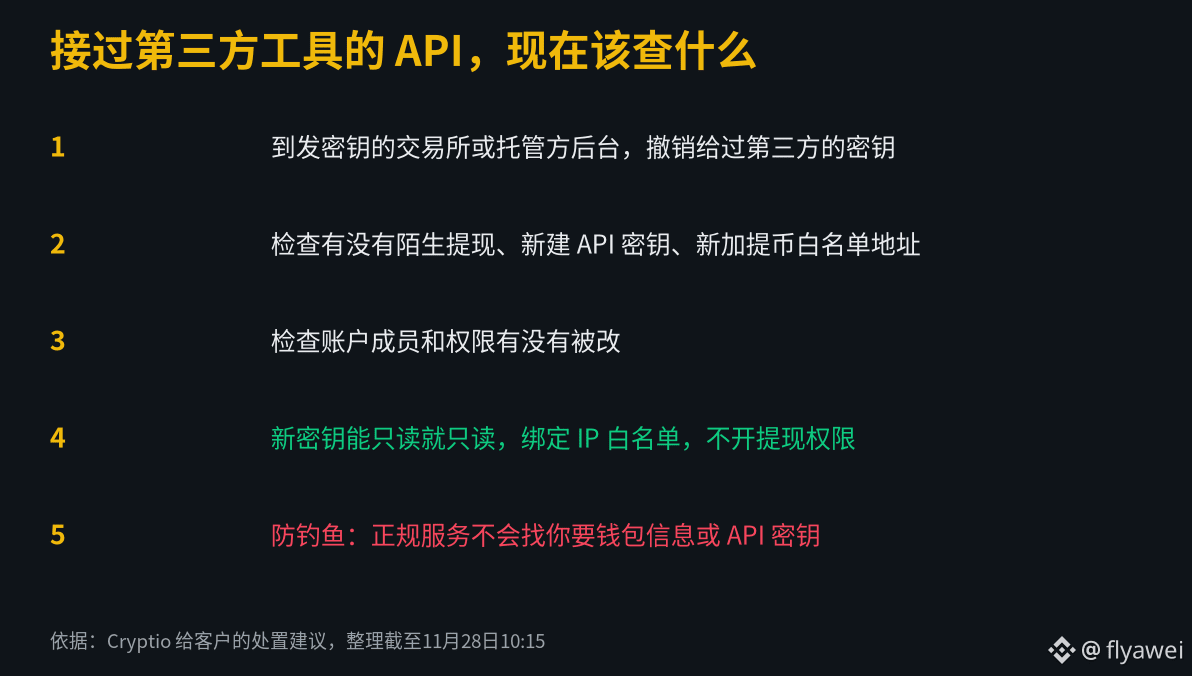
My view is that the reason no money was lost this time was luck and tightly configured permissions. When connecting any tool to an API, make it read-only if possible, and add an IP whitelist.
For beginners, the advice is to watch more and act less; if you buy crypto, just buy $BTC