In crypto, what often leaves people with nothing overnight isn’t a market crash—it’s a scam. Before you’ve even figured out what’s happening in the market, your wallet is already empty. It happens every day. Here’s a breakdown of the 8 most common scams, with an image for each. Save this and share it with friends who are new to crypto 👇
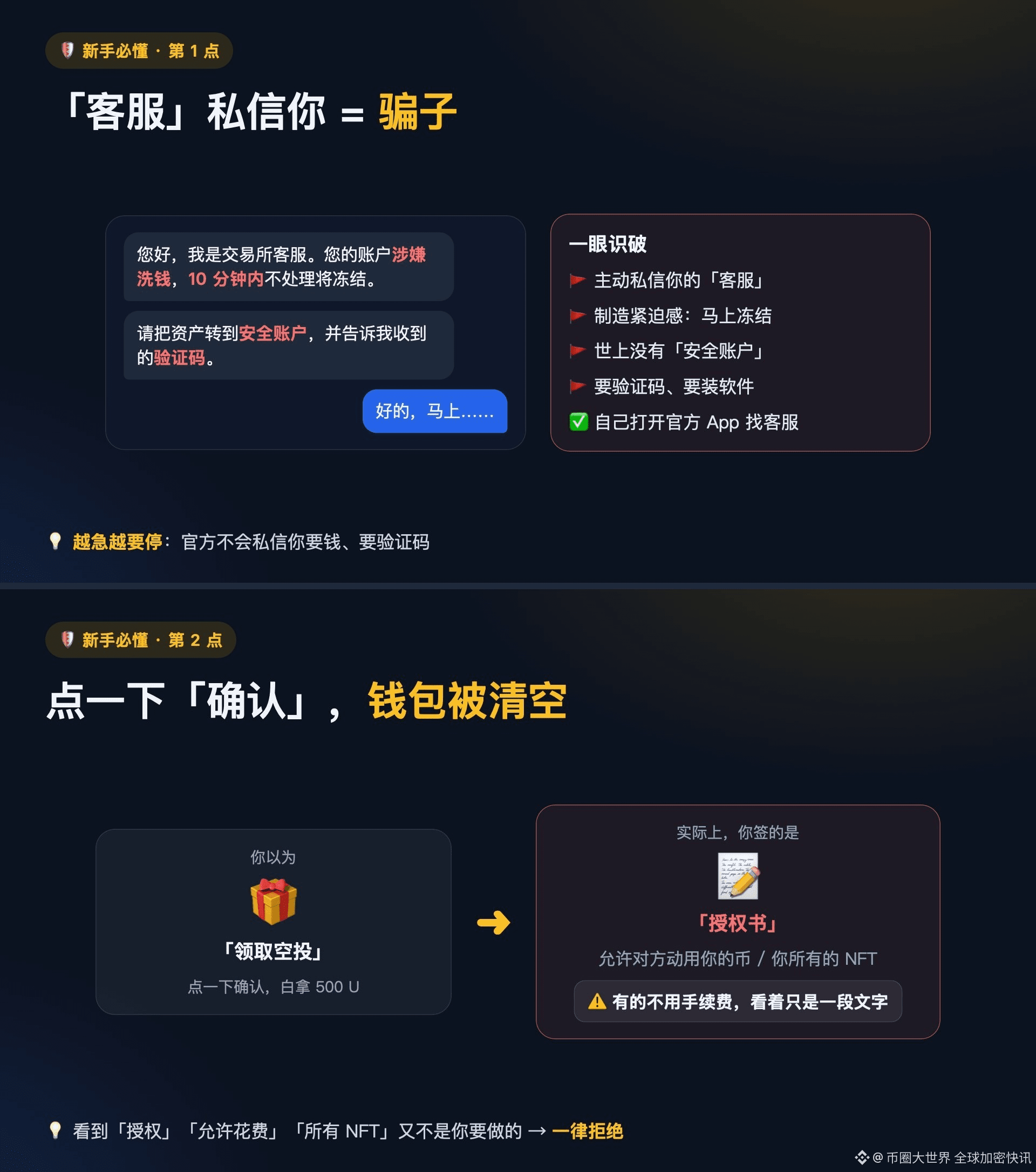
No. 1: Fake customer support — “There’s a problem with your account. Transfer your funds to a secure account.”
Your phone rings. The caller knows your name and claims to work in exchange security: “Your account is suspected of money laundering. If you don’t act within 10 minutes, it’ll be frozen.” Then they pressure you to transfer your crypto to a “secure account,” install remote-access software, or share a verification code. Their whole pitch hinges on those “10 minutes.” When you panic, you stop thinking clearly.
Remember: Official support will never contact you out of the blue to ask for money. “Secure accounts” don’t exist, and you should never give anyone your verification code. If you’re unsure, hang up and contact support through the official app yourself. The more they rush you, the more you should slow down.
No. 2: One tap on “Confirm” and your wallet is emptied
Many people get hacked without ever sharing their recovery phrase. They just tap “Confirm” when they shouldn’t. You visit a “claim your airdrop” or “free NFT mint” page and connect your wallet, thinking you’re claiming a reward. But what you’re actually signing is an authorization that lets someone spend your crypto—even all your NFTs. Some signatures don’t even require a fee. They may look like ordinary text, but they can do just as much damage.
How do you protect yourself? If a pop-up says “Authorize,” “Allow spending,” or “All NFTs,” and it’s not something you intended to do, reject it. Don’t connect the wallet that holds your savings to random websites. Use a separate, small wallet for trying out projects. If you signed by mistake, revoke the authorization immediately and transfer out any remaining funds.
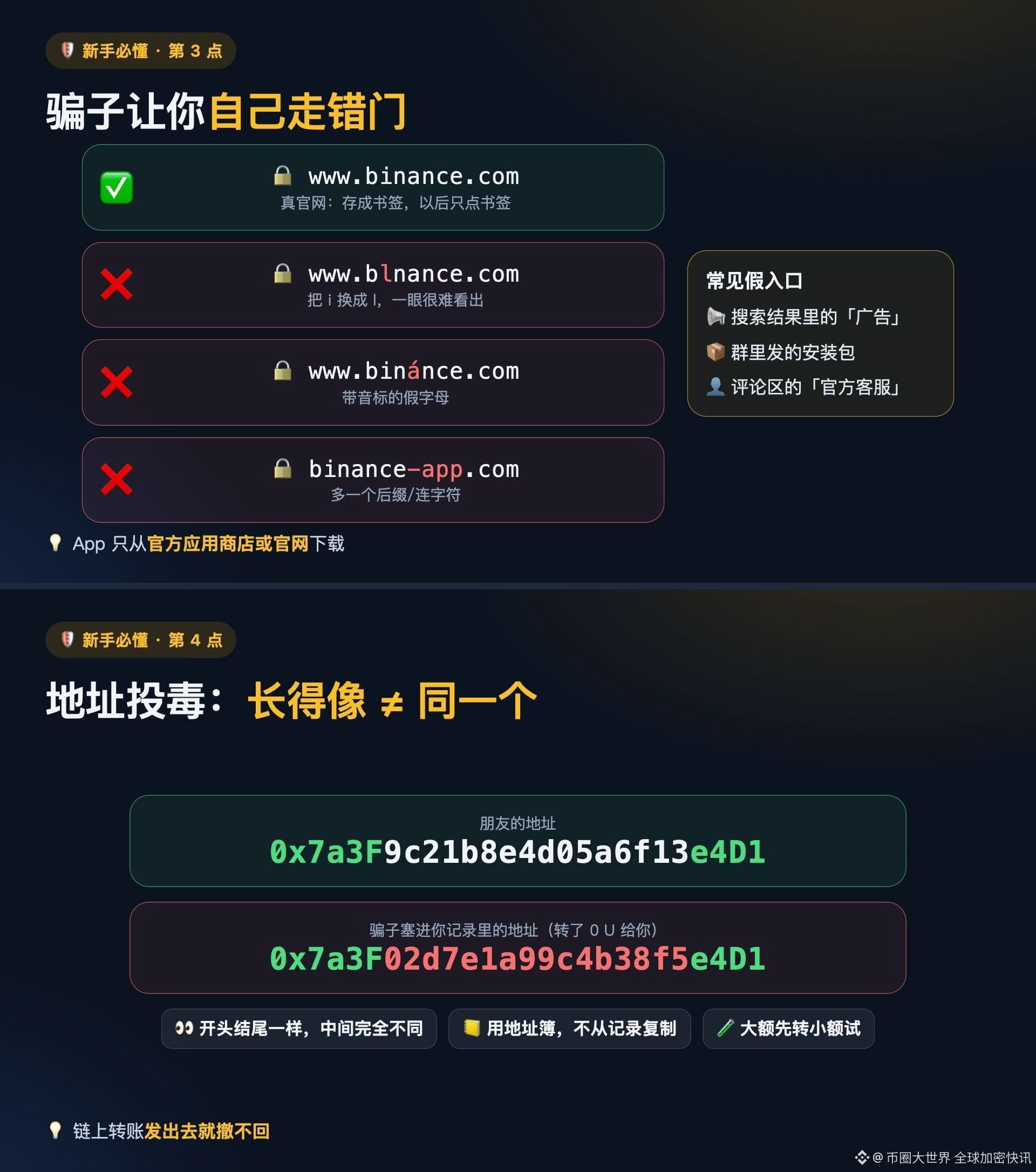
No. 3: Fake websites and apps trick you into going through the wrong door
Scammers’ greatest skill isn’t hacking—it’s setting up a fake door and waiting for you to walk through it. The top “sponsored” search result might be a fake official site, with a URL that differs by just one letter and an identical-looking interface. Someone might send you an installer for a “new version” of an app. Install it, enter your recovery phrase, and your funds are gone. The friendly “official support” accounts in comment sections are usually fake.
The safest habits: Bookmark the official website and use that bookmark every time. Don’t click search ads. Download apps only from official app stores.
No. 4: Address poisoning
You’ve just sent a friend 1,000 U, and now your transaction history shows a 0 U transfer. The address starts and ends just like your friend’s, but the middle is different. Scammers generate these “lookalike addresses” in bulk, hoping that next time you’ll save time by copying an address from your history—and send your money straight to them. They’re counting on most people checking only the first and last few characters.
How to protect yourself: Use your address book; don’t copy addresses from transaction history. Check the entire address. For a large transfer, send a small test amount first. Once an on-chain transfer is sent, it can’t be reversed.
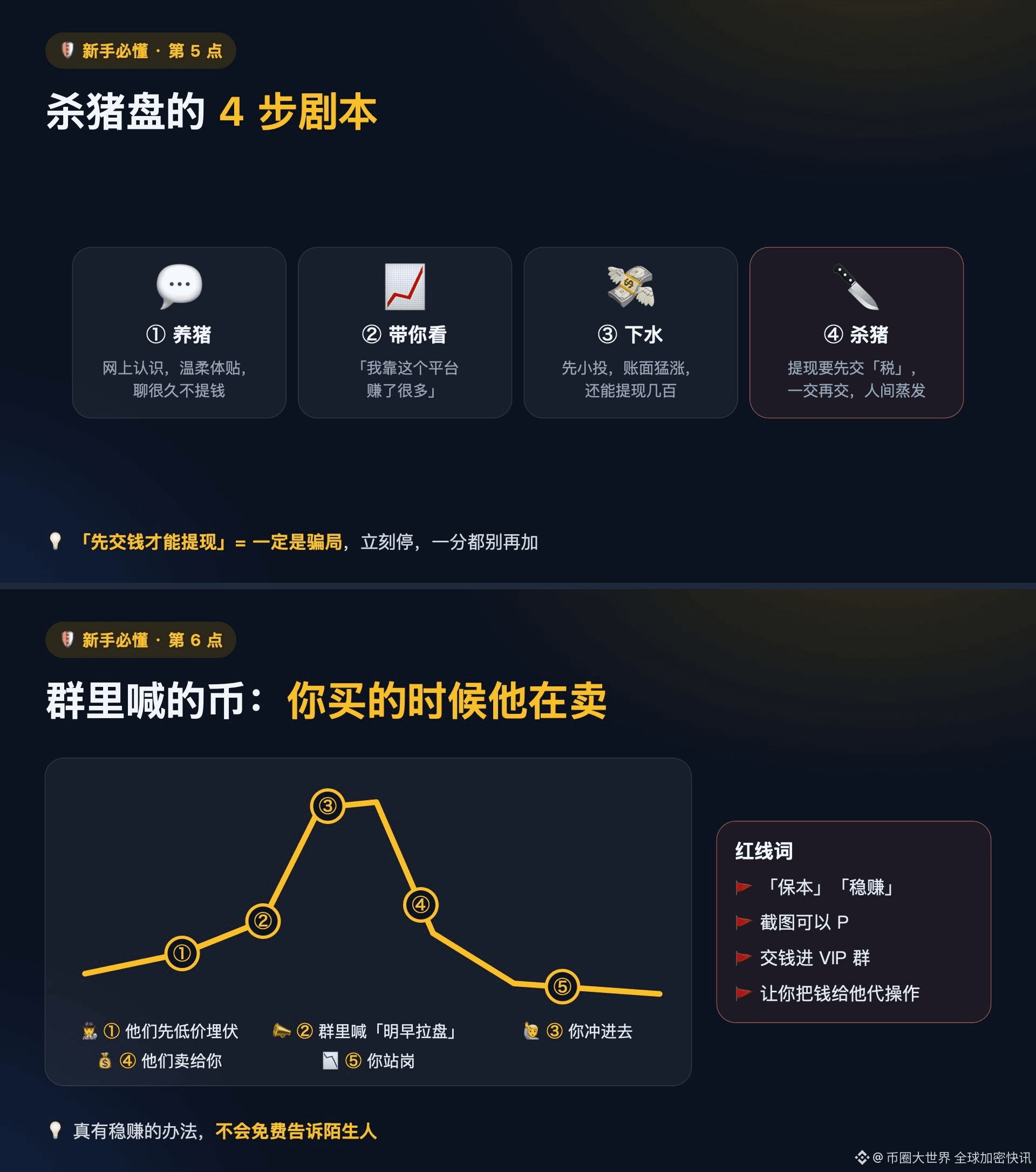
No. 5: The “pig-butchering” scam
The script has four steps. First, they “fatten you up”: You meet someone warm and easy to talk to online. You chat for a few weeks, and they don’t mention money. Next, they “draw you in”: They casually mention making good money on a platform and send screenshots of their profits. Then they “get you invested”: They guide you to sign up for an unfamiliar platform. You try a small amount, make money quickly, and even withdraw a few hundred dollars. Finally, they “slaughter you”: You put in a large sum, then suddenly need to pay “taxes” or an “unlocking fee” to withdraw. After you pay once, they demand more. Eventually, both the platform and the person disappear.
The hard-and-fast rule: If you have to pay money before you can withdraw, it’s a scam. Stop immediately, save the evidence, and report it to the police.
No. 6: Signal groups — “The expert’s picks have a 90% win rate”
Groups that post profits every day and are full of people thanking the “expert” are probably packed with plants. The expert calls a few trades on major coins. If prices rise, they flood the chat with success stories; if prices fall, they delete the records. Once you trust them, they start taking your money: charging for “VIP” access, getting everyone to buy a small coin they’ve already secretly bought into—so they can cash out when you buy in—or asking you to hand over your money for them to “trade on your behalf.”
If someone really had a guaranteed way to make money, would they share it with strangers for free? See “capital guaranteed,” “guaranteed profits,” or “double your money,” and walk away.
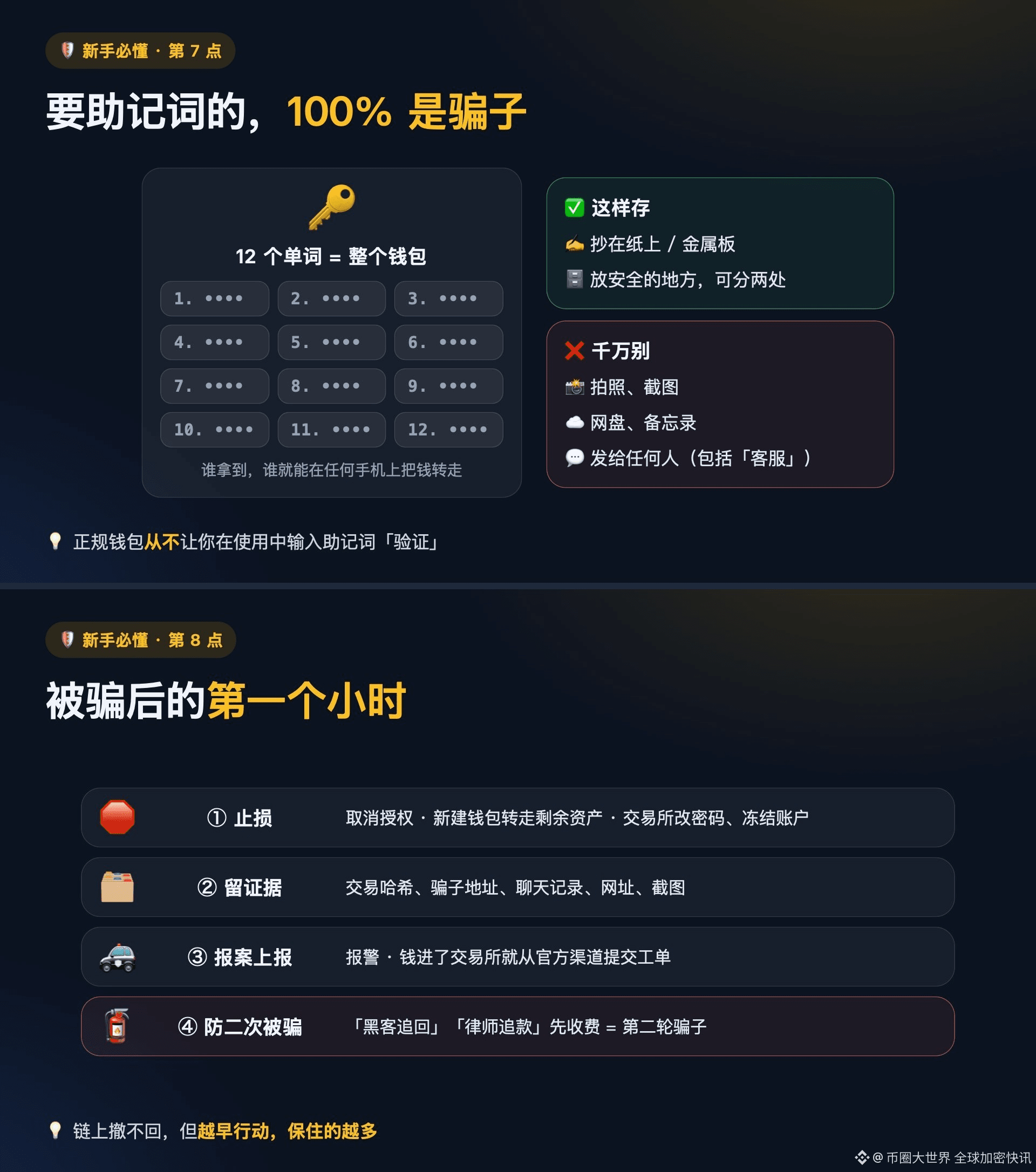
No. 7: Anyone who asks for your recovery phrase is a scammer
Those 12 or 24 words aren’t a password—they are your wallet. Anyone who gets them can transfer out all your crypto from any device. No matter what excuse they give—“sync your wallet,” “verify an upgrade,” or “help you recover your account”—anyone asking for your recovery phrase is a scammer. There’s an even sneakier trick: Someone “accidentally” posts the recovery phrase for a wallet that has crypto in it. You import it and add funds to cover the transaction fee, hoping to transfer the crypto out. As soon as the fee arrives, a bot sweeps it away.
Write your recovery phrase on paper and store it securely. Don’t photograph it, take a screenshot, or save it to cloud storage.
No. 8: If you’ve been scammed, what should you do in the first hour?
First, limit the damage: Revoke authorizations. If your recovery phrase may have been exposed, create a new wallet and transfer out whatever remains. Change your exchange password and enable two-factor authentication. Then save the evidence: transaction records, the other party’s address, and screenshots of your chats. Report it to the police. If the funds went to an exchange, submit a support ticket through its official channels; sometimes the scammer’s account can be frozen.
Finally, watch out for a second round of scams: Anyone who contacts you out of the blue claiming they can “recover your funds with hacking” and asking for an upfront fee is targeting victims with a follow-up scam.
Which of these 8 have you or someone you know encountered? Tell us in the comments about the most outrageous scam you’ve seen. If this helps even one person avoid a scam, it’s worth it 🛡
$BTC $USDT