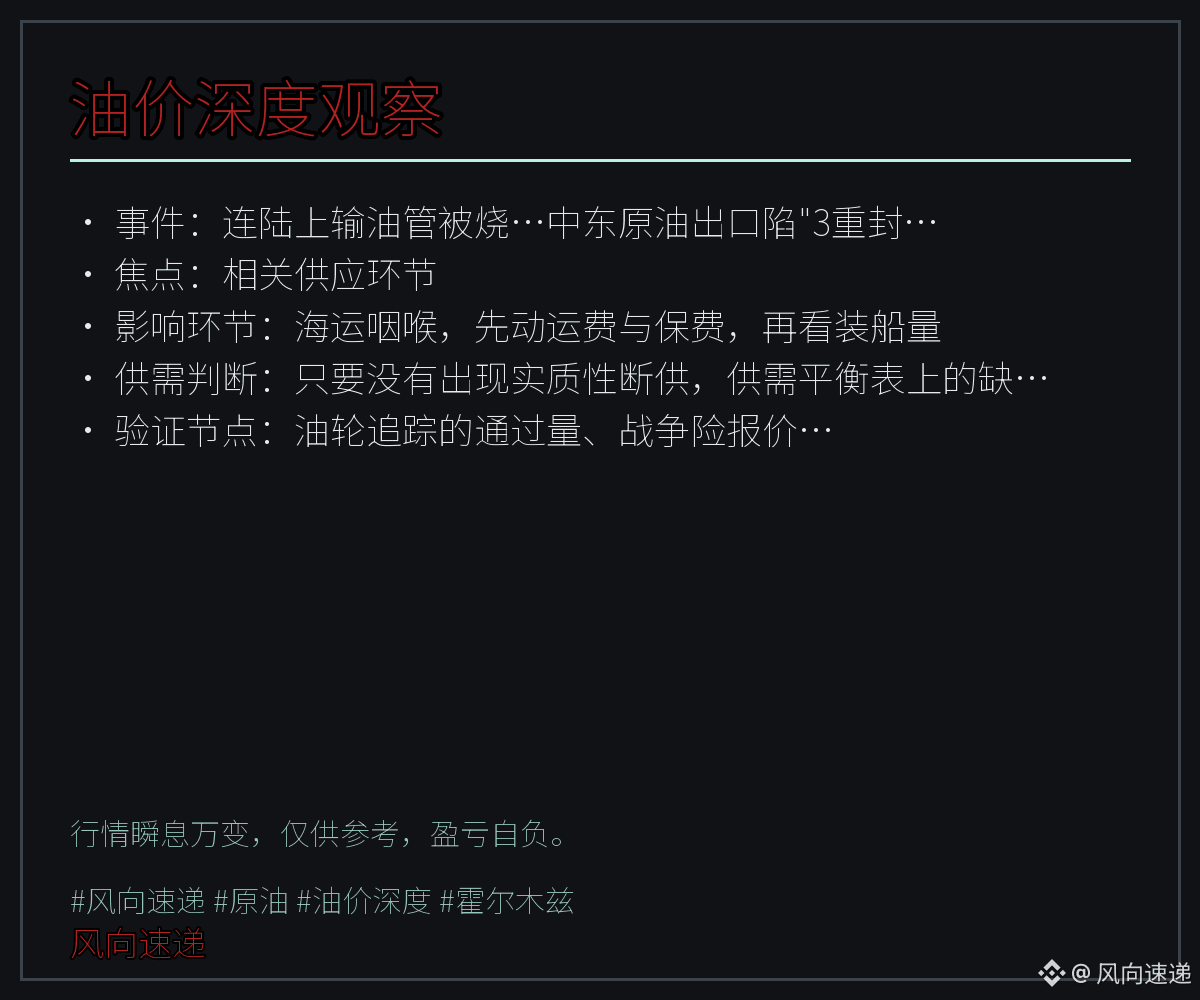
In-Depth Oil Price Watch
【Key Event】
Even an onshore oil pipeline has been set ablaze… Middle Eastern crude exports face a “triple blockade” (2 hours ago)
【Who Is Affecting Oil Prices】
Restrictions have been imposed on shipping routes. The focus is on the relevant supply links. The Strait of Hormuz carries about one-fifth of the world’s seaborne crude oil. If ships on the Red Sea and Suez routes have to divert around the Cape of Good Hope, the journey from the Middle East to Europe will take more than ten extra days.
【Transmission Mechanism】
If passage through the relevant supply links is restricted, shipowners reroute vessels, voyages get longer, and war-risk insurance premiums rise, driving up landed costs.
When this feeds into crude pricing, markets typically price in a risk premium first, then assess whether actual loading and transit volumes have really fallen.
【Supply, Demand, and Pricing】
As long as there is no actual supply disruption, any shortfall in the supply-demand balance will be limited, and the price impact will be reflected more in the term structure and regional price spreads.
WTI is currently trading near $83.08, with a 24-hour change of -1.59%. This level can serve as a starting point for monitoring; subsequent developments should be assessed alongside the verification signals below. Risk premiums often rise quickly and unwind just as quickly. Their staying power depends on whether vessels are actually damaged or transit data continues to decline.
【What to Watch Next】
Track tanker transit volumes, war-risk insurance quotes, and changes in the price spread between Brent and Dubai crude.
【What Would Invalidate This Thesis】
If transit resumes quickly and premiums fall, the previously priced-in premium will typically fade gradually.
Markets can change in an instant. For reference only; you are responsible for your own gains and losses.
#风向速递 #原油 #油价深度 #Hormuz