Nov. 28 Morning Brief | ETH ETFs End Nine-Day Outflow Streak and Turn to Inflows; IBIT Alone Accounted for 83% of November BTC ETF Outflows
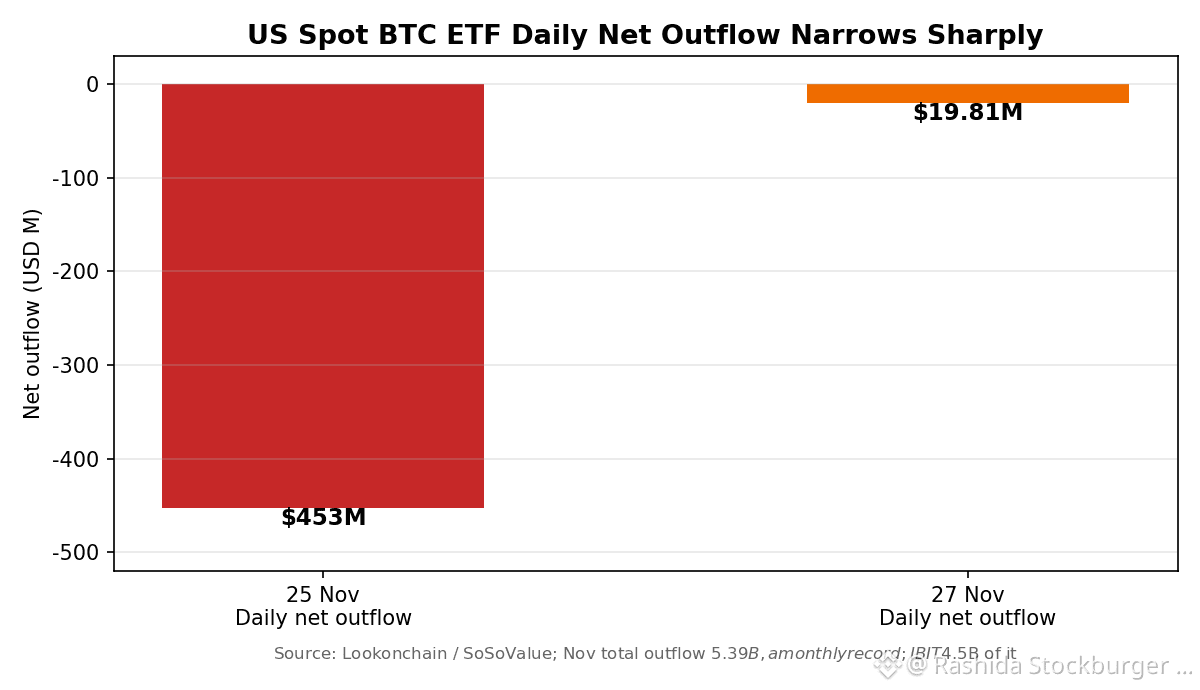
ETF flows showed a marginal shift: Data from Lookonchain shows that on Nov. 27, U.S. spot BTC ETFs saw net outflows of just 323 BTC (about $19.81 million), sharply down from $453 million on Nov. 25. However, cumulative outflows over seven days still reached 31,890 BTC (about $1.96 billion), meaning selling pressure has not disappeared.
ETH ETFs were the first to stem the bleeding: On the same day, ETH ETFs saw net inflows of 23 ETH (about $39,800), ending a nine-day outflow streak. Cumulative outflows over seven days totaled 171,634 ETH (about $295 million), while outflows for November reached about $1.3 billion.
Cumulative outflows from BTC ETFs in November reached $5.39 billion, setting a monthly record since the products launched (the previous record was $4.51 billion in June 2026). Outflows were highly concentrated: BlackRock's IBIT alone saw $4.5 billion in outflows in November, accounting for 83% of the sector total. On Nov. 25, IBIT saw $329.7 million in outflows in a single day, or 73% of the sector total that day.
Some funds bucked the trend: Morgan Stanley Bitcoin Trust attracted $114.1 million in November, despite the broader outflows. Its 0.14% management fee is the lowest in the sector. Total ETF net assets shrank from $104.27 billion at the end of October to $72.03 billion on Nov. 25.
Assessment: Narrower daily outflows and ETH ETFs being first to stem the bleeding suggest selling pressure is easing at the margin. However, IBIT's dominance means institutional withdrawals are not yet over; ETF creation and redemption data next week will be a key test.
Not investment advice.
#ETF #BTC #ETH