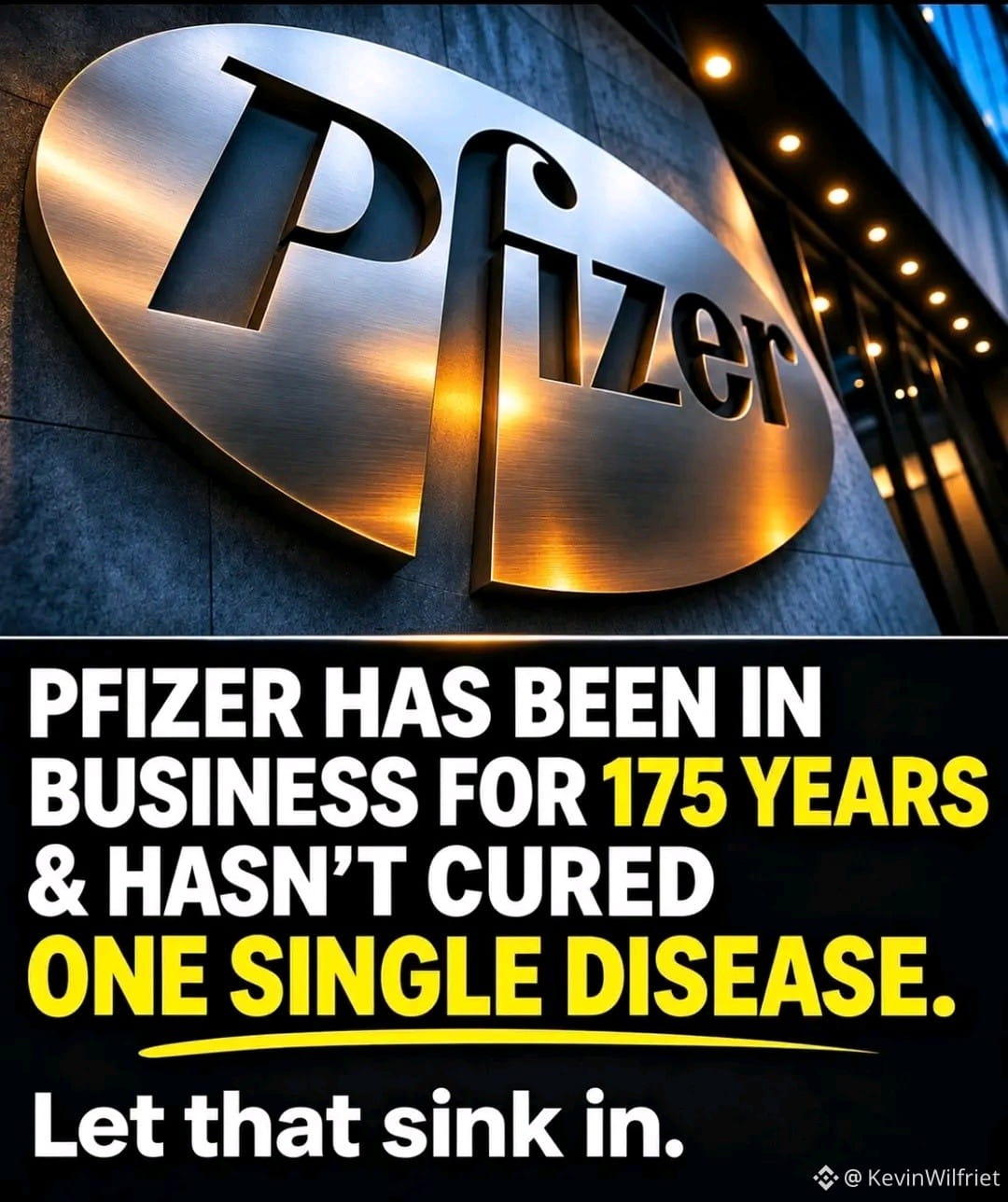
This meme goes viral because it _feels_ true. But it is not true. And it is not false either. It's cleverly worded.
Let's be cold.
1. The number is real.
Pfizer was founded in 1849. That's 177 years in 2026. Yes, it's old.
2. The claim is a trick of language.
What is a "cure"? If you mean a drug that kills a disease forever in one dose, almost NO pharmaceutical company has many of those. Because most diseases — diabetes, hypertension, cancer, Alzheimer's, asthma — are chronic, complex, and not caused by one bacteria.
But if you mean a treatment that saves you from dying of that disease, Pfizer has many:
Penicillin production in WWII. Antibiotics that cured bacterial infections that used to kill millions. Antifungals. Vaccines for pneumococcal disease, meningitis. Prevnar. COVID vaccine that prevented millions of deaths. Drugs that turn HIV from a death sentence into a chronic manageable condition.
Is that a "cure"? No. Is that useless? Also no.
3. The real truth the meme is pointing at:
Pharma makes money from _treatment_, not cure. A cure is a one-time sale. A treatment is a 30-year subscription.
That is the business model. Pfizer, like all Big Pharma, is incentivized to manage disease, not end it. That doesn't mean scientists are evil. It means the system rewards a pill you take every day more than a pill you take once.
4. The other side nobody says:
Cures are rare because biology is hard. We still haven't cured the common cold. Not because of conspiracy. Because viruses mutate, cancer is 200 diseases, and the human body is not a car you can just replace a part in.
So the meme is wrong on facts, but right on incentives.
Pfizer hasn't cured one disease because almost nobody has. But Pfizer also has no financial reason to _try_ to cure the diseases that pay its bills.
That's the part that should sink in.