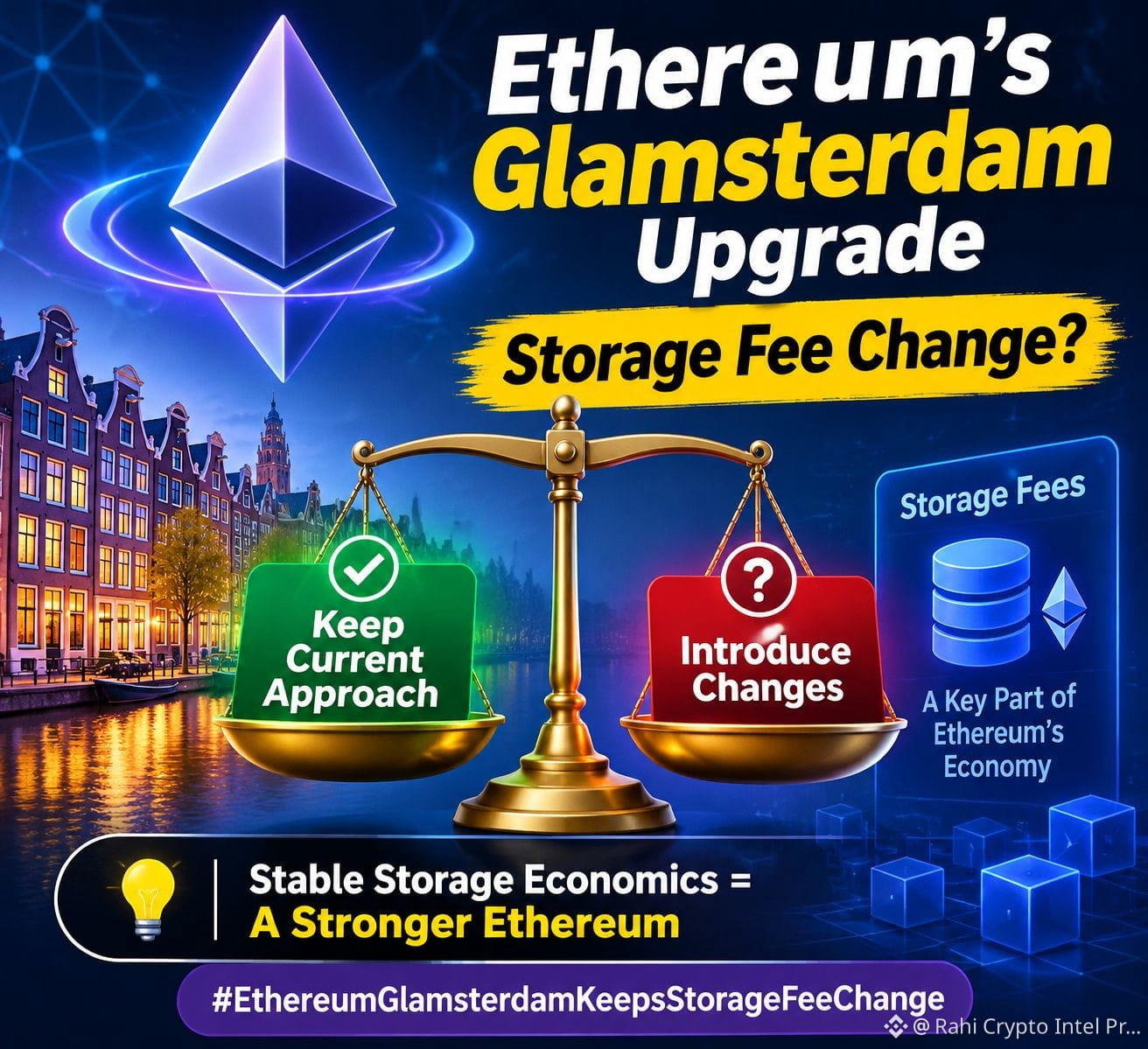
#EthereumGlamsterdamKeepsStorageFeeChange
Ethereum’s Glamsterdam upgrade raises an important question: should storage fees stay the same, or does Ethereum need a different approach?
Ethereum’s storage economics are more important than they might seem. Every smart contract, token balance, and piece of persistent on-chain data contributes to the network’s state, which nodes must maintain and manage.
Unlike ordinary transaction gas, storage-related costs are designed to discourage unnecessary state growth and make users account for the long-term resources their applications consume.
Keeping the existing approach could provide continuity for developers and avoid introducing additional complexity. However, changing the fee structure could potentially improve incentives, make storage usage more efficient, and help address Ethereum’s growing state-management challenges.
There is a trade-off, though. Higher or differently structured storage costs could affect smart contract developers, dApps, and users. Any changes would need careful consideration to avoid making Ethereum less accessible.
One important point: The hashtag alone does not confirm whether Glamsterdam will preserve or change the storage fee model. The actual outcome should be checked against official EIP discussions, Ethereum client release notes, and Foundation announcements.
My takeaway: Ethereum needs sustainable storage economics without sacrificing usability.
Should Glamsterdam keep the current storage fee approach or introduce changes? What's your view?
#Ethereum #ETH
$ETH
$UNI
$ARB