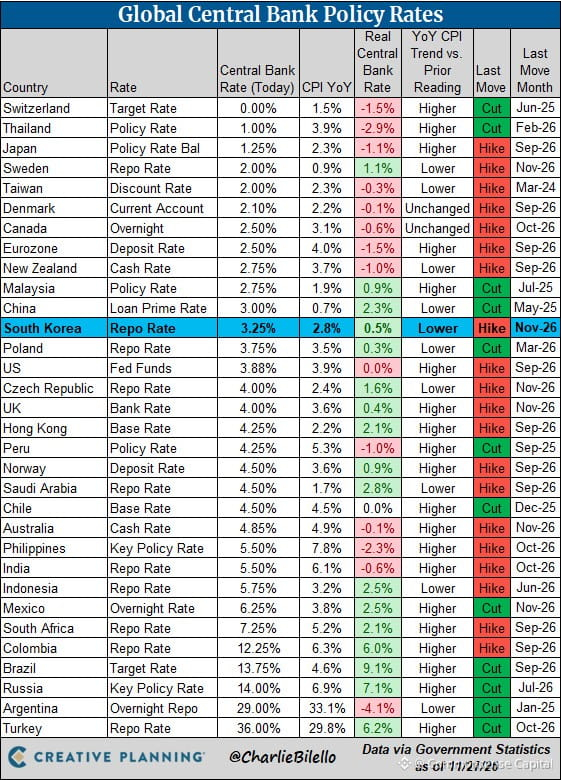
South Korea just raised rates again — third hike this year, now at 3.25%. And they're not done.
This matters because South Korea is a bellwether for global trade and manufacturing. When they're tightening aggressively, it tells you inflation isn't just a Western problem. It's embedded in supply chains, energy costs, and wage pressures across Asia.
The won has been under pressure all year. Higher rates are partly about defending the currency and keeping capital from fleeing to dollar assets. Classic emerging market playbook when the Fed is hiking hard.
For investors: Korean equities (especially exporters and tech) face headwinds from both slowing global demand and higher domestic borrowing costs. But if you're long Korean bonds or the won, this is supportive.
Bigger picture: central banks everywhere are still in inflation-fighting mode. The fantasy that rate cuts are around the corner keeps getting pushed back. Adjust your expectations accordingly.