

道AFI469
每天下午2点直播 ‖web3财富专区 ‖一级日调研‖优质标的发掘
1.3K Following
13.0K+ Followers
10.5K+ Liked
Posts
All
Quotes
Live
PINNED

Nayeem 承认我
·
--
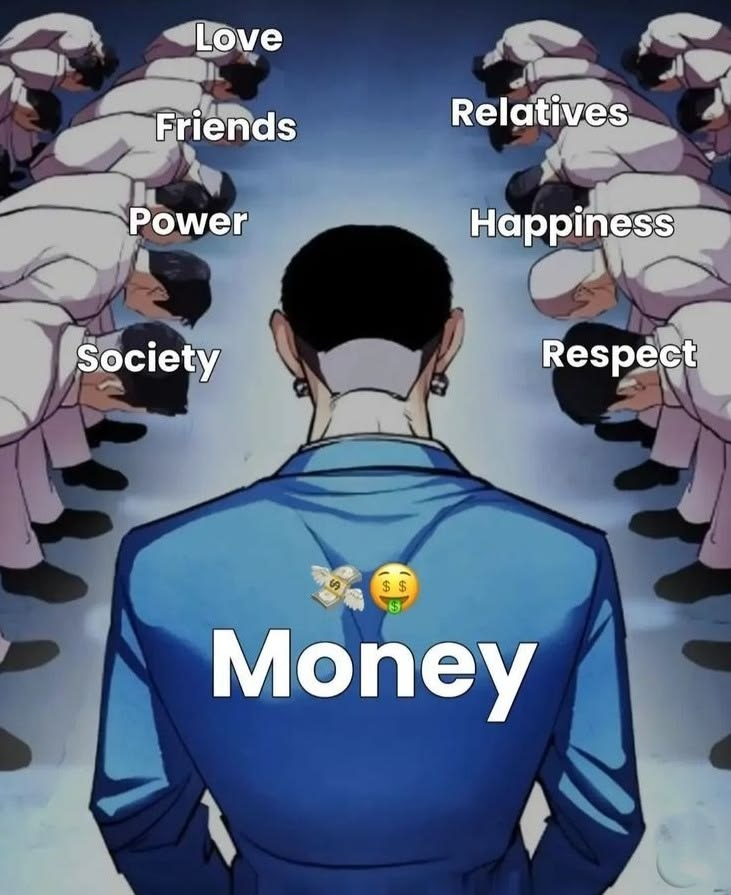
To survive in this world, everyone needs money; in this world, everyone bows down to money—the world is a slave to money.💸💸💸



MrSattarking
·
--
An Engineering Observation: Why Newton Reaches Consensus Before Producing BLS Signatures
While reading Newton Protocol's Consensus & Security documentation, one implementation detail stood out. Many distributed systems focus on how signatures are verified, but Newton places equal importance on ensuring every operator signs the same data in the first place.
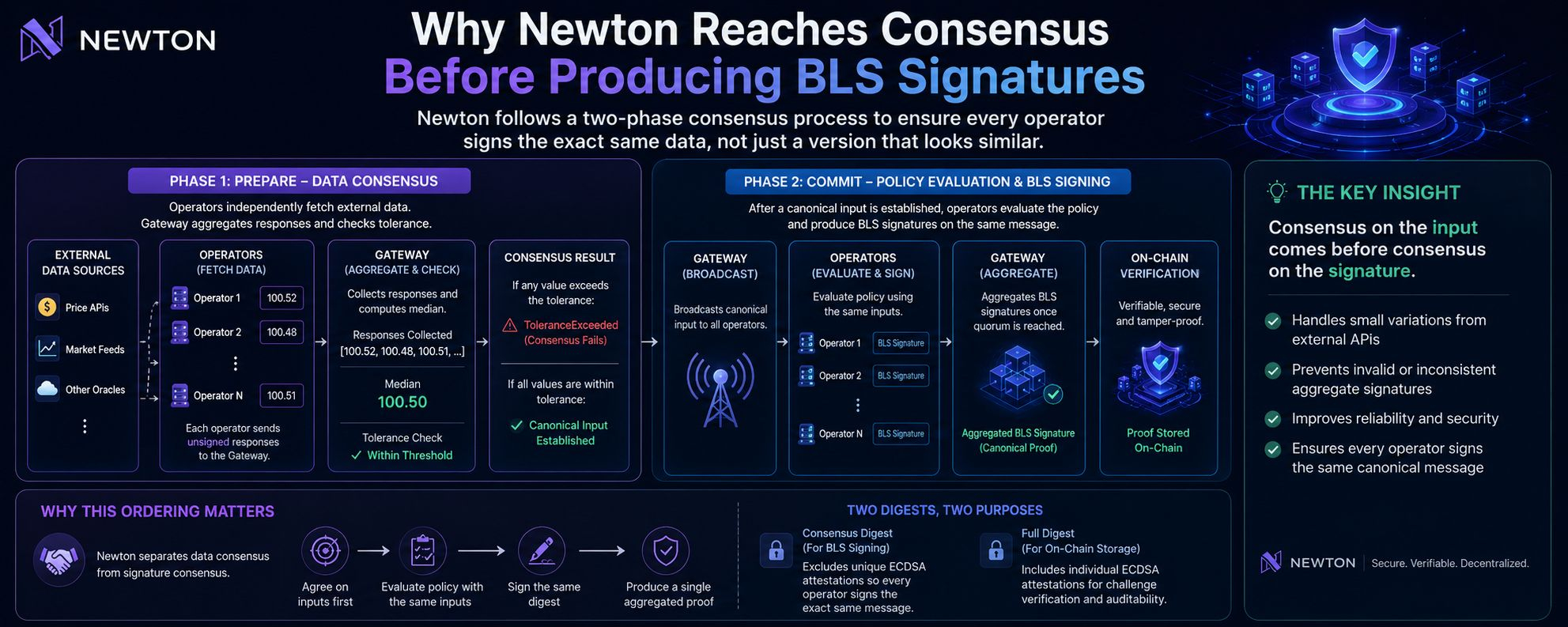
The documentation describes a two-phase consensus process consisting of a Prepare phase followed by a Commit phase.
During the Prepare phase, operators do not immediately evaluate policies or produce BLS signatures. Instead, each operator independently fetches external policy data, such as numeric values returned by PolicyData oracles, and sends unsigned responses back to the Gateway.
At this stage, no consensus proof exists.
Instead of allowing each operator to continue with slightly different inputs, the Gateway computes the median value for each numeric field and verifies that every operator's response remains within the configured tolerance. If any value exceeds the allowed tolerance, consensus fails with a ToleranceExceeded error rather than silently excluding the outlier.
Only after a canonical set of input values has been established does the protocol enter the Commit phase.
The Gateway broadcasts the consensus data back to operators. Because every operator now evaluates the policy using the same normalized inputs, they produce BLS signatures over an identical message. The Gateway then aggregates those signatures once quorum has been reached.
The documentation also explains why this sequence matters.
Newton uses two different digest types. Operators generate individual ECDSA attestations that naturally differ between participants, but BLS aggregation requires every signer to sign exactly the same message. To satisfy that requirement, operators BLS-sign a consensus digest that excludes the unique attestations, while a separate full digest containing those attestations is stored on-chain for challenge verification.
From an engineering perspective, this ordering reduces disagreement before cryptographic consensus even begins.
Rather than asking operators to sign first and reconcile differences later, Newton first standardizes the evaluation inputs, then performs policy evaluation, and only afterward produces aggregate BLS signatures.
This approach separates data consensus from signature consensus, making the final proof depend on a shared view of external data instead of independent interpretations of it.
The result is a workflow where consensus is built in stages. Operators first agree on the inputs, then evaluate the policy, then sign the same digest, and finally produce a single aggregated proof for on-chain verification.
That sequencing is one of the more interesting engineering decisions documented in Newton Protocol's Consensus & Security design.
Question for builders: When external data comes from multiple independent sources, is it better to standardize the inputs before policy evaluation, or should each operator evaluate independently and let consensus emerge only at the signature layer?@NewtonProtocol #Newt $NEWT

慢就是快Mike
·
--
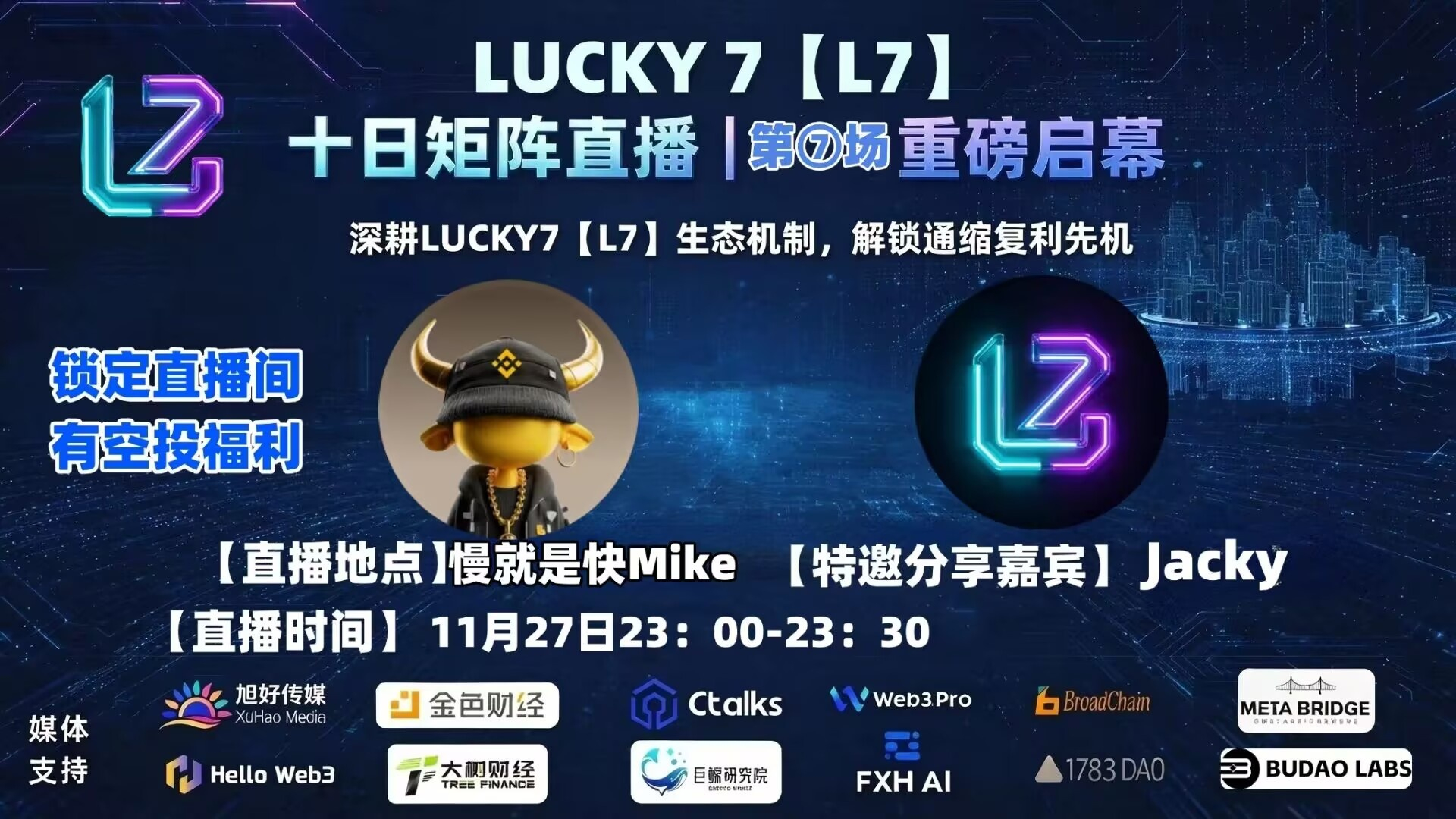
$BTC 📣🔥L7 Ten-Day Matrix Livestream | Session ⑦ Grand Opening✨
💎【This Livestream】 Slow Is Fast Mike's Binance Square livestream @慢就是快Mike
👦🏻【Special Guest Speaker】 Veteran community evangelist 【Jacky】
⏰Livestream Time: November 27, 23:00–23:30
#币安广场 #L7
💎【This Livestream】 Slow Is Fast Mike's Binance Square livestream @慢就是快Mike
👦🏻【Special Guest Speaker】 Veteran community evangelist 【Jacky】
⏰Livestream Time: November 27, 23:00–23:30
#币安广场 #L7

Bruce 富人
·
--
Bullish$BTC
$ETH
#EvolveAtBinanceBlockchainWeek
#CorePCEBeatLiftsFedHikeOdds
$ETH
#EvolveAtBinanceBlockchainWeek
#CorePCEBeatLiftsFedHikeOdds



心月势不可挡
·
--
With a steady heart, you can weather the ups and downs.
Wait patiently for the flowers to bloom, and opportunity will come.
Wait patiently for the flowers to bloom, and opportunity will come.


S U L E M A N 特币
·
--
Bullish🎁 LINEA TOKEN GIVEAWAY IS HERE! 🚀
A special giveaway for the community!
🔥 6,000 LINEA Tokens
👥 5,000 Lucky Participants
Don't miss this opportunity! Head over and claim your share of the LINEA token giveaway.
The sooner you participate, the better. Let's go, LINEA community! 💙
#LINEA #Giveaway #Crypto #AirdropAlert #Suleman特币
$BIGTIME $LINEA $ZEC

加倉妹
·
--
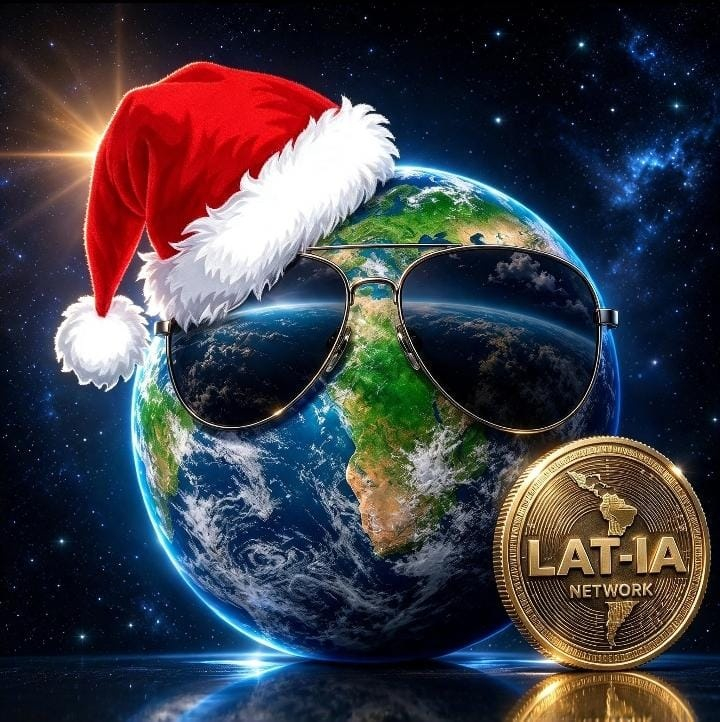
Keep working diligently and you’ll eventually succeed; when your wish comes true, your heart will be filled with joy. The harder you work, the luckier you get! 🍀

Geocrypto2026
·
--
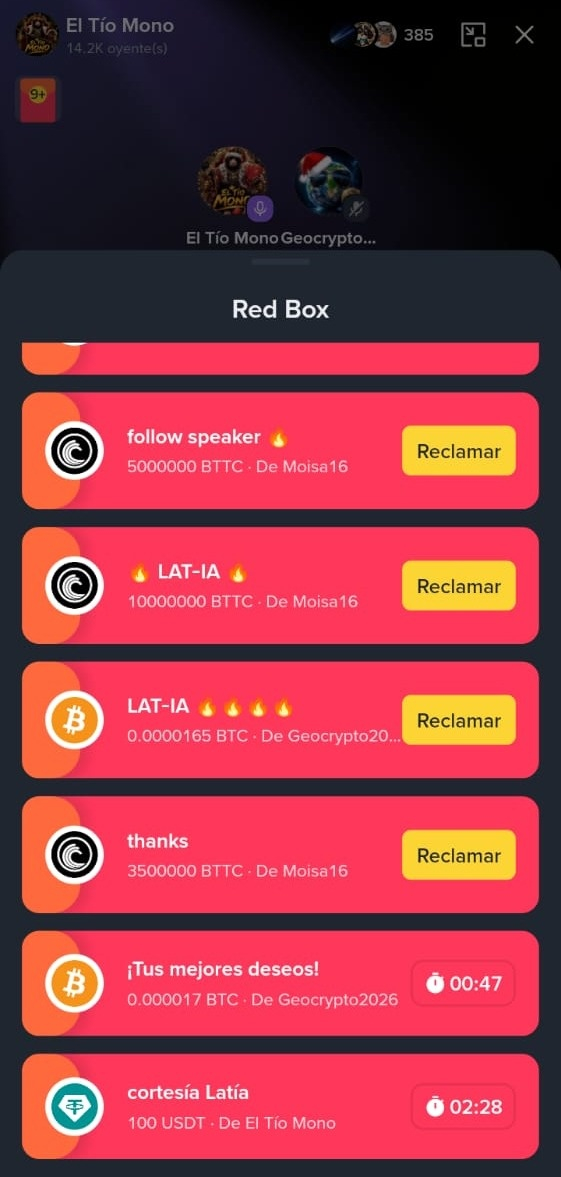
BullishIncredible energy on the live stream with El Tío Mono and the LAT-IA community! 🔥🎁 With BTTC, BTC, and USDT Red Packets courtesy of @El Tío Mono , @Vyz13 , @99PARAGUAYO , @FerDanzigPY , @Cripto_SharkVE , the community is still active, earning rewards live. Have you claimed yours before they run out? 🚀✨ #BinanceSquare #RedBox #CryptoCommunity

@奋斗Hustle1688
is speaking[LIVE] 🎙️ Let's talk about BNB Chain's new L1 blockchain
3.3k listens

@Hawk自由哥
is speaking[LIVE] 🎙️ Crypto market discussion / Newcomer Q&A / Building Binance Square together 🔥
7.6k listens

王婷-光明社区
·
--
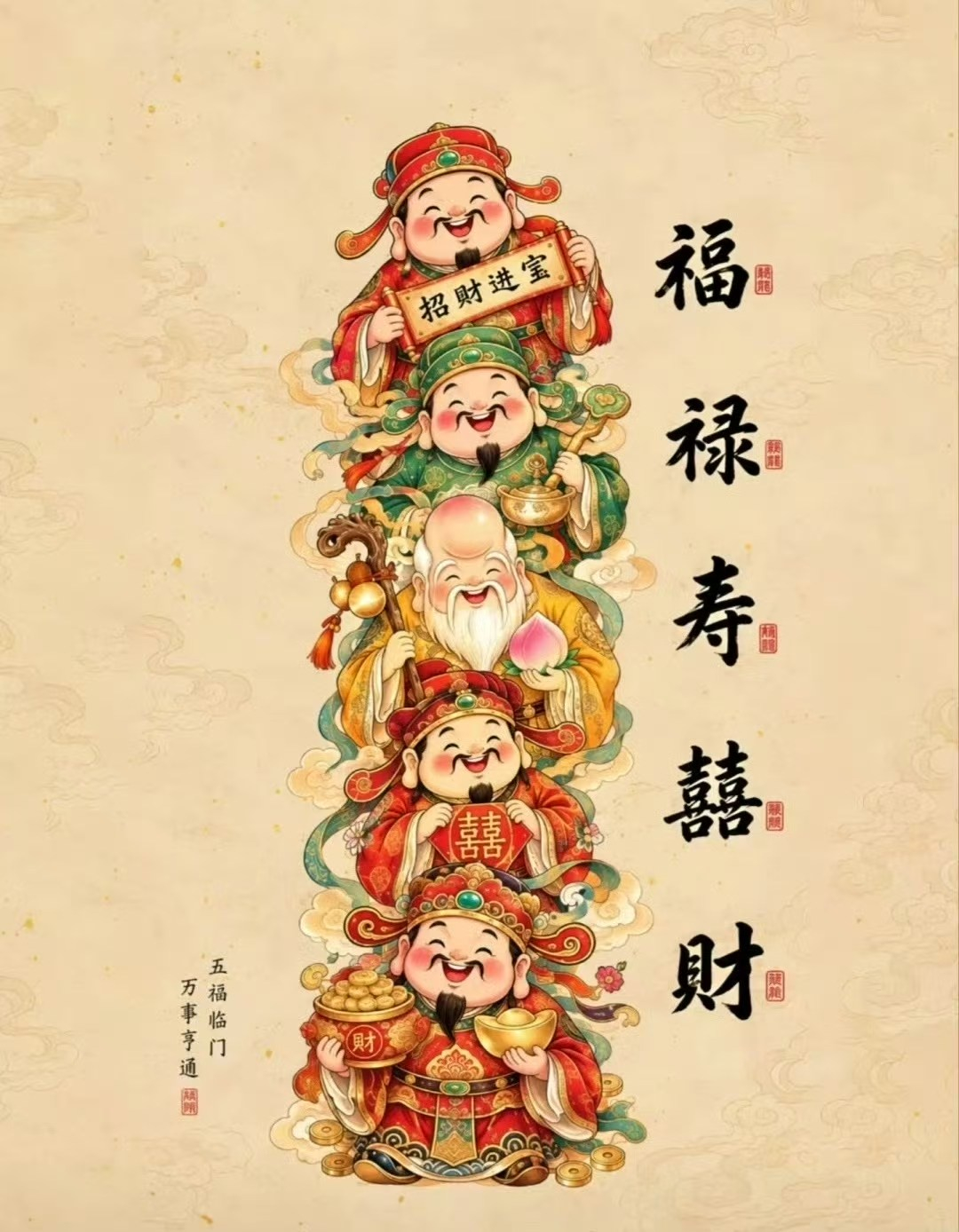
May blessings be with you day and night, prosperity follow your every success, longevity endure, joy stay by your side, and wealth enter your home.#SpaceX太空数据中心获批,AI芯片需求迎来新增长点? $BNB

HF火烽
·
--
Bullish🧧🧧🎁🎁 Wishing everyone profits every day $BTC


逐浪字母哥
·
--
🎁🎁
The soul has already escaped, but performance is never late$BTC
#感恩节美股休市,市场休整后能否迎来反弹?
The soul has already escaped, but performance is never late$BTC
#感恩节美股休市,市场休整后能否迎来反弹?

蒋雅琪1368
·
--
Many people are discussing whether BTC has bottomed out, so here are my observations on the charts.
As the broader market came under pressure, BTC retested its lows and showed relatively strong resilience. This time, it touched a key support zone from earlier on; whether it can stabilize remains to be seen.
As the broader market came under pressure, BTC retested its lows and showed relatively strong resilience. This time, it touched a key support zone from earlier on; whether it can stabilize remains to be seen.


正乾--四条2
·
--
Today's news is absolutely explosive 🔥
Everyone:
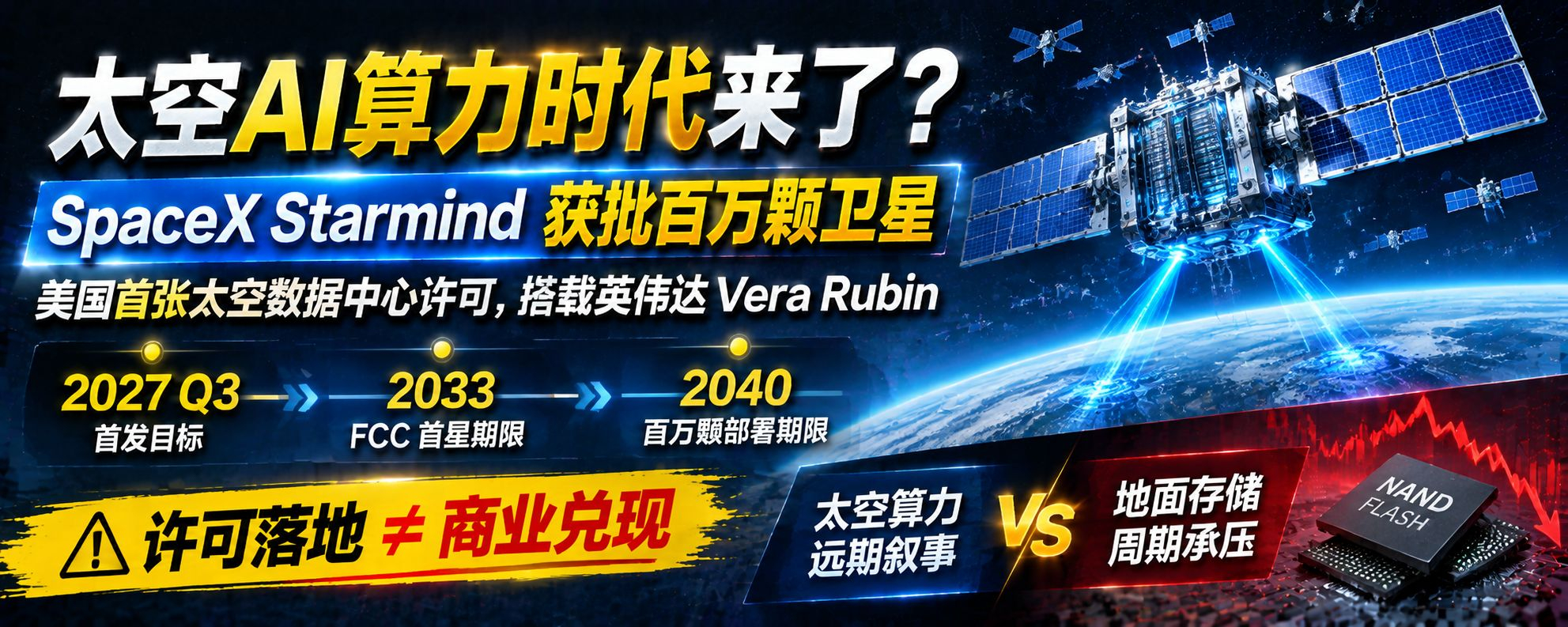
On November 25, the FCC approved SpaceX's Starmind! The first U.S. license for a space-based AI data center, with a cap of 1 million computing satellites equipped with NVIDIA Vera Rubin chips. Each satellite would deliver 120 kW, for a theoretical total of 120 GW of computing power at full capacity. While ground-based data centers are still constrained by power, cooling, and land, Musk is already targeting space-based solar-powered computing.
⚠️But be sure to pay attention to the timeline—don't get swept up in the grand vision: The FCC's compliance deadlines require the first satellite by 2033 at the latest, 100,000 satellites by 2035, and the full 1 million only by 2040. SpaceX's own targets are a first batch of launches in Q3 2027 and scaling up in 2028. The two timelines differ by a full six years. On the day of the news, SPCX fell more than 9% at one point during trading, recovering to just +1.3% by the close. It remains below its IPO price of 135. The upside is a long-term story; near-term profits simply can't be realized.
Meanwhile, on the same day, TrendForce lowered its outlook: NAND flash is expected to enter a downturn in 2027, putting pressure on memory demand. On one side is the vast potential of space-based computing; on the other, the terrestrial memory industry is already tapping the brakes.
And there's macro risk overhead: The probability of a rate hike on 12.8-9 is 95.8%, and Jensen Huang is also due to face three consecutive congressional hearings from 12.1-3. Market risk appetite is likely to shrink, and this kind of long-term narrative can easily be pushed to the back burner by investors.
The million-dollar question: Are you planning to wait until the first satellite actually reaches orbit before making a move, or are you betting now on expectations for 2027? Is this the next computing revolution, or just another trillion-dollar pipe dream?
欢迎加入正乾研习社
#AI算力 #Space #Starmind #太空算力

Node知行
·
--
BullishKeep large amounts of assets in a cold wallet; leave only trading funds on the exchange.🎁🎁🎁🎁🎁🎁🎁🎁🎁🎁🎁
· Don’t click unfamiliar links or authorize unknown contracts, and don’t store your seed phrase on your phone.
· One theft can wipe out all the experience you’ve gained.
· Don’t click unfamiliar links or authorize unknown contracts, and don’t store your seed phrase on your phone.
· One theft can wipe out all the experience you’ve gained.


老牛币了
·
--
Follow me to claim a red envelope

飞舞飞扬 Elaine
·
--
🧧🎁 After Thanksgiving, let’s surprise our friends in the crypto world!
In the world of Crypto, some have experienced the highs, while others are weathering the lows.
The market goes up and down, but everyone has their own story. ❤️
Today, I’m not making any market predictions—I just want to ask:
Since entering the crypto world, what’s been your biggest takeaway?
Was it earning your first big payday, learning something new, or meeting a group of like-minded friends?
🧧 I’ve prepared a few little red envelopes to thank everyone who’s stopped by!
Follow along and let’s share our stories from the world of Crypto. 🌱
#币安区块链周进化由你

Log in to explore more content