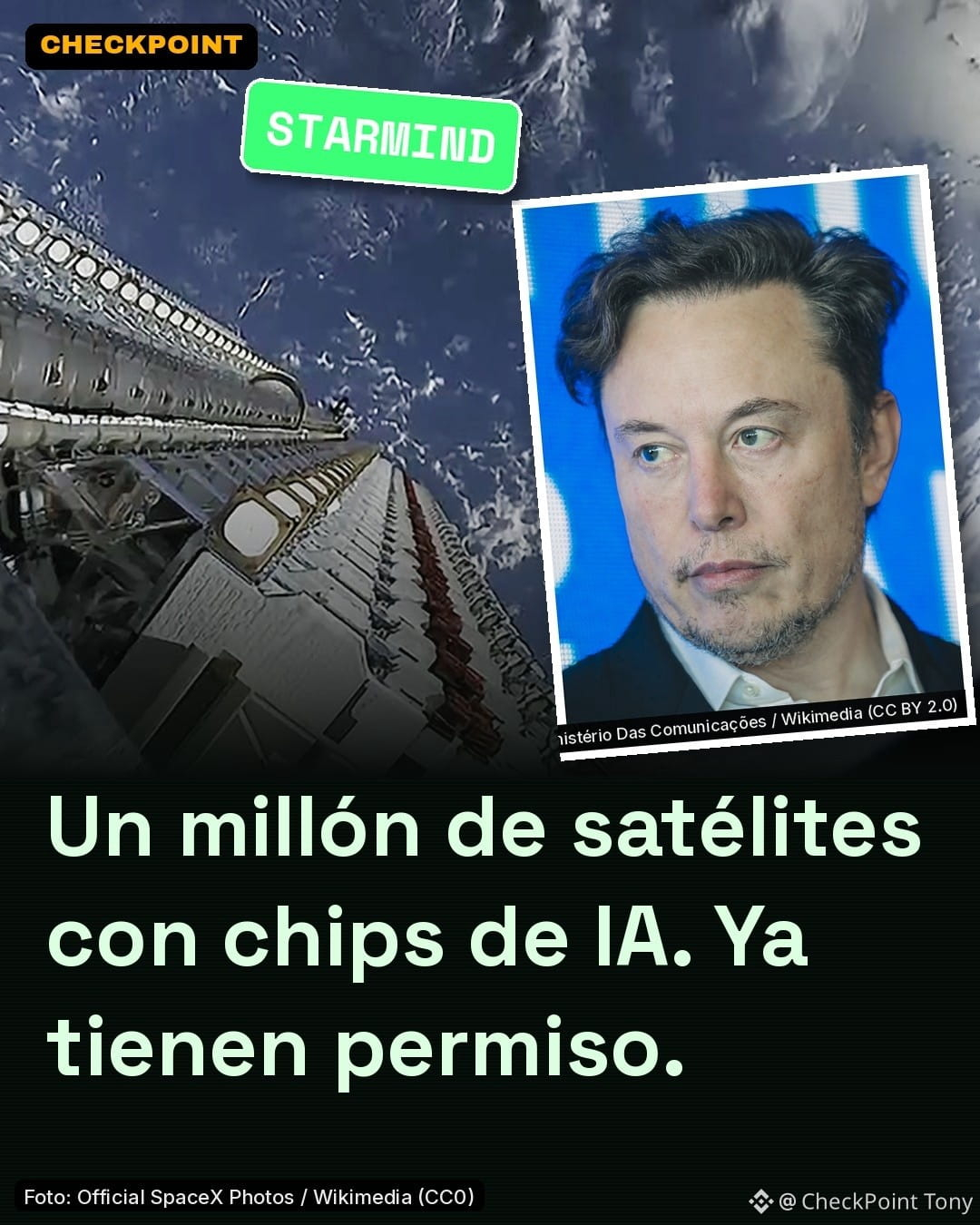
A million satellites with AI chips orbiting over your head. Sounds like science fiction, but since Wednesday, it has had official approval. 🛰️
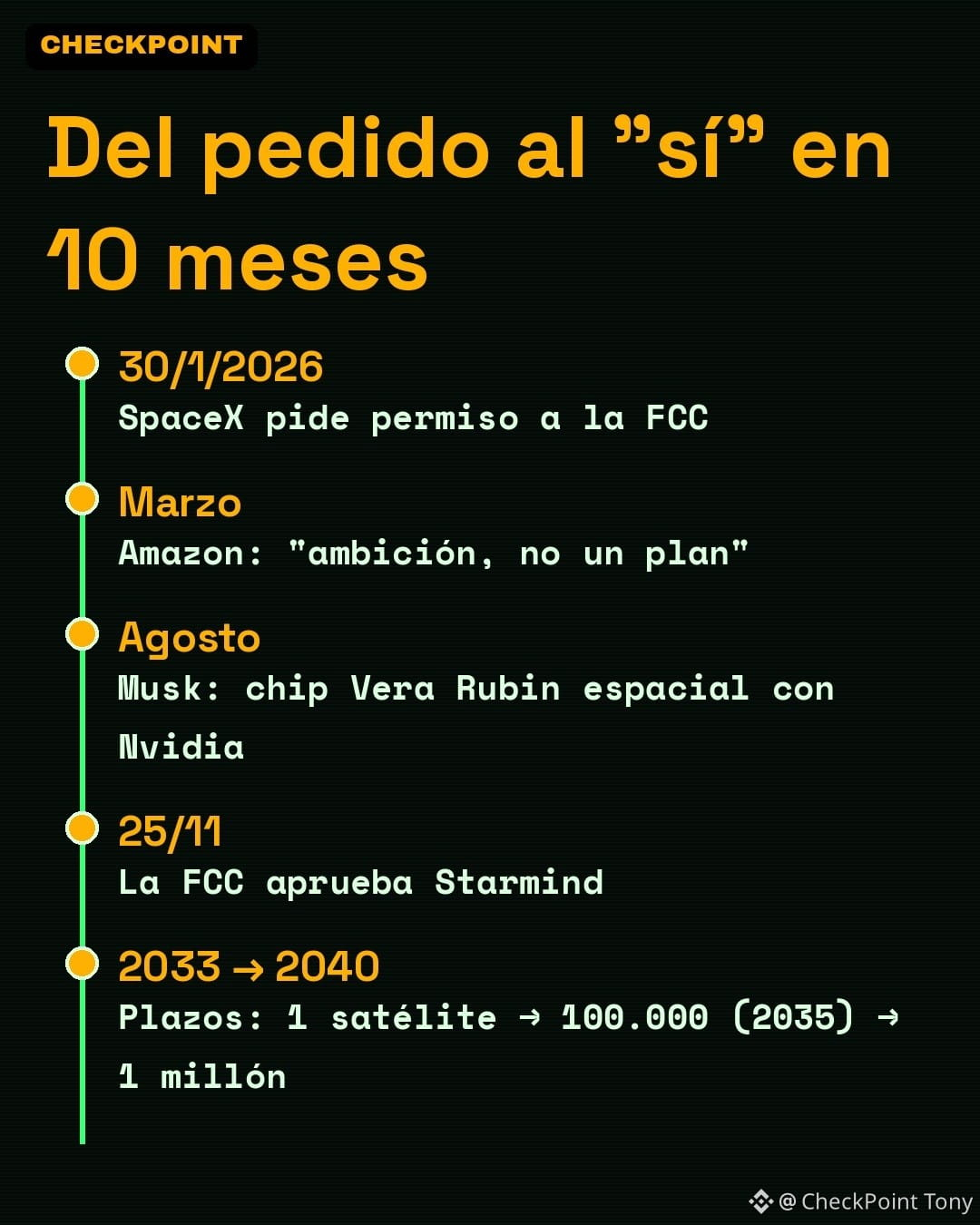
On Nov. 25, in the middle of Thanksgiving week, the FCC (the U.S. regulator) approved “Starmind”: up to 1,000,000 SpaceX satellites that would serve as solar-powered data centers in orbit. It’s the first authorization of its kind in the U.S. At full scale, it would multiply the number of satellites currently in orbit by about 50 (Ars Technica).
📅 The fine print:
▪️ First satellite operating before Nov. 25, 2033
▪️ 100,000 before 2035, 500,000 before 2038, and one million before 2040
🤖 What about the chips? In August, Musk said SpaceX had designed a space version of the Vera Rubin system with Nvidia, to launch in late 2027. Each satellite would carry an average of 175 kW of computing power: 175 GW with the full million (Via Satellite). That’s a licensing ceiling, not a funded plan.
🤫 What almost nobody is talking about:
▪️ In its IPO prospectus, SpaceX warned that orbital computing hasn’t been proven “at commercial scale, or at all.”
▪️ It still hasn’t announced any customers for it.
▪️ Wood Mackenzie: 1 GW in orbit would cost about US$170,000 million, more than 3 times as much as on Earth.
▪️ In the third quarter, it invested US$19,600 million, more than its revenue (US$14,600 million).
⚔️ Amazon (“an ambition, not a plan”), Viasat, and the American Astronomical Society opposed it. The FCC rejected all three requests.
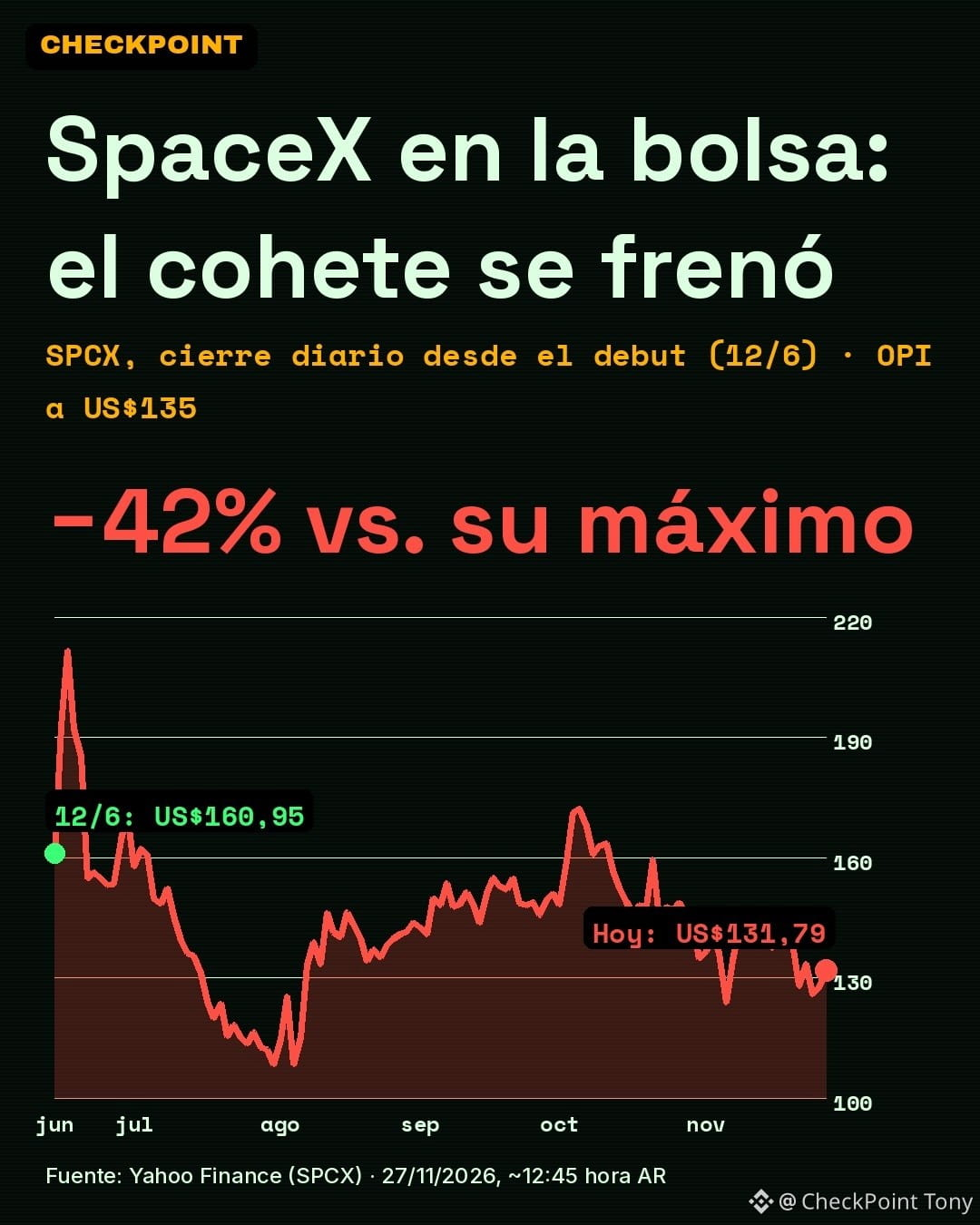
📉 The stock: SPCX fell about 9% on Wednesday and closed up 1.3% (US$127.44). Today, with Wall Street on shortened hours for Black Friday, it’s at US$131.79 (+3.4%): below its offering price (US$135) and about 42% below its high (Yahoo Finance, around 12:45 AR). $NVDA US$147.53 (−1.2%). $BTC US$60,000 (Binance).
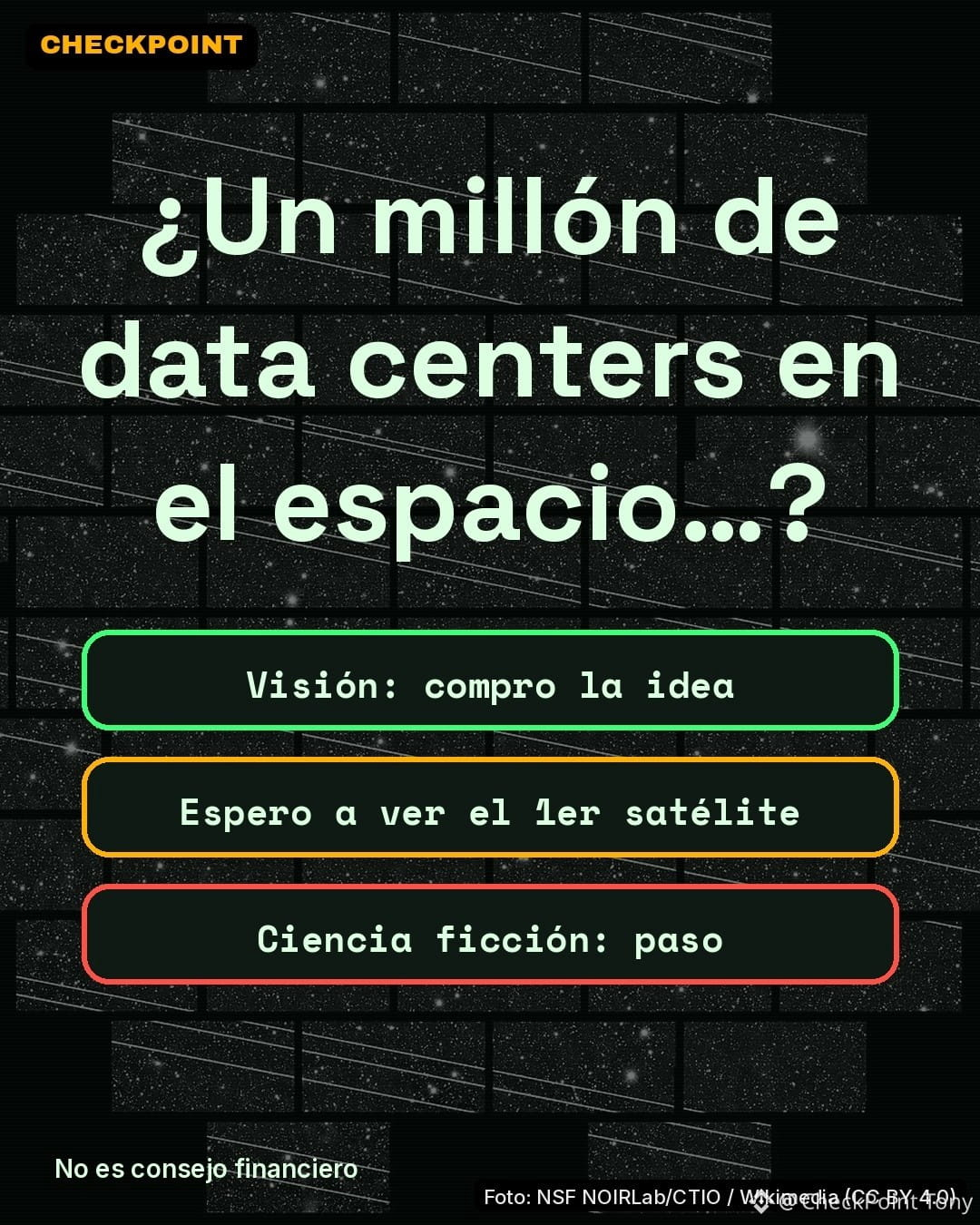
The next chip frenzy, or a license to dream about a deadline of 2040? Would you put money into something today that won’t even get started until 2027? 👇
Sources: FCC, CNBC, AP, Ars Technica, Reuters, Yahoo Finance, Via Satellite, 24/7 Wall St, Binance.
#SpaceX #CouldSpaceX’sOrbitalDataCentersBoostAIChipDemand?
This is not financial advice.