

道AFI469
每天下午2点直播 ‖web3财富专区 ‖一级日调研‖优质标的发掘
1.3K+ Following
13.8K+ Followers
11.0K+ Liked
Posts
All
Quotes
Live
PINNED
PINNED

@可可529
is speaking[LIVE] 🎙️ Why Chasing Rallies and Selling on Dips Always Loses Money: Let’s Discuss the Underlying Logic
7.5k listens

大丹7878
·
--
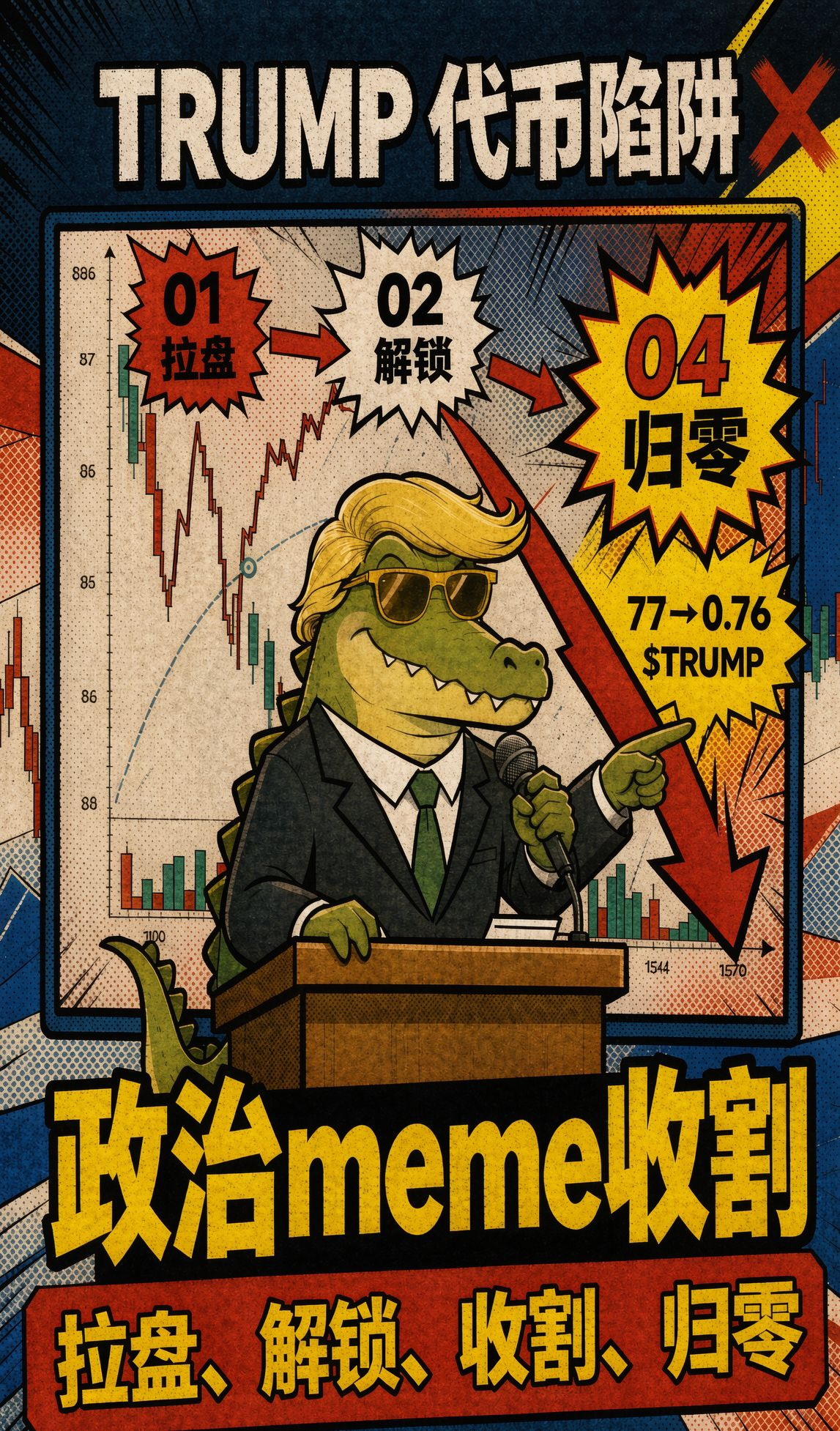
BearishWhoever touches the cake gets dealt with? The Trump family flipped their own table 🍰💥
WLFI halved in three hours; the reserve wallet dumped ETH and realized a $19 million loss
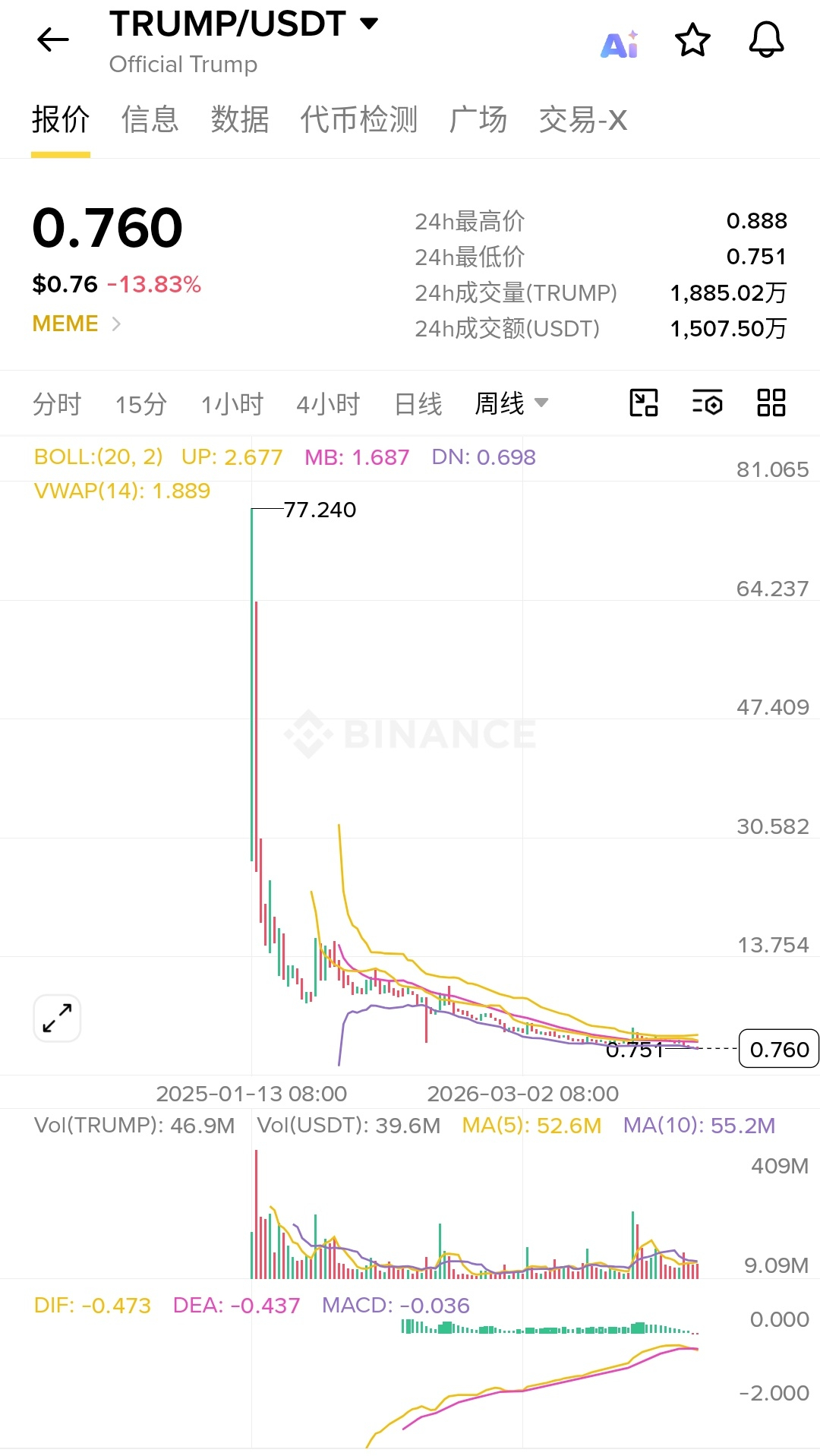
TRUMP went from 77 to 0.76: pump → unlock → cash out → zero
Even shady market makers are offering a cigarette: “Bro, you’re more professional than me.”
Who’s still holding? Sound off below 👇
$TRUMP $WLFI #狗庄
#BinanceSquareTalks

Fabi_4043
·
--
Have a great Friday 🥰🥰
Follow, like, and share 🧧🧧
$LUNC
#CanMarketsReboundAfterThanksgiving?
Follow, like, and share 🧧🧧
$LUNC
#CanMarketsReboundAfterThanksgiving?


磊哥1688
·
--
If you’re truly confident that you have talent and ability, then all the more reason to channel that drive into making something of yourself. In life, you owe it to yourself to see the strongest version of you at least once!
If you truly believe you have talent and capability, you ought to hold onto this drive and build yourself up. You owe it to yourself to meet the strongest version of who you can be.
If you truly believe you have talent and capability, you ought to hold onto this drive and build yourself up. You owe it to yourself to meet the strongest version of who you can be.


Ahli Hidaya
·
--
Bullish🔥 $19,000 to $376,900 (+1,984%) on a Single Nvidia Options Play?
After Nvidia shares tumbled 39% in November, a retail trader stepped in with a $19,000 bet on Nvidia call options right before the weekend.
When the board reinstated Jensen Huang as CEO on Monday, NVDA surged roughly 31% to around $165.05—turning that position into a $376,900 profit (+1,984%) at the open, per Bloomberg.
Key Market Takeaways:
Massive Leverage: Options amplified a sharp rebound move far beyond what spot shares alone could deliver.
Whale Action Too: Bloomberg also reported a large trader locking in $23.8 million in profit by selling half of a January $160 call position into the spike.
Volatility Cuts Both Ways: Even after the pop, hedging picked up quickly and NVDA pulled back on Tuesday—a reminder that headline catalysts bring extreme swings and liquidation/expiry risk.
Whether you trade stocks, options, or crypto perps—catching the catalyst is one thing, managing risk in violent volatility is another.
What’s your take on this move: pure timing or crazy risk? 👇
#NVDA #Nvidia #OptionsTrading #Trading #MarketNews #CryptoMarket #BinanceSquare$NVDAB $BTC #dyor



Bilverse
·
--
🚨 BNB RED PACKET GIVEAWAY! 🧧💛
💰 The #BilverseArmy deserves a WIN 🔥
I'm giving away a portion of $BNB to EVERYONE who participates. Yes, you read that right — EVERYONE. 👀💸
Here's how to join:
👇 COMMENT “BNB” 👇
That's it, drop “BNB” in the comments and get ready to receive your share of the red packet. 🧧
No one gets left behind. Let's spread the BNB love. ❤️
🔥 More comments, more hype, more reasons to celebrate.
Let's make this HUGE!
YOUR FRIENDLY CRYPTO GUY, #Bilverse 🚀
#BNB #CryptoGiveaway #CryptoCommunity


Bilawal Ashiq
·
--
🧧🧧Clam Repost Like SOL 🎁 🎁 Gift
$SOL
$SOL

Quoted content has been removed
Quoted content has been removed

NAJAF_999
·
--
‼️$DOGE 🧧 Reward is here ‼️
I’m sharing $DOGE 🧧 rewards with the community as a Bigger thank-you.
✨ Just claim your reward and enjoy! ✨
Claim it. Get rewarded
@DOGE_ $DOGE #DOGE
I’m sharing $DOGE 🧧 rewards with the community as a Bigger thank-you.
✨ Just claim your reward and enjoy! ✨
Claim it. Get rewarded
@DOGE_ $DOGE #DOGE


HF火烽
·
--
Bullish🧧🧧🎁🎁 Wishing everyone profits every day $BTC

Quoted content has been removed

技委书记
·
--
🧧🌹🎁《Bullish on PEPE—100 PEPE for Everyone》🧧🌹🎁
🐸 Why am I still bullish on PEPE among so many meme coins?
In the meme coin market, short-term hype may attract attention, but the projects that stay in the spotlight over the long term are often those with strong community consensus and cultural influence.
And PEPE is one of the meme projects I’ve been following closely.
I’m bullish on PEPE for three main reasons:
🔥 First: Strong community consensus
PEPE has built a huge community and strong market recognition. For meme coins, community engagement and user consensus are important factors in maintaining long-term interest.


Wendy小幸运
·
--
[Replay] 🎙️ Build Binance Square Together
02 h 06 m 44 s · 960 listens


Nayeem 承认我
·
--
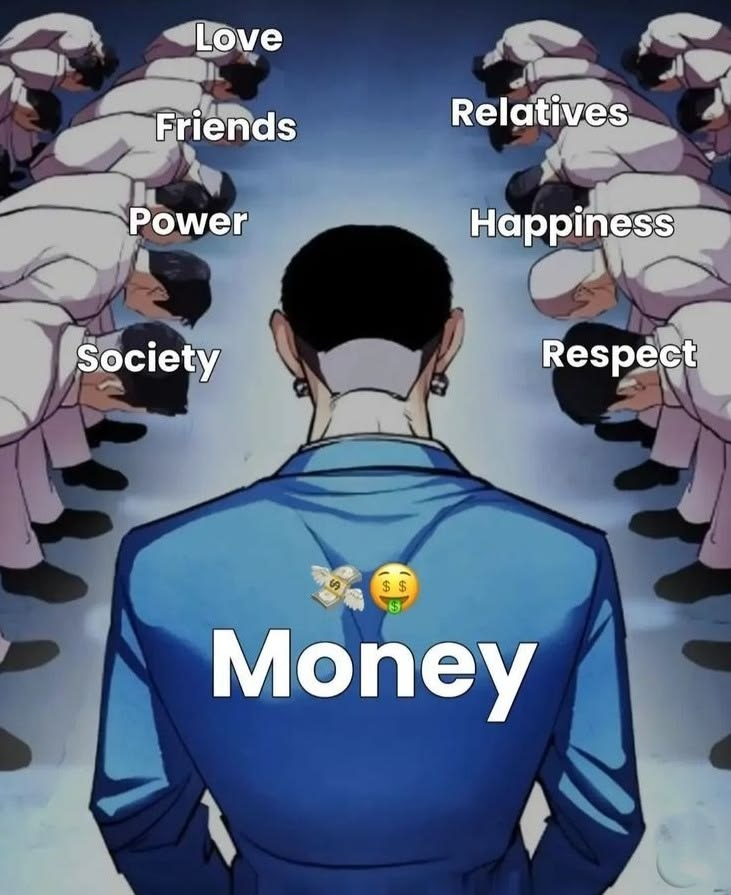
To survive in this world, everyone needs money; in this world, everyone bows down to money—the world is a slave to money.💸💸💸


MrSattarking
·
--
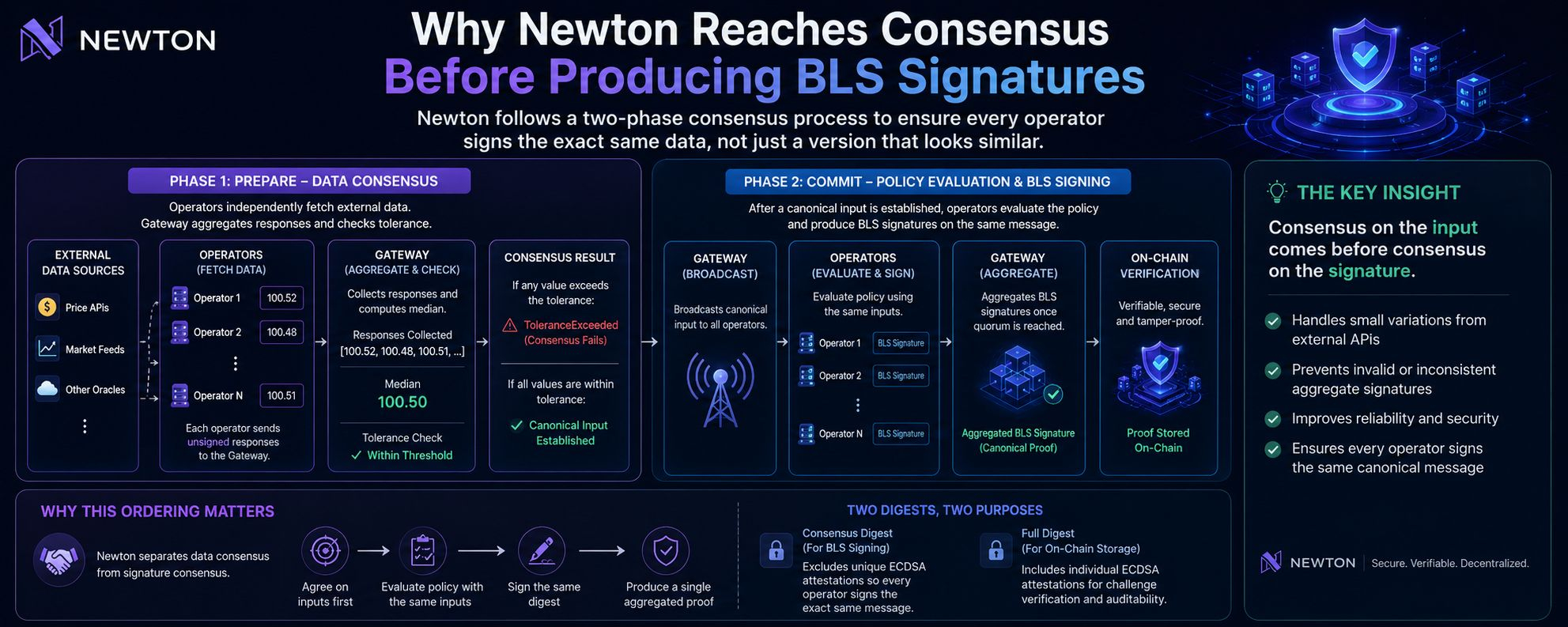
An Engineering Observation: Why Newton Reaches Consensus Before Producing BLS Signatures
While reading Newton Protocol's Consensus & Security documentation, one implementation detail stood out. Many distributed systems focus on how signatures are verified, but Newton places equal importance on ensuring every operator signs the same data in the first place.
The documentation describes a two-phase consensus process consisting of a Prepare phase followed by a Commit phase.
During the Prepare phase, operators do not immediately evaluate policies or produce BLS signatures. Instead, each operator independently fetches external policy data, such as numeric values returned by PolicyData oracles, and sends unsigned responses back to the Gateway.
At this stage, no consensus proof exists.
Instead of allowing each operator to continue with slightly different inputs, the Gateway computes the median value for each numeric field and verifies that every operator's response remains within the configured tolerance. If any value exceeds the allowed tolerance, consensus fails with a ToleranceExceeded error rather than silently excluding the outlier.
Only after a canonical set of input values has been established does the protocol enter the Commit phase.
The Gateway broadcasts the consensus data back to operators. Because every operator now evaluates the policy using the same normalized inputs, they produce BLS signatures over an identical message. The Gateway then aggregates those signatures once quorum has been reached.
The documentation also explains why this sequence matters.
Newton uses two different digest types. Operators generate individual ECDSA attestations that naturally differ between participants, but BLS aggregation requires every signer to sign exactly the same message. To satisfy that requirement, operators BLS-sign a consensus digest that excludes the unique attestations, while a separate full digest containing those attestations is stored on-chain for challenge verification.
From an engineering perspective, this ordering reduces disagreement before cryptographic consensus even begins.
Rather than asking operators to sign first and reconcile differences later, Newton first standardizes the evaluation inputs, then performs policy evaluation, and only afterward produces aggregate BLS signatures.
This approach separates data consensus from signature consensus, making the final proof depend on a shared view of external data instead of independent interpretations of it.
The result is a workflow where consensus is built in stages. Operators first agree on the inputs, then evaluate the policy, then sign the same digest, and finally produce a single aggregated proof for on-chain verification.
That sequencing is one of the more interesting engineering decisions documented in Newton Protocol's Consensus & Security design.
Question for builders: When external data comes from multiple independent sources, is it better to standardize the inputs before policy evaluation, or should each operator evaluate independently and let consensus emerge only at the signature layer?@NewtonProtocol #Newt $NEWT
Log in to explore more content