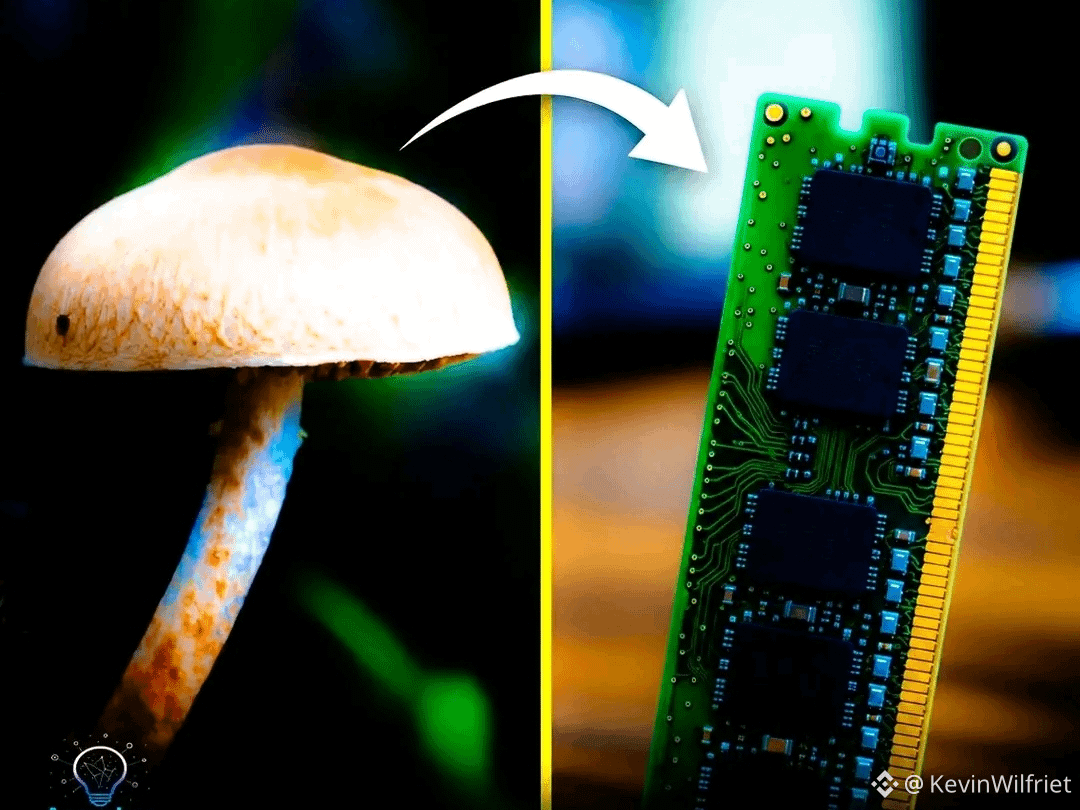
Researchers at Ohio State University turned common shiitake mushrooms into a working computer memory device.
How? They used the *mycelium*, the root-like network under the mushroom. Mycelium naturally carries tiny electrical signals, a bit like neurons in a brain.
They grew shiitake and button mushrooms, dried them to preserve them, connected them to circuits, and applied different voltages. The fungi behaved like *memristors* — electronic components that “remember” their last electrical state.
When tested as RAM, the mushroom memristor switched between states up to *5,850 times per second, with about 90% accuracy*. When performance dropped at higher frequencies, adding more mushrooms fixed it, just like adding more neurons helps a brain.
Why does this matter? Traditional chips need rare metals, huge factories, and lots of energy. Mushrooms can be grown at room temperature, use almost no power on standby, and are biodegradable and compostable.
But let’s be cold: this is still a lab prototype. It’s slow, large, and far from replacing your 16GB DDR5. It points to a future of low-cost, eco-friendly, brain-inspired computing for sensors, wearables, and space — not a mushroom gaming PC.
Source:
Ohio State University / PLOS ONE (2025) — LaRocco et al., “Sustainable memristors from shiitake mycelium for high-frequency bioelectronics”
https://phys.org/news/2025-10-mushrooms-memory-chips-future.html