Don’t be too quick to interpret this as “Kenya is introducing a new tax on crypto.” What the tax authority has put forward this time are two draft reporting rules that are still open for public comment.
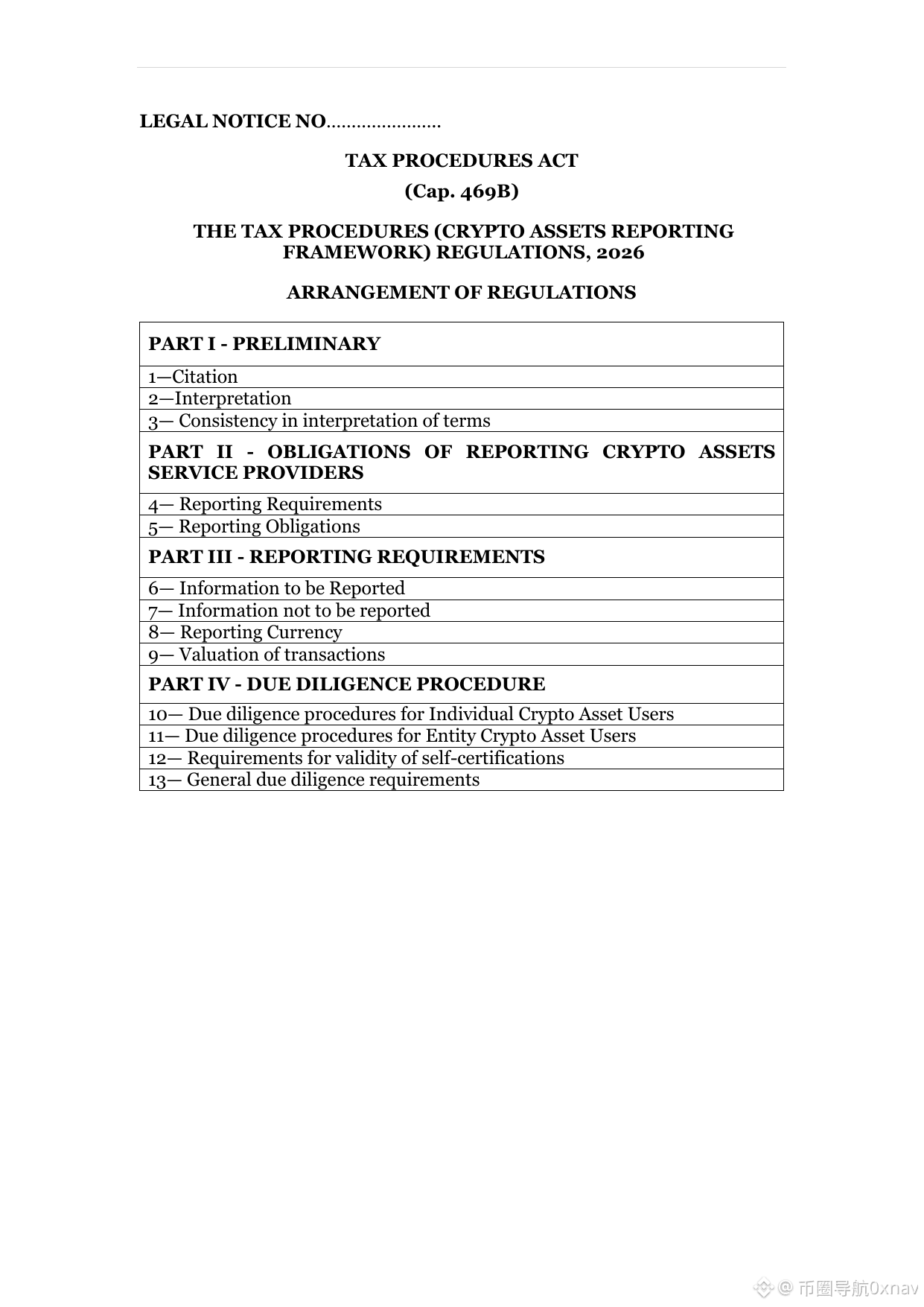
On November 25, the Kenya Revenue Authority (KRA) issued a notice stating that, on behalf of the Cabinet Secretary for the National Treasury and in accordance with Chapter 2A of the Statutory Instruments Act, the Commissioner was inviting public comments on two draft regulations. One is the draft Tax Procedures (Common Reporting Standard) Regulations, 2026, and the other is the draft Tax Procedures (Crypto-Asset Reporting Framework) Regulations, 2026. The drafts are available on the KRA website. Comments must be submitted to the Commissioner by December 8, either by post to P.O. Box 48240-00100, Nairobi, or by email to stakeholder.engagement@kra.go.ke.
The draft that is more directly relevant to ordinary people is the Crypto-Asset Reporting Framework. Here are a few key points 👇
🔹 These are not rules that are already in force. The date after “Made on” at the end of the draft is blank. The signature section bears the name of the Cabinet Secretary for the National Treasury, John Mbadi Ng'ongo, but it has not yet been signed into force. The rules will still need to be finalized after the public-comment period ends.
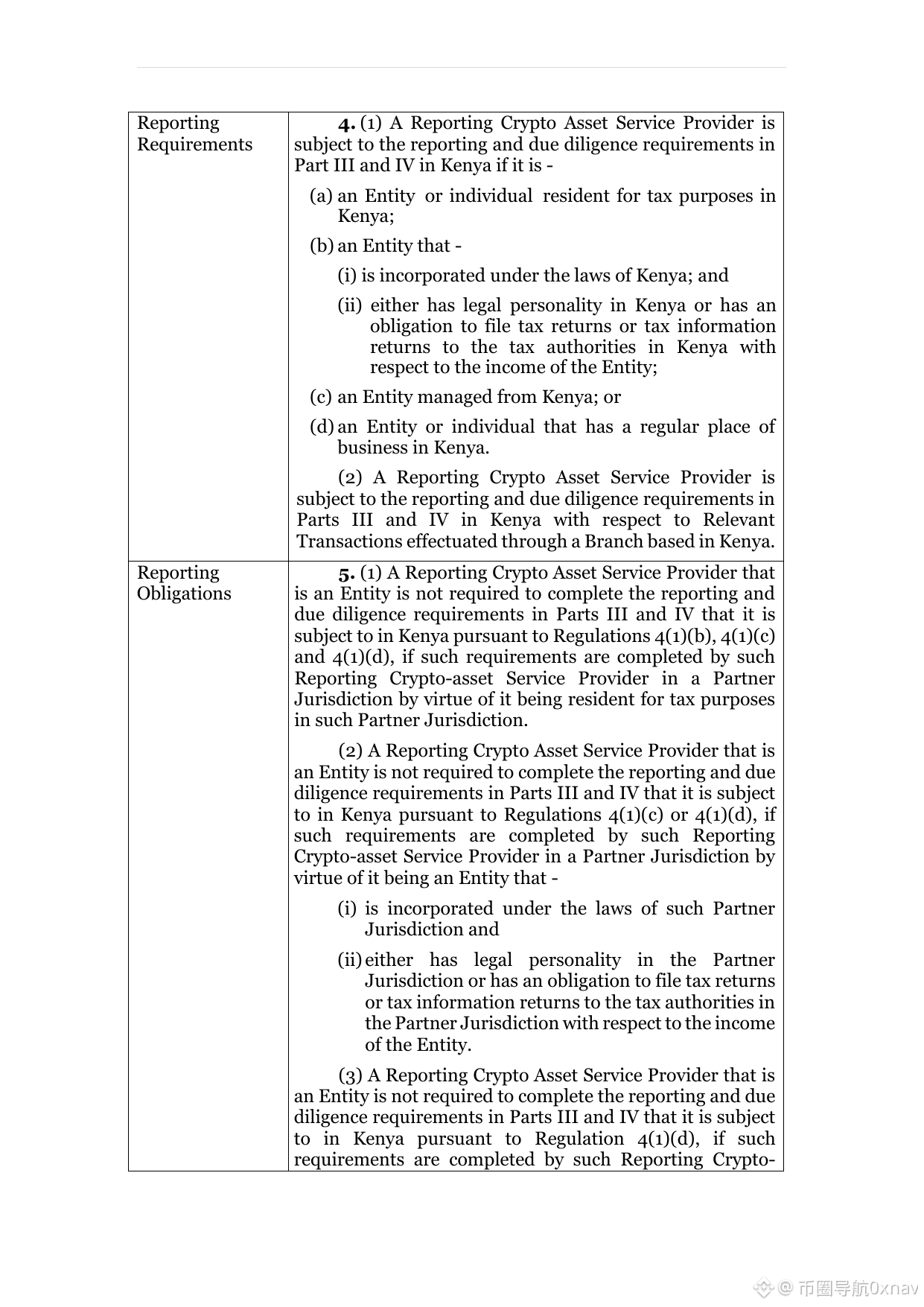
🔹 What has to be reported is information, not a new tax rate. The draft defines a “reporting crypto-asset service provider” as an individual or entity that, as a business, facilitates exchange transactions for customers, whether acting as a counterparty, an intermediary, or providing a trading platform. Only providers with a Kenyan connection must meet the reporting and due diligence obligations in Kenya. This applies if the provider is a Kenyan tax resident; is incorporated in Kenya and has legal personality, or is required to file tax returns in Kenya; is managed from Kenya; has a regular place of business in Kenya; or the relevant transactions are facilitated through a branch located in Kenya. Article 5 sets out circumstances in which duplicate reporting in Kenya may be waived if the provider has already complied with equivalent rules in a “Partner Jurisdiction.”
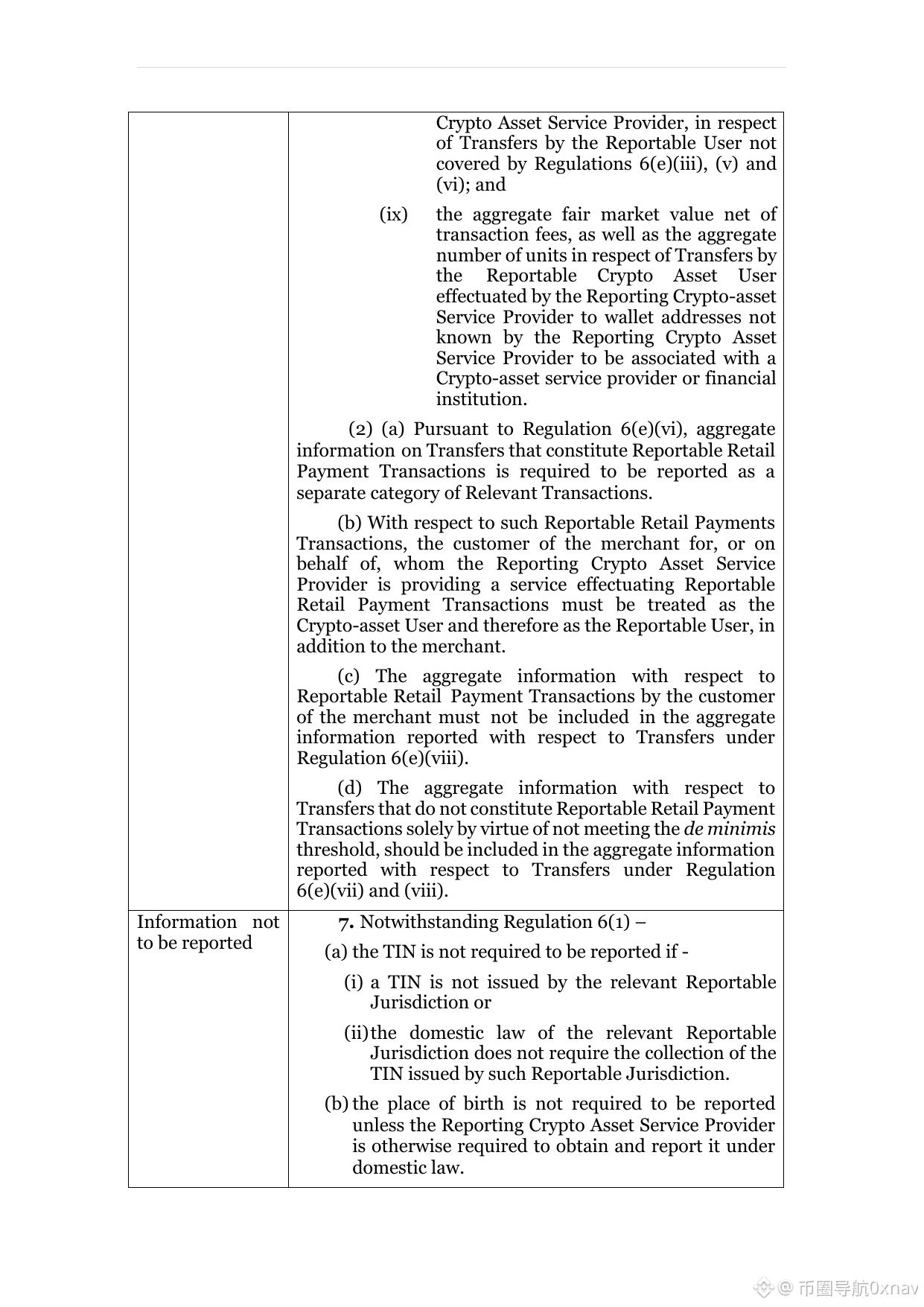
🔹 The scope of relevant transactions is fairly broad. It includes exchanges between relevant crypto-assets and fiat currencies, exchanges between relevant crypto-assets, and transfers of relevant crypto-assets. For each calendar year, service providers must report to the Commissioner of the KRA information about users, including their names, addresses, jurisdictions of tax residence, taxpayer identification numbers, and dates of birth. They must also report annual totals, broken down by asset type, for purchases and sales involving fiat currency, purchases and sales involving other crypto-assets, retail payments, and each type of transfer. One item is listed separately: for transfers to wallet addresses that the service provider does not know to belong to a crypto-asset service provider or financial institution, the provider must report the total fair market value and quantity.
🔹 Paying for things with crypto does not mean every transaction is reported separately. The draft’s “reportable retail payment transaction” means a transfer of more than US$50,000 made using relevant crypto-assets to pay for goods or services, which must be reported as a separate category. Where the conditions are met, both the merchant and the customer acting as the counterparty may be treated as users. Central bank digital currencies, specified electronic money products that meet the definition, and crypto-assets that the service provider has adequately determined cannot be used for payment or investment purposes are not “relevant crypto-assets.”
🔹 Existing and new users have different timelines. For individual or entity users who had an existing relationship with the service provider as of December 31, 2026, the provider must obtain a self-certification within the 12 months beginning January 1, 2027. For new users, the information must be collected when the relationship is established. The self-certification must include the user’s name, address, jurisdiction of tax residence, taxpayer identification number, and date of birth. Relevant documents and data must be retained for at least five years after the end of the reporting period.
So, people in Kenya or using local Kenyan platforms are more likely to encounter identity verification and annual transaction summaries first, rather than a new tax rate suddenly appearing in the draft. The rules are not finalized yet, and comments can be submitted through official channels up to December 8.
#肯尼亚税务局公布加密申报规则草案 #BTC #ETH