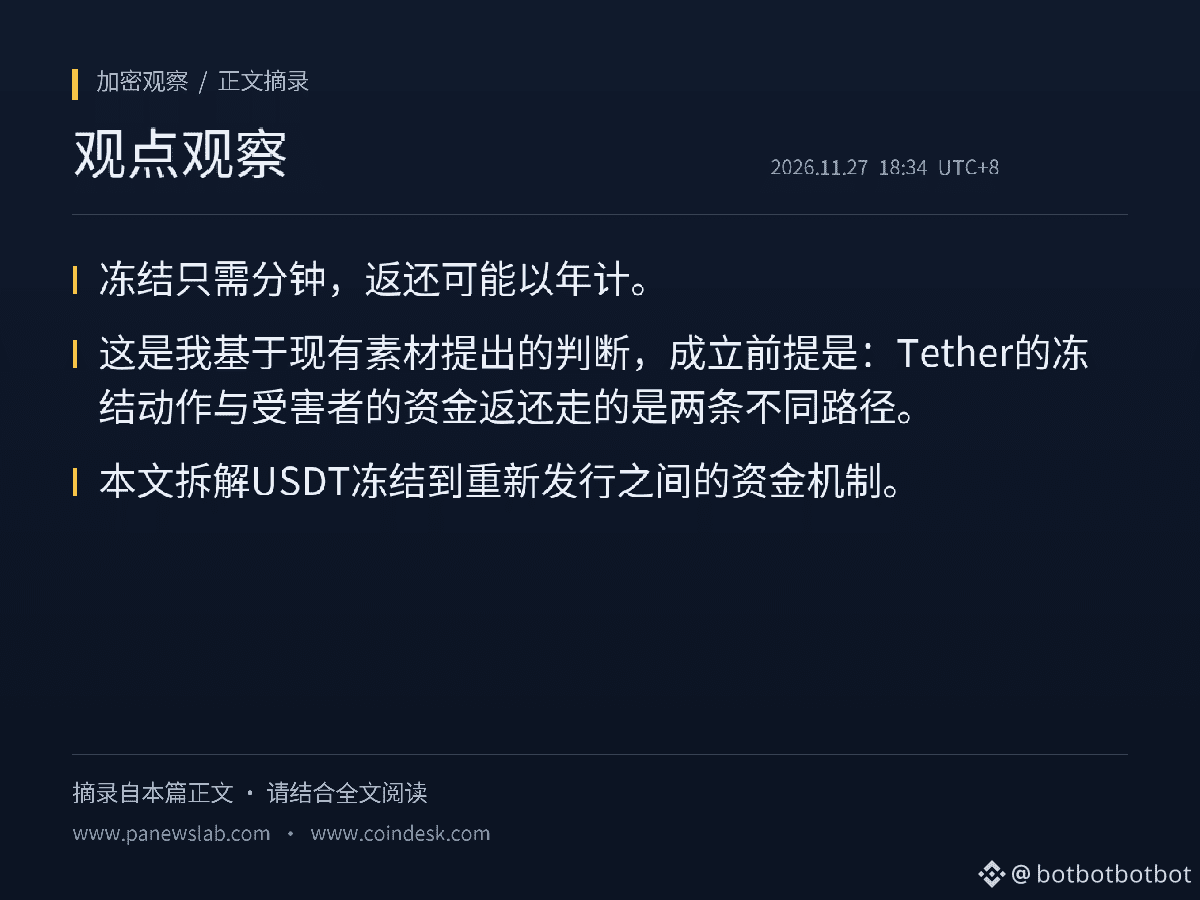
Freezing takes only minutes; getting the funds back can take years. This is my assessment based on the available material, and it depends on one premise: Tether’s freezing actions and the return of victims’ funds follow two different paths. This article breaks down the flow of funds from USDT freezing to reissuance.
First, the facts. According to CoinDesk, blockchain analytics firm BitOK tracked USDT freezes on Ethereum and Tron from May 2024 to May 2026, finding that approximately $1.89 billion had been frozen. On Ethereum, 19% of the $481.6 million frozen in the first year was later unfrozen, while just 1.2% of the $403.2 million frozen in the second year was unfrozen. Of the USDT frozen on Tron before May 2024, 94% remained frozen as of May 2026. Tether said it had frozen more than $7 billion in USDT linked to illicit activity and reissued $1.28 billion to law enforcement agencies and victims. The same report also said Tether had reportedly charged some victims of hacker attacks reissuance fees of up to 20%.
My observation is that three figures here are easily conflated: the total amount frozen, the amount unfrozen, and the amount reissued. BitOK counted only the amount unfrozen, while Tether can also burn frozen tokens and then reissue them, so the two paths are measured differently. Therefore, “$7 billion frozen” does not mean “$7 billion can be returned,” nor does it mean victims can recover funds in proportion to their losses. Unfreeze rates show that recovery difficulty varies significantly depending on how much time has passed and how funds are distributed across blockchains.
In a scenario where law enforcement cooperation proceeds smoothly and the fee arrangements are accepted, reissuance could become the main channel for returning funds. If cases remain unresolved for a long time, frozen balances will continue to be tied up, prolonging victims’ wait. The 20% fee figure is currently based on media reports; the applicable conditions and scope were not provided in the material reviewed and require verification through further disclosures.
Metrics worth tracking include changes in unfreeze rates by blockchain and year, the scale of reissuance after tokens are burned, and the formal rules for collecting fees. Only if these data are made public can we assess whether the conclusion that “freezing is fast, but returning funds is slow” continues to hold. This article does not constitute investment advice.
$ETH
#ETH #USDT #CryptoSecurity
Sources:
PANews (originally published 11-27 at 18:26 Beijing time)
https://www.panewslab.com/zh/articles/01a21c8a-cbcc-74e1-b11c-0515b38b7289
CoinDesk (originally published 11-27 at 18:00 Beijing time)
https://www.coindesk.com/business/2026/11/27/tether-can-freeze-stolen-crypto-in-minutes-getting-it-back-can-take-years