“The Big Short” investor Burry reposted a long article: insuring Oracle’s debt now costs more than 4 times as much per year 🤔
Michael Burry, the real-life figure behind the movie *The Big Short*, reposted a long article called “Mark to Swap” on X these past couple of days, adding just two words: Must read. He didn’t write the article, but its central tool is the one he used to make money in 2008: CDS (credit default swaps).
In a nutshell, a CDS is “default insurance” for a company’s debt. The more expensive the premium, the more worried the market is that the company won’t be able to repay its debt.
Figures in the article (the author’s estimates, not conclusions from a ratings agency):
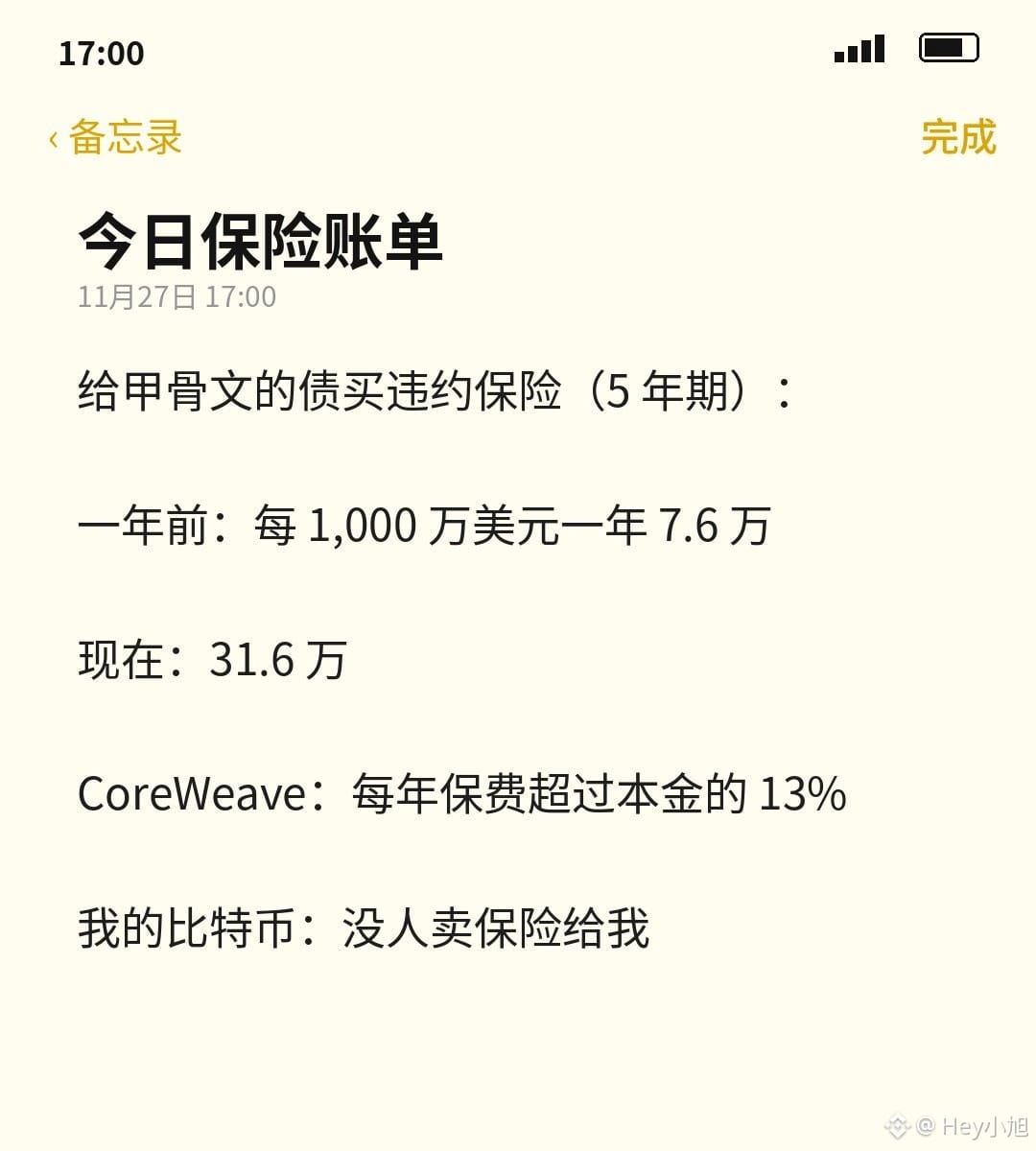
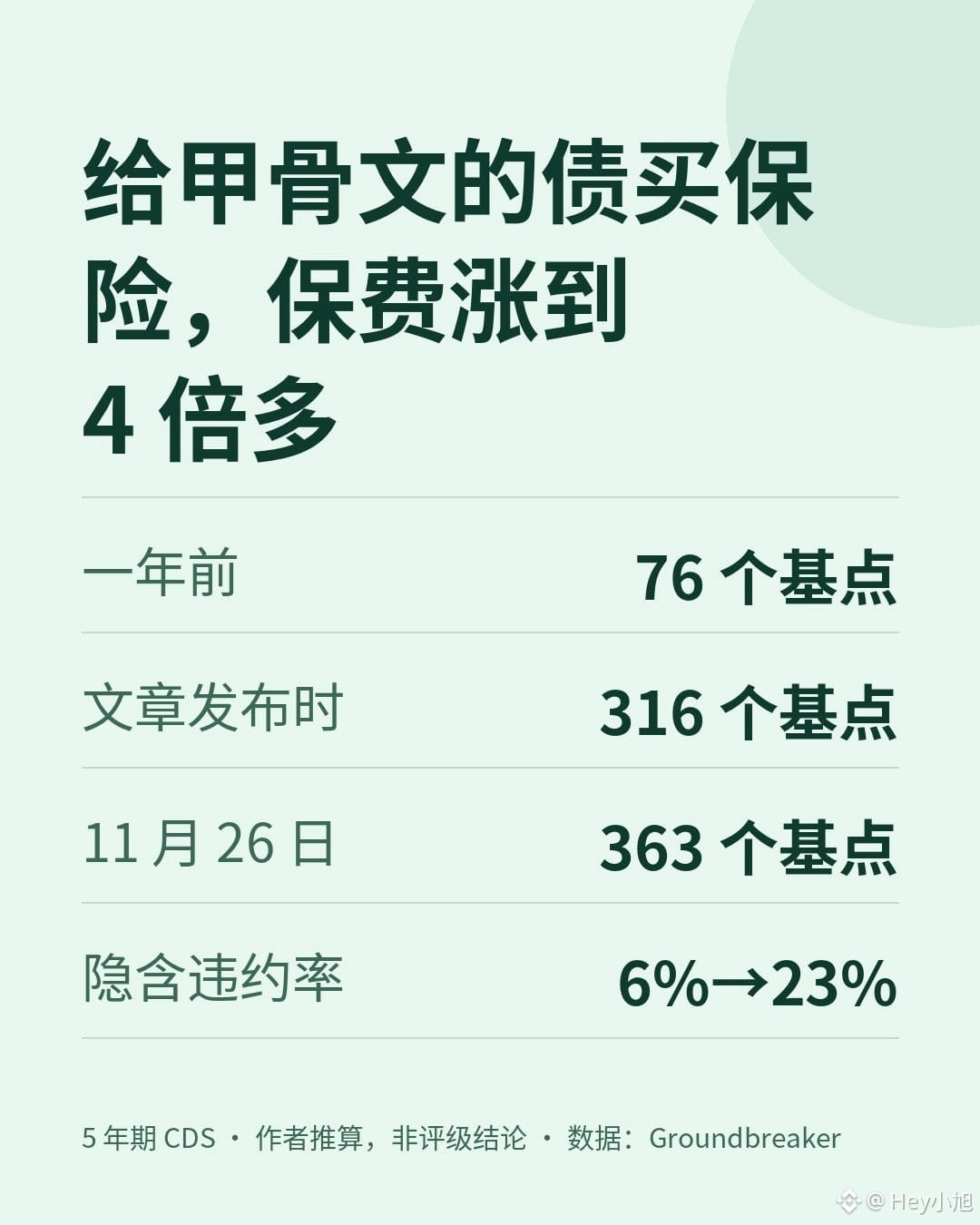
1. Oracle’s 5-year CDS was around 76 basis points a year ago, 316 basis points when the article was published, and rose to 363 in an update on November 26.
2. At 316 basis points, insuring $10 million in debt would cost about $316,000 a year; a year ago, it would have cost just $76,000.
3. Based on this, the article estimates that the market-implied 5-year probability of default rose from about 6% to about 23%.
4. CoreWeave’s CDS reached 1,314 basis points, meaning the annual premium is more than 13% of the principal.
5. Over the same period, the CDS index for investment-grade companies as a whole barely moved: the jitters are confined to AI.
The author’s argument: AI data centers are being built with massive amounts of borrowed money, backed by “credit support” from big tech companies—a lot like Wall Street in the spring of 2007. The counterargument is straightforward too: real demand for AI is not the same as subprime mortgages back then. The author also acknowledges that if CDS spreads for these companies fall sharply and remain low, this thesis doesn’t hold up.
What does this have to do with crypto? Bitcoin and the Nasdaq have been highly correlated this year, and when AI stocks get hit, crypto prices often take a hit too.
Do you think AI will be the next subprime crisis, or is this time different?
Source: Groundbreaker, “Mark to Swap”; TechNews
#美股 #AI #CDS