
#Nasdaq100FiveDayAvgIntradayVolatilityHits3.8%
What does an average intraday volatility of 3.8% in the Nasdaq 100 mean?
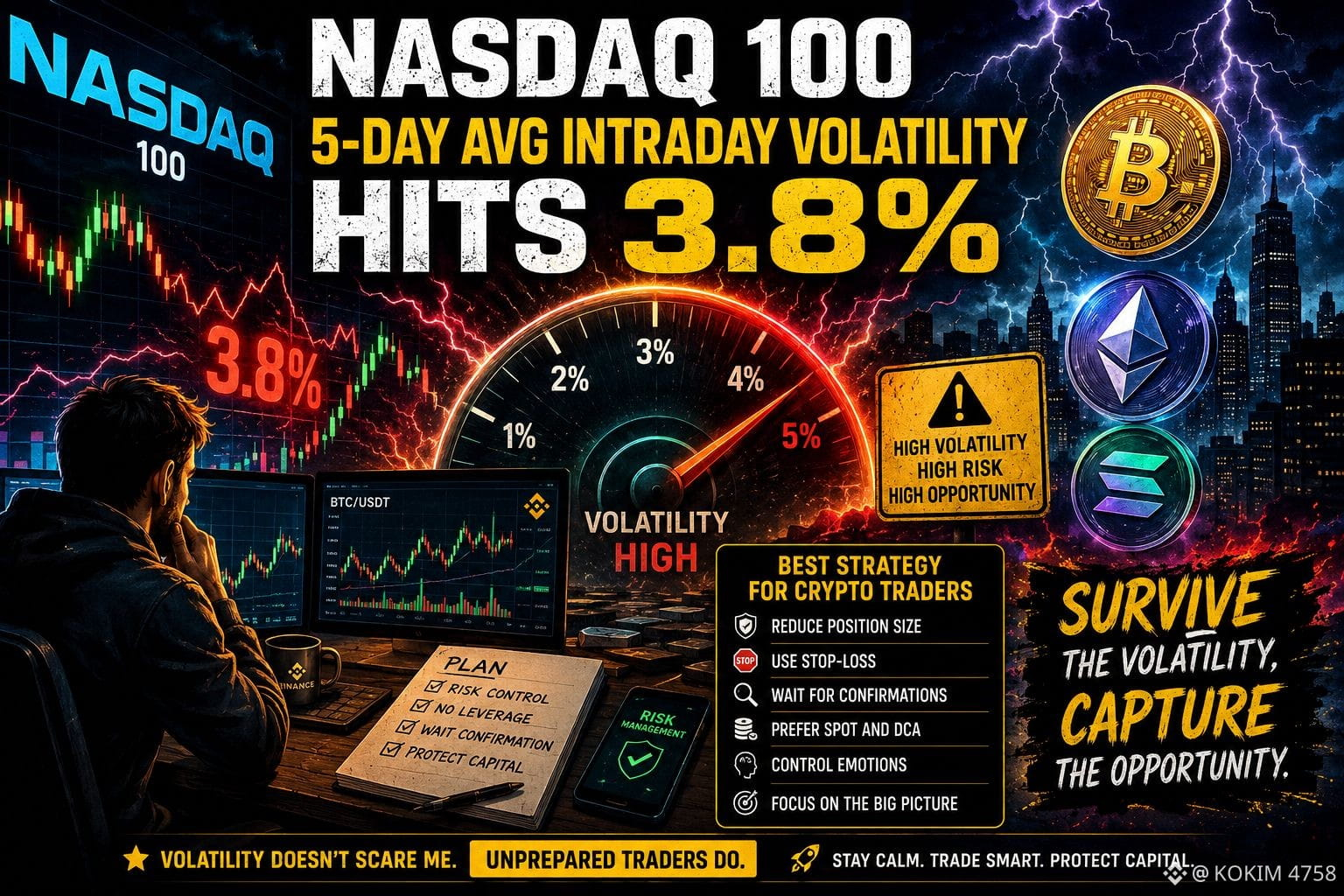
When the Nasdaq 100 records average intraday volatility of 3.8% over the last five days, the market is sending an important signal: prices are fluctuating sharply, and uncertainty is dominating trading.
In practice, this means significant moves during the same trading session, bringing greater opportunities but also much higher risks. And this situation deserves special attention from anyone trading cryptocurrencies.
In crypto, the impact can be even stronger. Bitcoin and altcoins may react quickly to shifts in sentiment on U.S. stock exchanges, especially when investors reduce their exposure to risk.
But this doesn't mean we should automatically go short or long. It means we need to change the way we trade.
My strategy would be simple: reduce position sizes, avoid high leverage, use stop-losses, and wait for confirmation before entering. I would also favor spot trades and staggered purchases in support areas.
Another important precaution is not to chase giant candles. When the market is nervous, entering on impulse can quickly turn an opportunity into a loss.
Volatility isn't necessarily a trader's enemy. It creates opportunities, but it also tests your ability to control your emotions and protect your capital. At this moment, I'd rather miss an entry than lose money trying to guess the next move.
In the market, surviving major swings is just as important as taking advantage of major opportunities. $BTC $SPCX $NVDA.US
#Bitcoin #CryptoMarket #MarketVolatility #tradingStrategy