Deribit sees [$XRP ]
[]
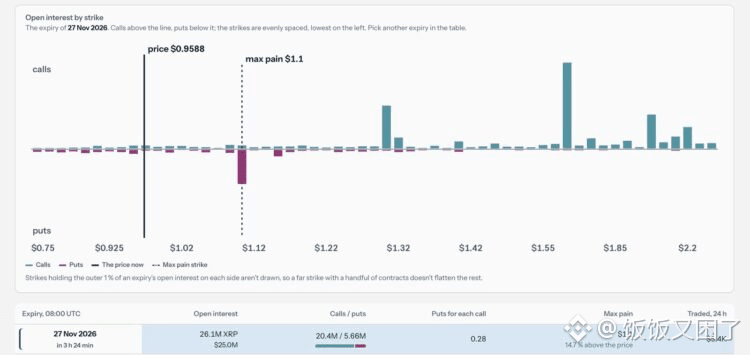
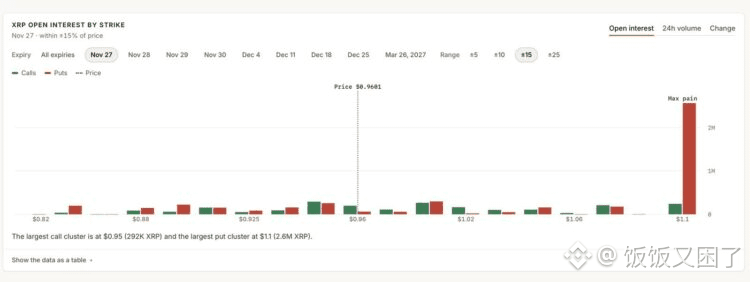
monthly options expire on Friday, with a total of 26.1 million XRP options positions settling and a notional value of approximately $25 million. As of 08:00 UTC, [#xrp ] is trading near $0.96, still 4.2% short of the psychological $1 threshold. In terms of positioning, open interest stands at 20.4 million call options and 5.7 million put options, a call-to-put ratio of 3.6:1. On the surface, the share of bullish positions appears high, but this data should not be interpreted directly as a bullish signal. Many call options are concentrated at strike prices far above the current price, and many positions are strategies in which sellers write calls to earn premiums—not bullish bets placed by buyers expecting a rally. The maximum loss price (max pain) for this options expiry is $1.10, about 14.7% above the current price. It represents only the breakeven point for options settlement, not a price target.
Many traders fall into the misconception that a $25 million notional value means corresponding buying will enter the market around the same time. Deribit’s XRP options are [#USDC ] cash-settled: at expiry, only profit and loss are transferred, with no need to buy spot XRP on the market for delivery, so there is no direct support from physical buying. A potential source of volatility is market makers adjusting their hedges: to hedge options risk, they increase or reduce spot or futures positions as prices change. With XRP liquidity relatively weak recently, these adjustments can amplify short-term price swings, though their direction is difficult to predict.
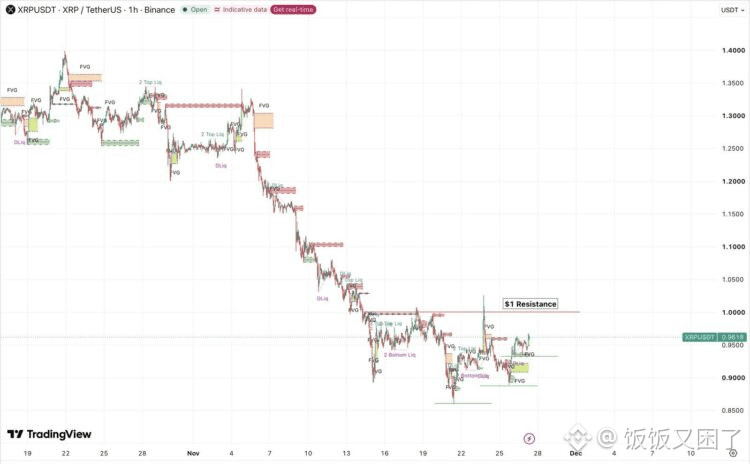
Looking at the charts, XRP has repeatedly failed to hold above $1 after rebounding from a low of $0.87. The value of this options expiry lies not in a momentary spike at settlement, but in the price action after settlement is complete. If spot trading volume continues to grow after settlement and XRP holds firmly above $1, that would signal a genuine recovery in bullish momentum. Conversely, if the price quickly retreats after a rally, it would suggest that the rise was merely a short-term disruption caused by derivatives hedging and that the trend has not changed. It is also worth tracking how positions build in new options for December, and whether investors are willing to continue positioning in longer-dated contracts, as an indicator of the market’s medium-term confidence.