
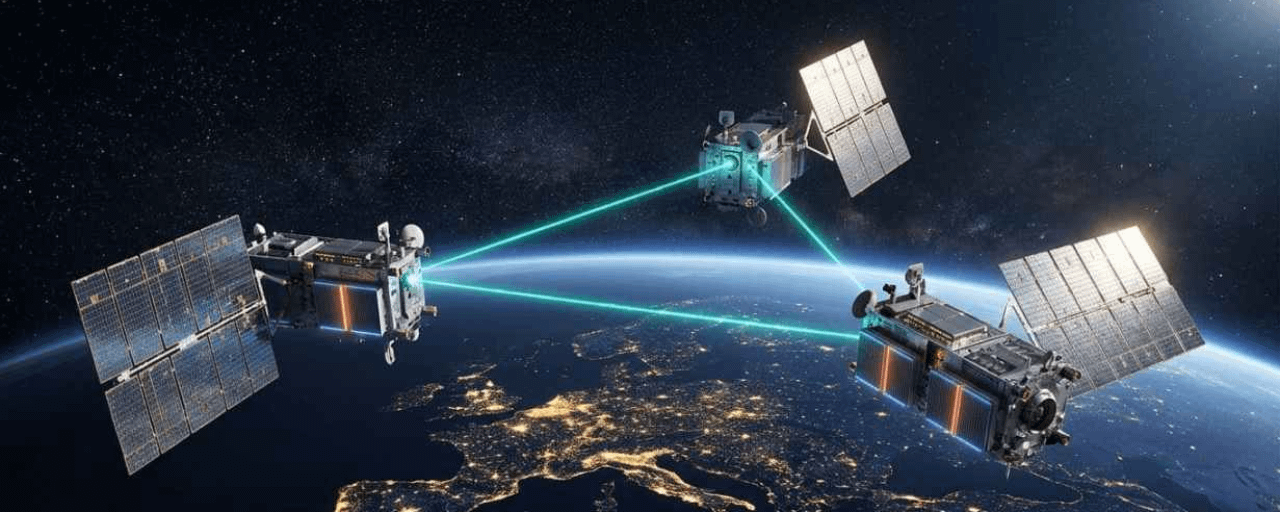

The FCC has officially approved SpaceX’s Starmind constellation plan, allowing the deployment of up to 1 million satellites to build space-based data centers that can meet demand for AI computing capacity. The news immediately set the tech and AI industries abuzz. First, let’s look at the core question: With today’s technology, is it actually feasible to move AI data centers into space?
Objectively speaking, at this stage there are still numerous major hurdles that are difficult to overcome:
The cooling challenge for computing chips: Powerful AI chips generate high power consumption and heat flux. Ground-based data centers can continuously dissipate heat using liquid or air cooling; in the vacuum of space, heat can only be dissipated through radiation, which is extremely inefficient. Running large-scale clusters on AI training tasks for extended periods makes temperature control a critical bottleneck.
Power bottleneck: Satellites rely on solar panels for power, and their energy supply is limited. The cost of powering a computing cluster on a single satellite is extremely high, making it difficult to match the power capacity of terrestrial supercomputing centers.
Cost and launch capacity: SpaceX currently has only about 17,000 satellites in orbit. Its license requires it to launch 100,000 satellites by 2035, with a cap of 1 million. Rivals such as Amazon have directly questioned whether deploying them all at the current launch rate could take centuries. The costs of rocket launches, in-orbit maintenance, and satellite upgrades and replacements would be astronomical.
Signal latency: AI inference and training are latency-sensitive. Even if the computing happens in space, data still has to be sent back to Earth, incurring link losses and transmission delays. Many low-latency use cases simply aren’t suited to space-based computing.
Of course, there is some room for imagination: Space naturally offers low interference and freedom from geographic constraints, making it suitable for certain specialized computing tasks, such as real-time in-orbit processing of remote-sensing data and local AI inference in space. In the short term, however, it can only complement specific niche use cases and cannot replace terrestrial data centers.
Now, let’s talk about the significance behind Musk’s announcement of this plan—it’s far more worth considering than simply “building data centers in space right away”:
✅ Get ahead in the race to set the rules: Secure an FCC license first and lock in orbital and spectrum resources early. Low-Earth orbit satellite slots are scarce. Getting approval first means securing a ticket to the future space-computing race and building a first-mover advantage.
✅ Raise industry expectations and tie into the AI narrative: AI computing power is currently the main story driving global markets. Tying the satellite constellation to AI computing gives Starlink a new valuation narrative: it’s no longer just satellite internet, but “space-based AI infrastructure,” expanding the possibilities imagined by capital markets.
✅ Drive technological advances: Setting a goal of one million satellites could in turn accelerate the development of space-grade chips, heat dissipation in orbit, lightweight computing systems, and reusable rocket technology. Even if the final number falls short of the one-million-satellite cap, the technologies developed along the way could also benefit Starlink’s core business.
✅ Secure a position in the long-term future: Terrestrial computing will always face limits in power consumption, land availability, and energy-use quotas. In the long run, if controlled nuclear fusion, radiative cooling, and space-grade chip technologies make breakthroughs, space-based computing could become a future alternative. Getting in early is a bet on the defining technology trend of the next decade.
In short: In the near term, space-based AI data centers are more of a vision. Given the constraints of heat dissipation, power supply, and cost, large-scale replacement of terrestrial AI data centers is basically unrealistic. But the strategic value of this license far exceeds its immediate practical value. At its core, Musk is using a long-term vision to secure orbital resources, tell a new AI story, and gain an edge over competitors.
⚠️Personal opinion only; this does not constitute investment advice