The S&P 500 closed at 7182.78, down 18.31 points on the day.
The Nasdaq 100 fell 0.64% the same day, while the Dow rose 0.33%.
Only one line is dividing them. Who pays for AI first?
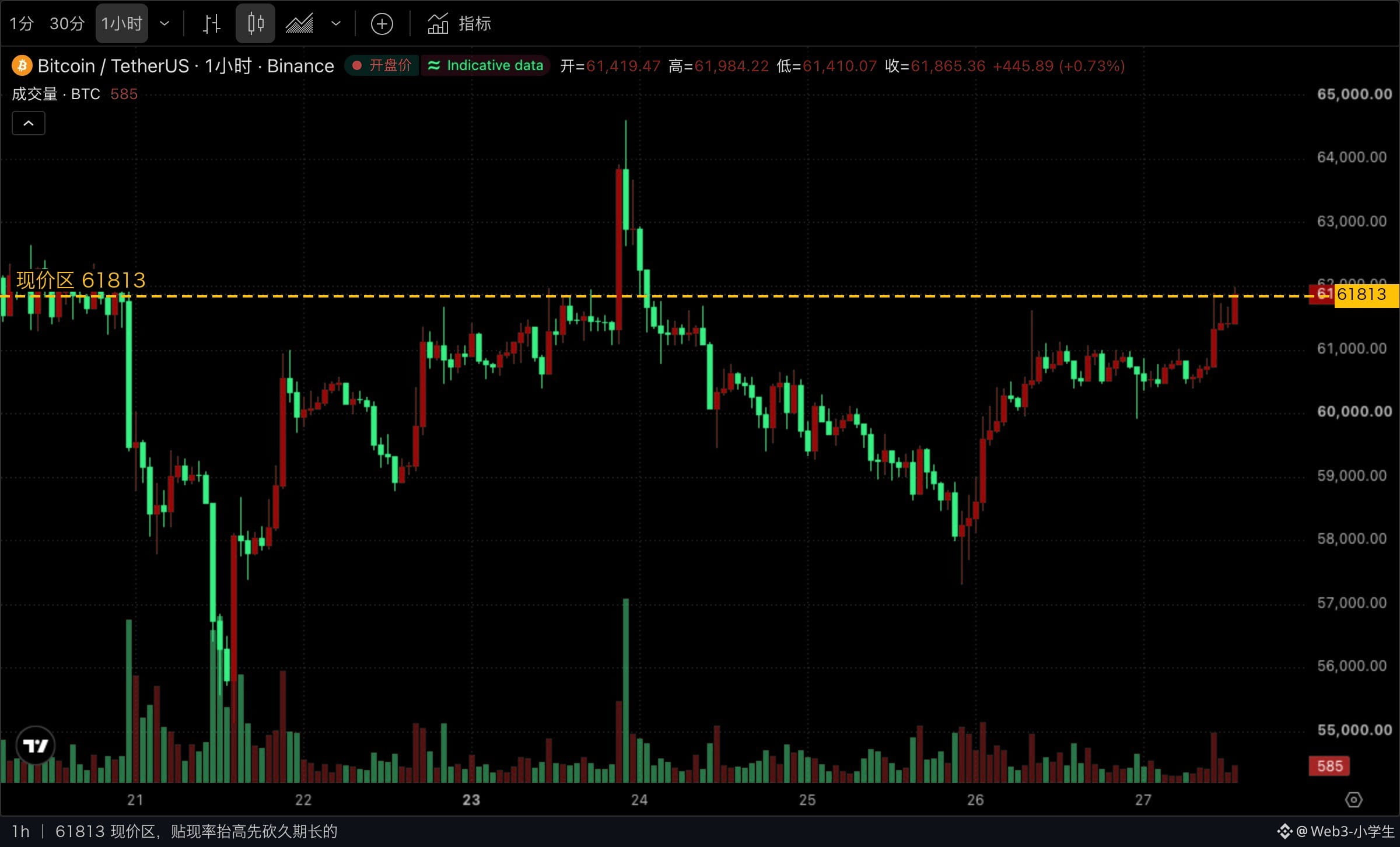
$BTC 61813 still rose 1.3%.
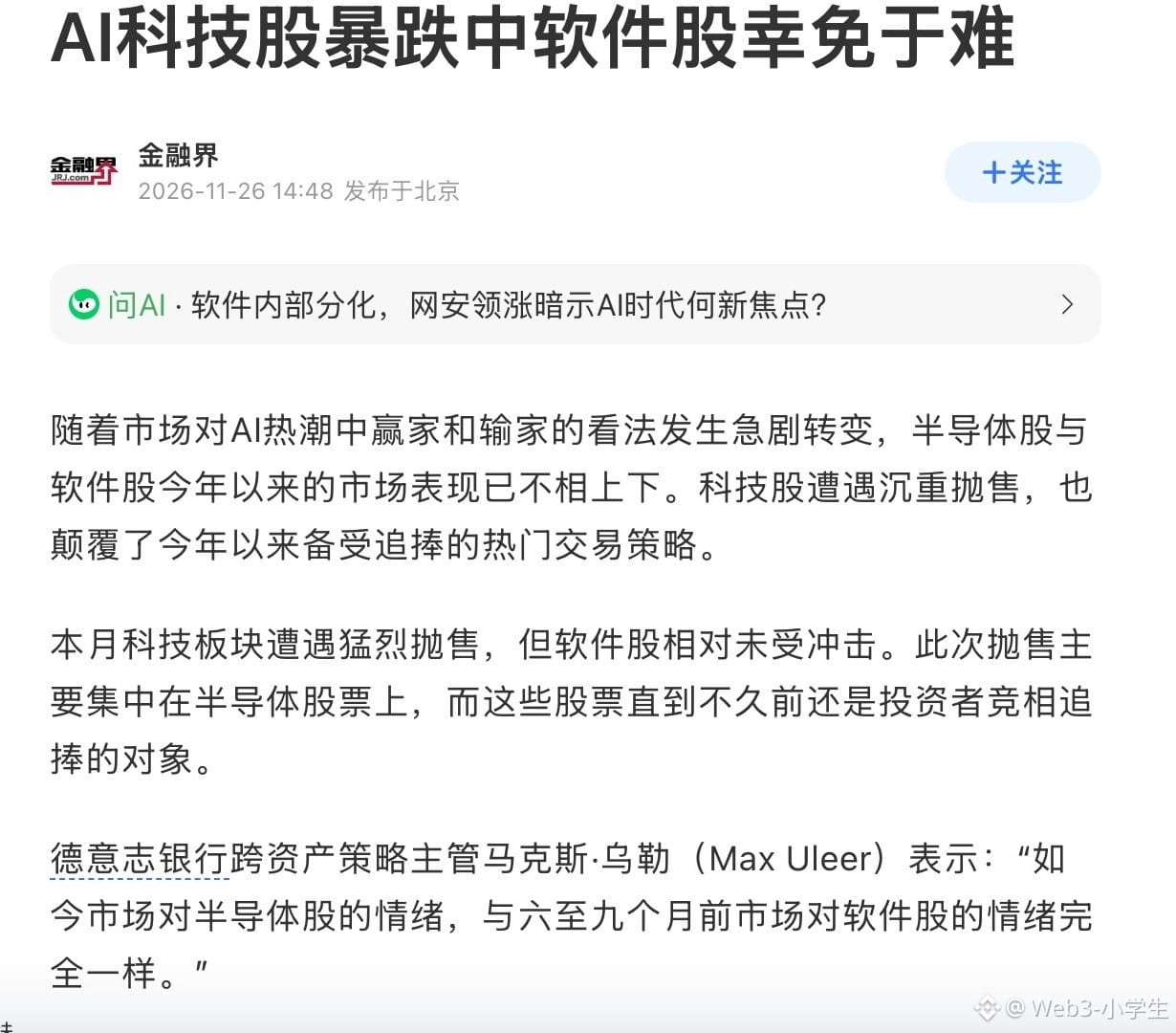
Nvidia closed at 149.30, down 3.91%. Palo Alto Networks rose 0.89%, and Salesforce rose 2.04%. The WSJ wrote that Nvidia and AI sell-offs left US stocks mixed; CNBC wrote that worries about AI debt were rising, while Nvidia's rebound masked the spending squeeze on big tech; the FT simply ran a headline about software escaping the tech bloodbath.
Three outlets describing the same thing: money is shifting away from the shovel sellers. Apollo's chief economist put it plainly: inflation says rates should rise, while the AI outlook says they should fall.
Different payment timelines.
I looked through the books for $NVDAB , wanting only to know when the money spent buying chips turns back into revenue. Chips are capital expenditure: paid for today, recouped through orders in the years ahead. Depreciation is spread across costs year by year, and compute rental income has to compete with newcomers. Software is subscription revenue: customers pay this month. The probability of a 25-basis-point rate hike in December has already reached 97.2%; next year's money is worth less when discounted to today. Either way, those who pay first take the hit first.
AI isn't broken; what changed is the order in which the bills come due.
Some compare this to 2000, saying companies that don't earn a penny die first. This time is different: Nvidia has orders; the question is what the buyers of its chips will use to pay. At the start of the year, some also aggressively dumped all software, saying the industry was finished as soon as those Anthropic tools came out. But the old customers and proprietary data that were dismissed back then have now become a source of protection; Palo Alto Networks is still up 92.71% year to date. Deutsche Bank put it more bluntly: the market's attitude toward chips now is the same as its attitude toward software six or seven months ago.
No one knows exactly how much institutional investors have cut their positions; State Street gave only the direction, not the number.
Watch two things next. The December 8 rate decision changes the discount rate; after that, watch whether chip orders get delayed. Earnings Radar shows none of these big companies has a new earnings report due in the next 30 days, so prices during this stretch are being driven by whoever holds the positions.
$ETH 1745.76, up 2.63%, is all about tomorrow's usage. If you measure them with the same yardstick, the longer the duration, the sooner it hurts. Software collects cash in the current period; chips and long-duration tokens are all waiting for the future.
This is not investment advice.