$SOPH: Understanding FOMO Relief in a Flat Hourly Market
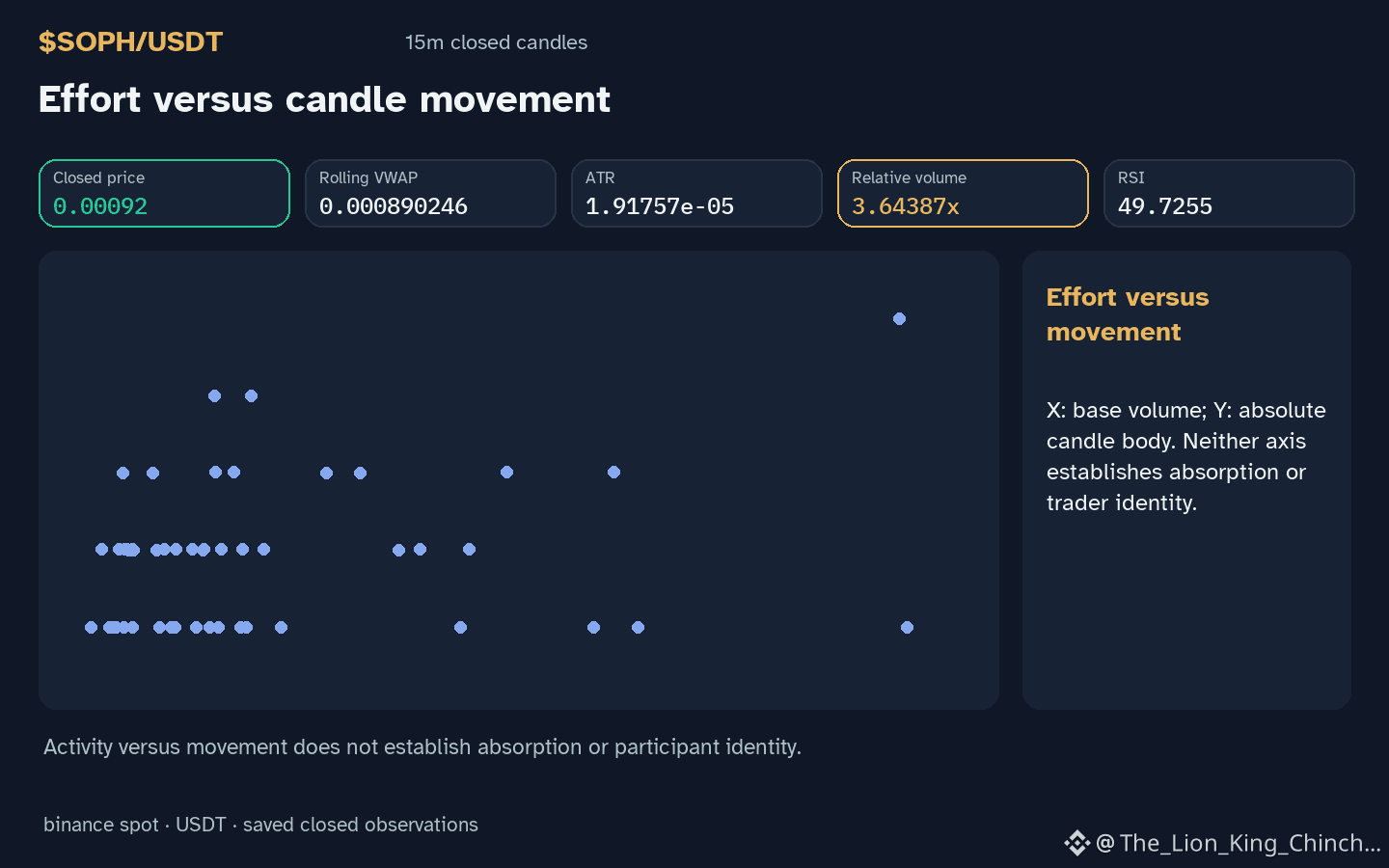
$SOPH: SOPH is trading inside its recorded range while hourly volume sits above baseline. Why might a trader feel relief after missing a green bar, and how can that feeling shape future decisions?
A common bias called fear of missing out relief emerges when a trader watches a sudden price move, hesitates, and then sees the move reverse. The observation of flat direction with elevated volume provides a concrete scenario: the market shows enough participation to suggest interest, yet price does not break out. This mismatch can trigger a mental shortcut where the trader tells themselves the missed move was a false alarm, reinforcing a belief that waiting saves loss.
One possible reaction is to tighten entry rules, assuming that future spikes will be less risky. However, an alternative interpretation is that the high baseline volume simply reflects broader market activity without any predictive power. The bias may lead to over‑confidence in a self‑imposed rule, ignoring that the next candle could still move sharply.
A counterexample is when the next hourly candle breaks the range despite the same volume level, showing that relief was unfounded.
Practical self‑check: after a missed move, note the current relative volume 3.64x baseline and ask whether the feeling of relief is based on the data or on the desire to avoid regret. If the volume remains high and price still respects the range, consider keeping the rule; if the price breaches support or resistance, reassess the bias. This simple test helps separate genuine risk assessment from emotional relief.
Probabilistic market research, not a recommendation or guaranteed return.
Watchlist contrast: $ETH has hourly direction up and volume above its baseline; $INIT has hourly direction down and volume above its baseline. This alone does not establish correlation.
#SOPH #ETH