Fed Vice Chair Bowman reported a figure this month. AI-related debt is expected to exceed $800 billion this year, while off-balance-sheet commitments tied to AI construction are estimated to be more than three times that amount. This means rate hikes are no longer just the central bank flipping a switch—companies’ own borrowing is also helping tighten the screws.
Last night, Cailian Press shared a report by Timiraos. He noted that eight years ago, in December 2018, U.S. stocks fell about 11% from their peak, and Warsh and Druckenmiller co-authored an article calling on the Fed to pause its tightening. At the time, inflation had only just climbed to around 2%.
Now Warsh himself is sitting in the chair’s seat. Core PCE inflation was 3.3% year over year in October, up from 3.1% in September. Inflation has been above target for more than five years straight.
The same Warsh is now likely to vote in favor of a rate hike at the policy meeting two weeks from now. What he opposed eight years ago is precisely what he may have to do now.
There’s a chain of events here that reaches into everyone’s wallet.
Companies borrow to build data centers, first buying chips, then scrambling for power equipment. When supply can’t keep up, sellers gain pricing power. Chicago Fed President Goolsbee said business contacts reported sharp price increases in electricity-related products. New York Fed President Williams has shifted his focus away from past supply shocks; he’s watching how strong demand is now, much of it related to AI.
Those price increases will eventually feed into core inflation. With core inflation stuck at 3.3%, the Fed can’t let up. When interest rates remain high, assets that depend on discount rates have to be recalculated.
$BTC is now at 60516, up 3.02% over 24 hours. $ETH is at 1688, up 2.42%. Both figures are moving up today, but the interest-rate environment behind them is much tighter than during the cycle eight years ago.
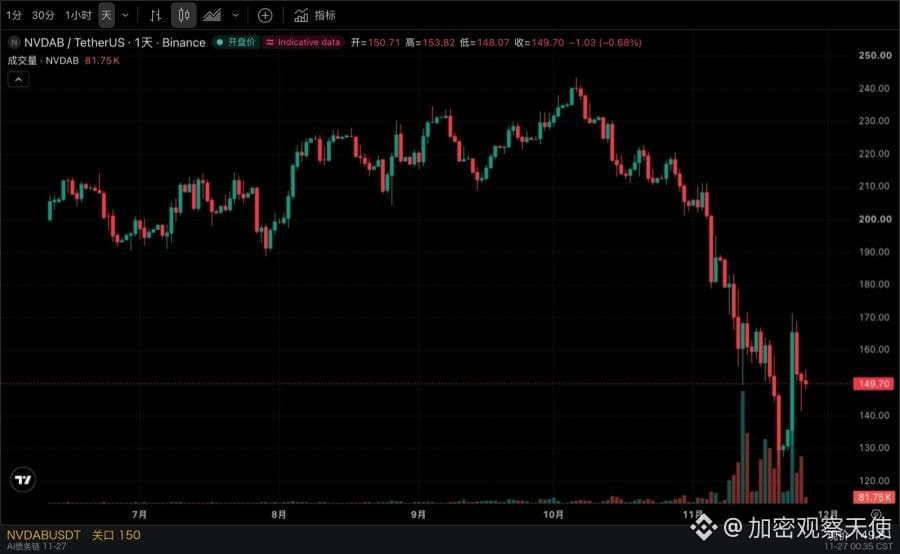
$NVDAB is at 149.81, at the very top of this debt chain.
Whether the stock market has fully bottomed or not, the bond market has already given its answer. $800 billion in debt won’t disappear on its own; it will either become data centers or turn into defaults. Whether rate hikes can be pushed through depends not on the stock index, but on whether this money can be rolled over.
(Data sources: Cailian Press’s repost of a Timiraos report and public statements by Fed officials, 11-26; market prices collected from Binance’s public API in the early hours of 11-27, not real-time. This is a compilation of public information and does not constitute investment advice.)