
#CouldSpaceX’sOrbitalDataCentersBoostAIChipDemand?
Orbit or Hype? What the FCC’s Green Light for Starmind Means for AI Chips
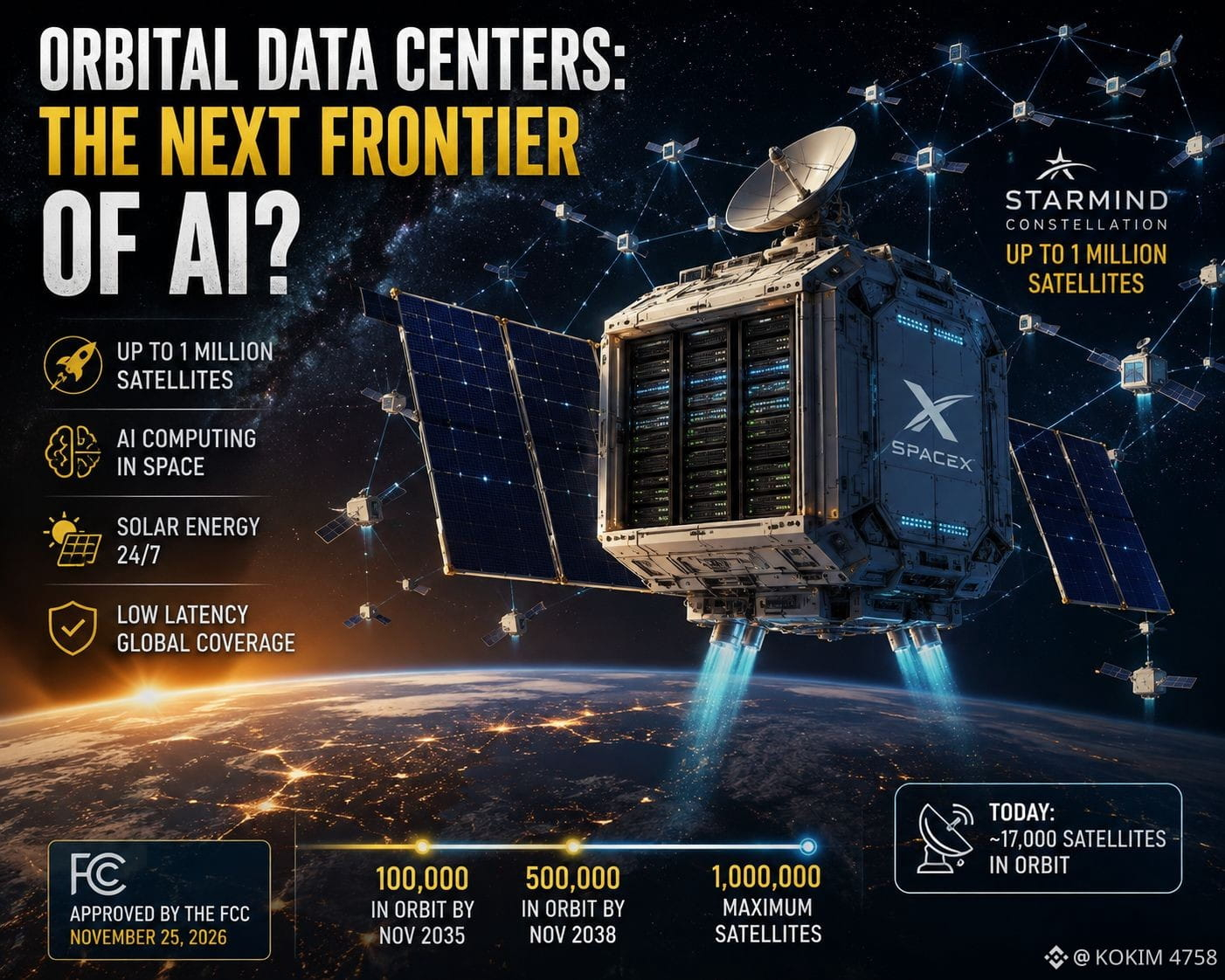
The FCC’s authorization for up to 1 million SpaceX Starmind satellites sparks a direct debate: will this accelerate AI chips, or merely kick off a long and uncertain race? In practice, the answer is split between the near term on Earth and the long term in space.
On Earth, demand for computing power is already running up against bottlenecks in electricity and cooling, as well as local resistance to new data centers. That’s why immediate demand for AI chips remains tied to terrestrial infrastructure and ongoing contracts, while SpaceX points to continuous solar power, heat dissipation in a vacuum, laser links, and large-scale production at factories such as Gigasat and Terafab to enable orbital computing.
Even so, the path to 1 million modules is long: regulatory timelines have been extended, and questions remain about space debris, light pollution, and the actual pace of launches compared with the current fleet in orbit. For those following technology and digital markets, the project bolsters the long-term narrative around AI infrastructure and energy scarcity, but it does not replace tangible progress on the ground in the coming years.
$HAEDAL $INIT $SSV
#SpaceX #AI #DataCenters #ChipsIA