
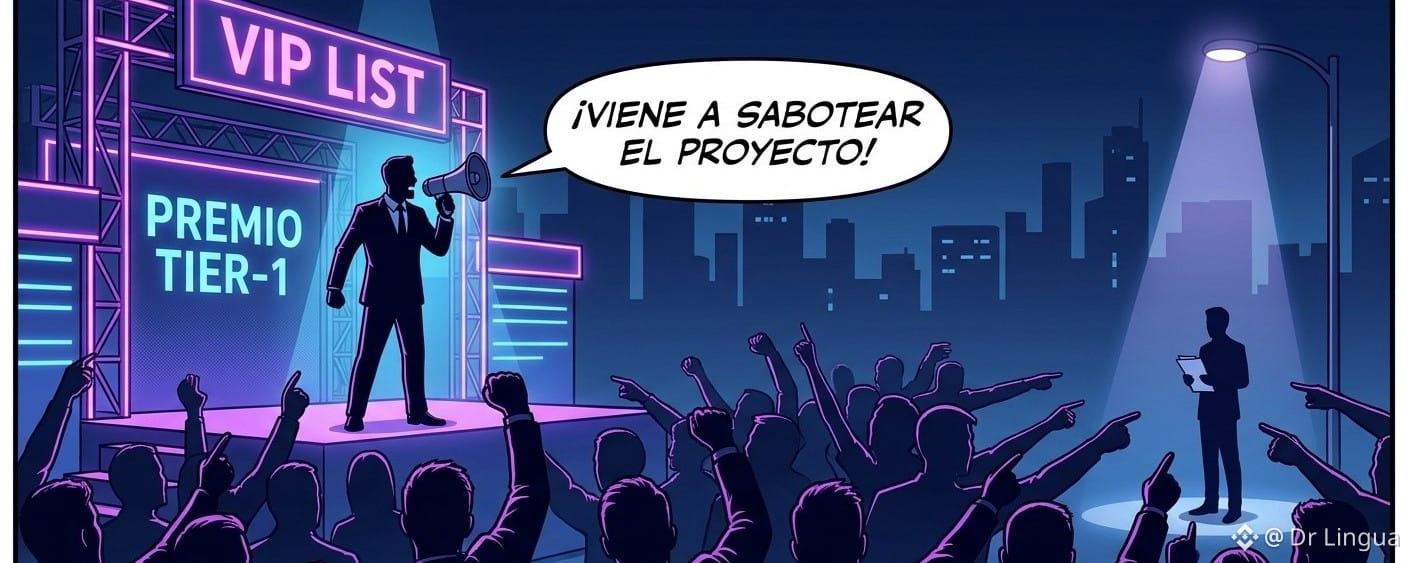

In previous installments, we saw how they build the outward-facing facade and manipulate the clock. Today, we’re looking at seven psychological and emotional traps they use to get your money and data—and silence the warnings:
🔹 1. The fake exclusivity of the “VIP List” (Whitelist)
They send you a notice saying: “Congratulations, you’re one of the first 500 exclusive spots to buy before the public.” You feel chosen and pay quickly so you don’t lose your place. The reality is that anyone who sends money can access that form, while insiders have already been allocated millions of coins at a fraction of a cent, ready to sell as soon as the market opens.
🔹 2. Unrealistic Returns and “Tier-1 Listing Rewards”
To stop you from selling or claiming your tokens when delays hit, they promise fixed returns of 60% or more on their own website, or an extra coin bonus “the day we list on a top-tier (Tier-1) exchange.” It’s a retention trap: since there’s no firm date or verifiable contract backing up that reward, they keep you waiting for a miracle while others cash out first.
🔹 3. Listing Announcements on Low-Reputation Platforms
Many presales pay for advertising on small or little-known exchanges that urgently need traffic. These platforms post “Coming Soon: Listing” banners to attract new deposits, making newcomers believe the project has passed a serious audit. In the end, the listing never happens, or trading opens with an empty order book where you can’t sell without crashing the price.
🔹 4. The “Charitable Donation or Development” Excuse
A very common tactic is to appeal to your goodwill: they claim that some of the money will go to a charity, environmental rescue, or community development. However, the money ends up in private wallets, with no audit or record of any real foundation. What’s more, by labeling your contribution a “voluntary donation” in the fine print, they create the perfect legal shield against being held accountable if they never deliver anything.
🔹 5. Identity Verification (KYC) on Anonymous Sites
Some websites with no registered company or known legal backing ask you to upload a photo of your official ID, a selfie, or a facial scan, claiming they need to “comply with international regulations to release your coins.” Once you send that information to an anonymous site, your personal and biometric data are exposed without any protection.
🔹 6. The Impersonation Ambush in Comments and Private Messages
As soon as you ask on their social media when the supposed listing will happen or where the donation receipt is, cloned accounts with the same name and photo as the project appear and message you privately. They offer to “activate your bonus” or “validate your wallet” through a malicious link designed to drain your savings when you sign an approval.
🔹 7. Information Blackout: Only the Team’s Voice Counts
When an experienced user checks the numbers and tries to warn others in their groups or comments, they block them immediately, delete their messages, and tell the community that “they’re a bot or are here to sabotage the project.” This isolates newcomers so no one can open their eyes before it’s too late.
In Part 2, we’ll go through practical safeguards step by step to protect your wallet, your data, and your money from each of these traps.
Personal opinion for educational purposes; not financial advice.
👇 Have you ever seen someone get blocked for simply trying to warn others with real evidence, or been offered a “VIP spot” to get in quickly? I invite you to follow the account so an innocent fellow crypto user won’t be left alone.
#DrLingua #SeguridadCripto #PsicologiaTrading #GestiónDeRiesgo #CriptoEnEspanol