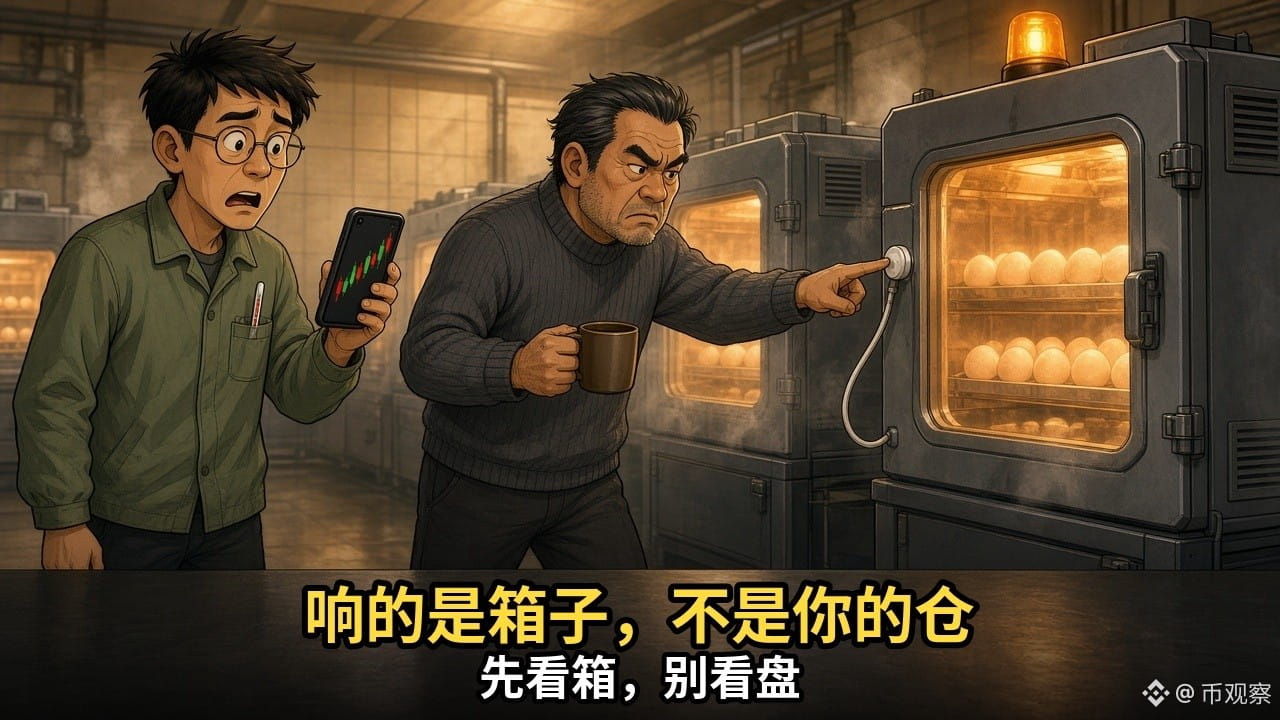
The alarm rang and he reached for his phone. The old hand slapped the plug back in: “It’s the incubator making that noise.”
At Wenshi Hatchery on the outskirts of town, there was an early-shift technician named Zhou Shouwen, thirty-nine years old. He always kept an electronic thermometer clipped to his breast pocket, but didn’t trust it. His left hand was also wrapped in an old piece of cloth, inside which he kept a mercury thermometer. He thought digital readings jumped around; mercury wouldn’t lie. When checking the incubators, he had to count from No. 1 to No. 12. If anyone spoke to him along the way, he started over from No. 1. The sign by the door that read “Please close the door gently” would fade in the damp air within a week, so every Monday he rewrote it. His handwriting was more meticulous than an eggshell. He only poured warm water into his thermos. When someone told him iced water was refreshing, he shook his head. “The cold will startle the eggs.” Truth was, he was the one who got startled.
He had another habit everyone could see: whenever he reached the area around Incubator No. 7, his hand would touch the phone in his pocket before touching the incubator door. He’d left home at five that morning. Fog still clung to the hatchery’s corrugated-metal roof. At the entrance, he’d gone over two characters on the sign again, then headed inside before the ink had dried.
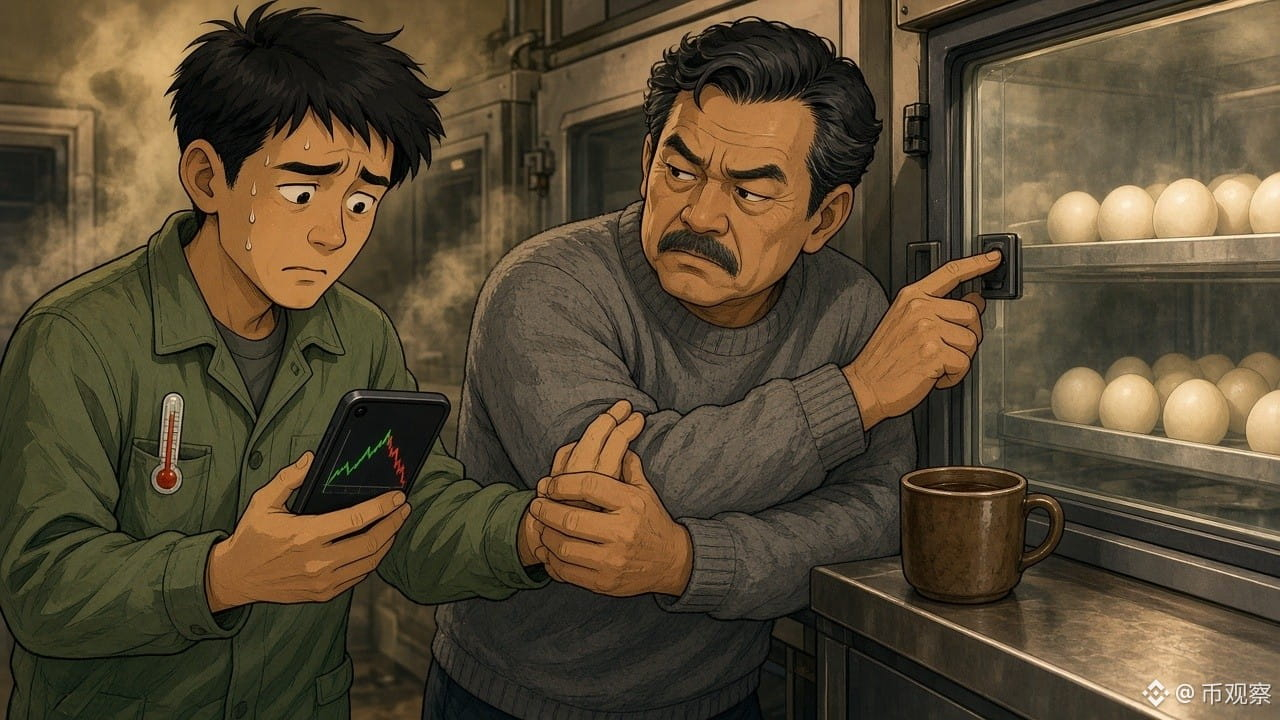
Just after five that morning, Incubator No. 7 suddenly beeped. It wasn’t a loud sound, just a short, sharp chirp, like someone giving a quiet cough in the corner. Zhou Shouwen’s hand moved faster than his brain. What he pulled out wasn’t the thermometer—it was his phone. The mercury thermometer nearly slipped from the cloth and hit the ground; he caught it between his knees, but his eyes never left the screen. The chart went green for a moment, then shrank back, like someone stepping into empty space in the dark and being hauled back from the edge of a pit—but being pulled back didn’t mean they were standing steady. His thumb paused over the Add to Position button. The 20x long was still open, and he already had his excuse: since it had come back, he might as well add a little more.
A hand behind him clamped around his wrist.
Liu, the old hand, was fifty-eight and had worked at the hatchery for twenty years. The tea leaves in his mug had long since settled to the bottom. He didn’t look at the phone. First he checked the sensor plug on the side of Incubator No. 7. It was crooked, as if it hadn’t woken up yet. He slapped it back into place with a sharp crack, and the alarm stopped at once. The incubator temperature reading was fine. The eggs were still there, and their shells weren’t even sweating. All that remained in the room was the hum of the humidifier and the faint clink of the lid against Liu’s mug.
Liu asked him, “Are you here to watch the temperature, or watch the market?”
Zhou Shouwen was still holding up his phone, its glow reflected on the incubator glass, red and green spilling across it as if giving the eggs a completely unnecessary checkup. He opened his mouth. “I thought… it had blown up.” Only after the words came out did he realize he hadn’t even opened the incubator door.
“It’s your brain that’s blown up.” Liu set his mug on the edge of the incubator. “The incubator was making the noise, not your position. A loose wire makes a sound. When your hand lets go, that’s actually safer.”
Xiao Ke, one of the younger workers, poked his head in and asked what was wrong with No. 7. Zhou Shouwen pointed to the plug. “It was loose.” He paused for half a second, then added, “And so was my hand.” Xiao Ke didn’t understand. He was already off counting the next row of doors. Zhou Shouwen had lost his count too, so he had to start over from No. 1.
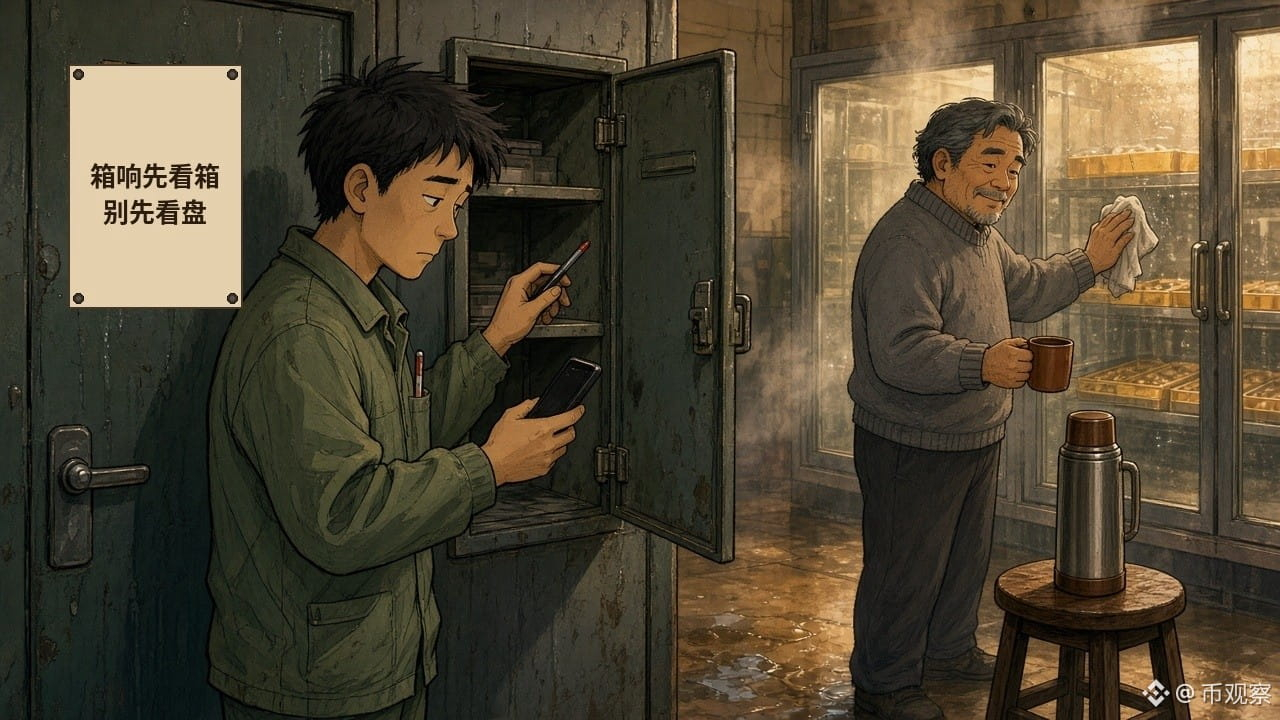
Zhou Shouwen closed his 20x position and kept only a little spot $BTC . He locked his phone—and the electronic thermometer he barely used anyway—in his locker. Beneath the old sign by the door, he squeezed in two more lines: “If an incubator beeps, check the incubator first—not the market.” The damp air soon came to lick at the ink. He stood there and waited for it to dry. This time, at least, he didn’t reach for the Add button.
Near the end of the shift, Liu wiped the glass of Incubator No. 7 and said, “If these eggs could talk, the first thing they’d say wouldn’t be ‘add to your position.’ They’d tell you to plug the thing back in properly.”
Zhou Shouwen counted from No. 1 to No. 12 again. This time no one interrupted him, and, to his surprise, he got it right in one go. As he left, he felt the empty pocket of his trousers. It felt strangely light. He thought that only a position small enough to let the incubator stay steady—and let him sleep—deserved to be in the same room as these eggs. Keep your position under control. When the alarm rings, look where you’re supposed to look. Don’t leave your hand hovering over Add.
(The characters in this story are fictional.)