$JST: Is Busywork a Badge of Effort?
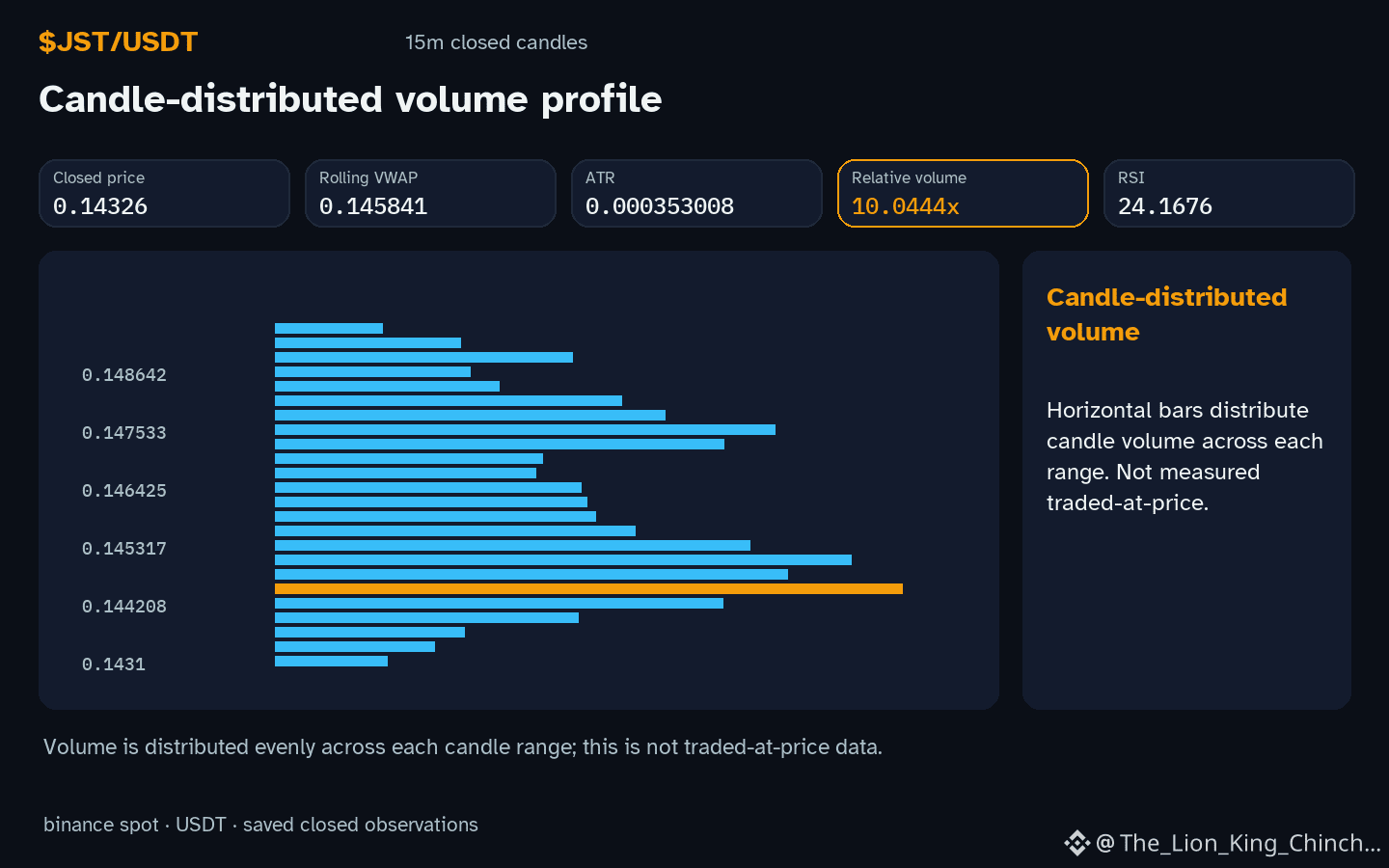
$JST: JST trades below local support with hourly direction down. Relative volume is 10.04x baseline. Does high activity signal skill or just noise?
The Question
Traders may conflate busywork with productivity. This is the bias of confusing process with outcome. High relative volume can create a feeling of importance, leading to over-trading. The assumption is that more clicks equal better results. This is a heuristic error. Activity does not equal intelligence.
Evidence and an Alternative
Current data shows price below 0.14405 and hourly direction down. The MACD reading is -0.00038807 against a signal line at -0.000238152. RSI is at 24.2. These metrics describe state, not intent. A trader might see volatility and increase trade frequency. This increases exposure to error. The alternative interpretation is that high volume reflects normal market mechanics. No causal link exists between volume and trader quality. One must distinguish the observation from the inferred motive. The candlestick pattern does not prove a specific strategy was used. It only shows price movement.
A Practical Self-Check
Before placing a trade, ask if this position adds new information. If the answer is no, rest. Over-trading often stems from fear of missing out or needing to feel busy. Stop and review the plan. Check if the entry aligns with the defined strategy. If the only reason is "something is happening" due to volume, do not trade. This self-check prevents the false badge of effort. It forces reliance on structure rather than activity. Future closed-candle data could weaken this interpretation. If price reverses above 0.14567 despite high volume, the bearish assumption weakens. Wait for confirmation. Do not guess. Use the evidence. Stop when the plan says stop.
Probabilistic market research, not a recommendation or guaranteed return.
#JST #TradingPsychology