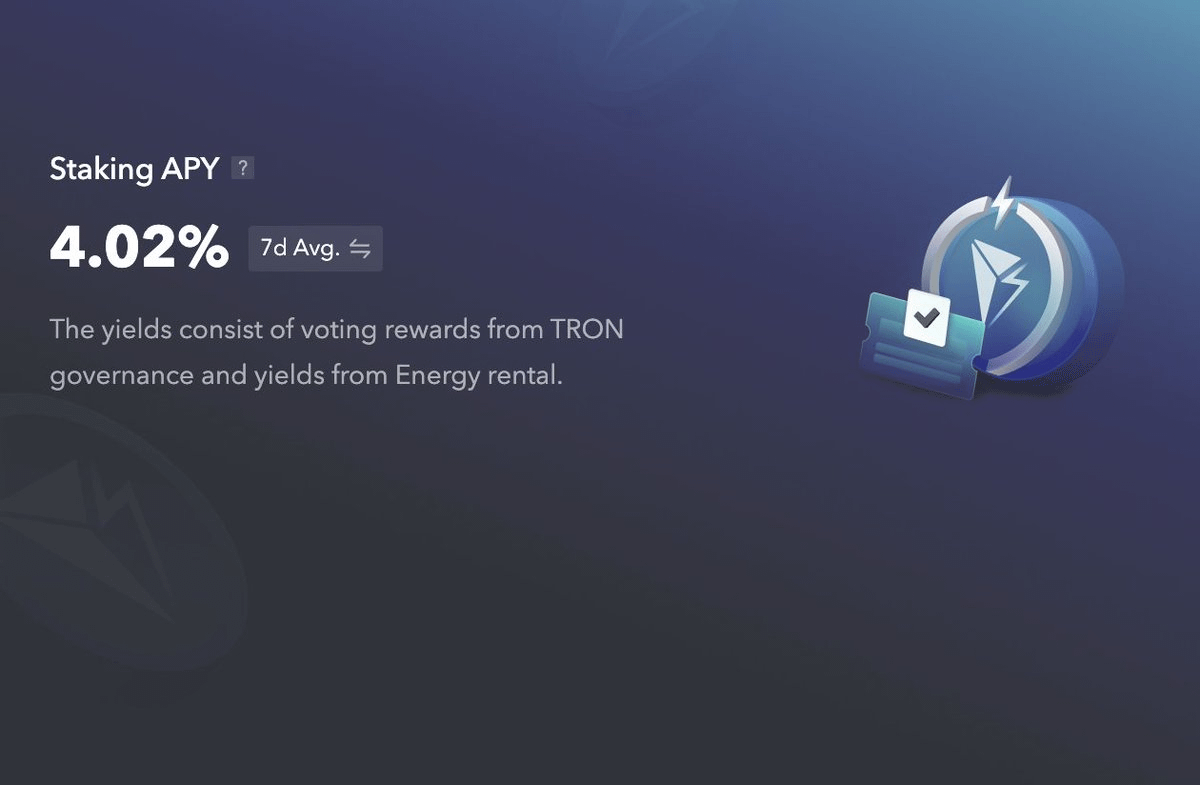
𝗝𝗨𝗦𝗧𝗟𝗘𝗡𝗗 𝘀𝗧𝗥𝗫 𝗔𝗧 𝟰.𝟬𝟮% 𝗔𝗣𝗬: 𝗛𝗢𝗪 𝗟𝗜𝗤𝗨𝗜𝗗 𝗦𝗧𝗔𝗞𝗜𝗡𝗚 𝗧𝗥𝗔𝗡𝗦𝗙𝗢𝗥𝗠𝗦 𝗧𝗥𝗫 𝗜𝗡𝗧𝗢 𝗔 𝗣𝗥𝗢𝗗𝗨𝗖𝗧𝗜𝗩𝗘 𝗔𝗦𝗦𝗘𝗧
Holding TRX provides exposure to the development of the TRON network, but liquid staking introduces an additional dimension: the ability to generate returns from the network's underlying economic activities.
Through JustLend DAO, users can stake TRX and receive sTRX, a liquid staking token that represents their participation in the staking mechanism.
What makes sTRX particularly interesting is its combination of governance rewards and Energy Rental income.
Rather than relying exclusively on conventional staking rewards, this model connects token holders with demand for blockchain resources.
The distinction matters because sustainable DeFi returns should ultimately be evaluated through the economic activities supporting them, rather than advertised percentages alone.
𝗧𝗪𝗢 𝗥𝗘𝗩𝗘𝗡𝗨𝗘 𝗦𝗧𝗥𝗘𝗔𝗠𝗦 𝗕𝗘𝗛𝗜𝗡𝗗 𝗝𝗨𝗦𝗧𝗟𝗘𝗡𝗗'𝗦 𝘀𝗧𝗥𝗫
According to JustLend DAO's latest announcement:
• Staking asset: TRX.
• Liquid staking token: sTRX.
• Seven-day average APY: 4.02%.
• Primary yield sources: TRON governance rewards and Energy Rental income.
These two sources represent different aspects of TRON's network economy.
Governance rewards originate from participation in TRON's staking and voting mechanisms.
Energy Rental income connects staking returns with demand for computational resources used to execute smart contract transactions.
For example, users and businesses conducting TRC-20 stablecoin transfers require Energy or must pay the corresponding transaction costs.
Energy Rental provides an alternative mechanism for accessing these resources, potentially creating economic opportunities for resource providers.
The combination allows sTRX holders to participate indirectly in both network governance economics and resource utilization.
However, the announcement does not disclose the individual contribution of each revenue stream to the reported 4.02% APY. The figure is a historical seven-day average, not a guaranteed future return.
Official staking interface:
https://app.justlend.org/strx
𝗠𝗬 𝗣𝗘𝗥𝗦𝗢𝗡𝗔𝗟 𝗩𝗜𝗘𝗪: 𝗧𝗛𝗘 𝗥𝗘𝗔𝗟 𝗩𝗔𝗟𝗨𝗘 𝗢𝗙 𝘀𝗧𝗥𝗫 𝗟𝗜𝗘𝗦 𝗜𝗡 𝗖𝗔𝗣𝗜𝗧𝗔𝗟 𝗣𝗥𝗢𝗗𝗨𝗖𝗧𝗜𝗩𝗜𝗧𝗬
I believe liquid staking should be evaluated as a capital management mechanism rather than simply another passive income product.
Consider a hypothetical long-term holder staking 100,000 TRX through JustLend DAO.
Assuming the reported 4.02% APY remains unchanged throughout the year:
• Initial capital: 100,000 TRX.
• Estimated annual return: 4,020 TRX equivalent.
• Estimated year-end position: 104,020 TRX equivalent.
• Average monthly return: approximately 335 TRX equivalent.
At an assumed TRX price of $0.30:
• Initial capital value: $30,000.
• Annual staking return: $1,206.
• Estimated year-end value: $31,206.
Now consider how market volatility affects the same position.
If TRX declines by 20% to $0.24:
• Estimated year-end position: 104,020 TRX equivalent.
• Estimated market value: $24,964.80.
• Net change against initial dollar value: approximately -16.78%.
Despite accumulating additional TRX-equivalent value through staking, the investor would still experience a decline in dollar-denominated capital.
These calculations are illustrative, exclude fees and assume a constant APY. The $0.30 TRX price is hypothetical, not a verified current market quotation.
Actual returns may be reflected through the sTRX-to-TRX exchange rate rather than additional sTRX tokens appearing in the user's wallet.
This distinction highlights an important principle: staking yield increases asset-denominated productivity, but it does not eliminate exposure to market volatility.
Users must also consider smart contract security, redemption conditions, secondary-market liquidity and potential deviations between sTRX's market price and its underlying redemption value.
𝗙𝗥𝗢𝗠 𝗘𝗡𝗘𝗥𝗚𝗬 𝗥𝗘𝗡𝗧𝗔𝗟 𝗧𝗢 𝗔 𝗠𝗢𝗥𝗘 𝗣𝗥𝗢𝗗𝗨𝗖𝗧𝗜𝗩𝗘 𝗧𝗥𝗢𝗡 𝗘𝗖𝗢𝗡𝗢𝗠𝗬
The long-term opportunity for sTRX extends beyond the current 4.02% APY.
TRON's resource model creates an economic relationship between staked capital and blockchain usage.
As stablecoin payments, decentralized trading and smart contract activity expand, demand for Energy may increase. Under favorable market conditions, this could support additional rental income for resource providers.
However, higher transaction activity does not automatically translate into higher staking yields. Energy supply, rental pricing, resource efficiency and protocol revenue distribution also influence profitability.
The indicators I would prioritize when evaluating sTRX include:
• Total TRX deposited into liquid staking.
• Historical sTRX-to-TRX exchange rate growth.
• Governance reward contribution.
• Energy Rental revenue contribution.
• Energy utilization and rental pricing.
• Historical APY stability.
• Redemption liquidity and withdrawal conditions.
• Net returns after applicable protocol costs.
These metrics would provide a clearer understanding of whether sTRX generates sustainable returns supported by genuine network demand.
Public research resources:
https://app.justlend.org/strx
https://just.network
https://tronscan.org
https://developers.tron.network
In my assessment, JustLend DAO's liquid staking model illustrates how blockchain infrastructure can transform a native token into a productive financial asset.
TRX provides the underlying network capital.
Governance participation contributes staking rewards.
Energy Rental connects that capital with practical blockchain resource demand.
sTRX represents participation in the combined economic mechanism.
The most compelling aspect of this architecture is not necessarily achieving the highest possible APY. It is establishing a sustainable relationship between capital deployment, network utilization and transparent reward generation.
A productive asset should derive its long-term value from the economic activities it supports, not merely from temporary incentives.
That is the fundamental opportunity behind JustLend DAO's sTRX strategy.