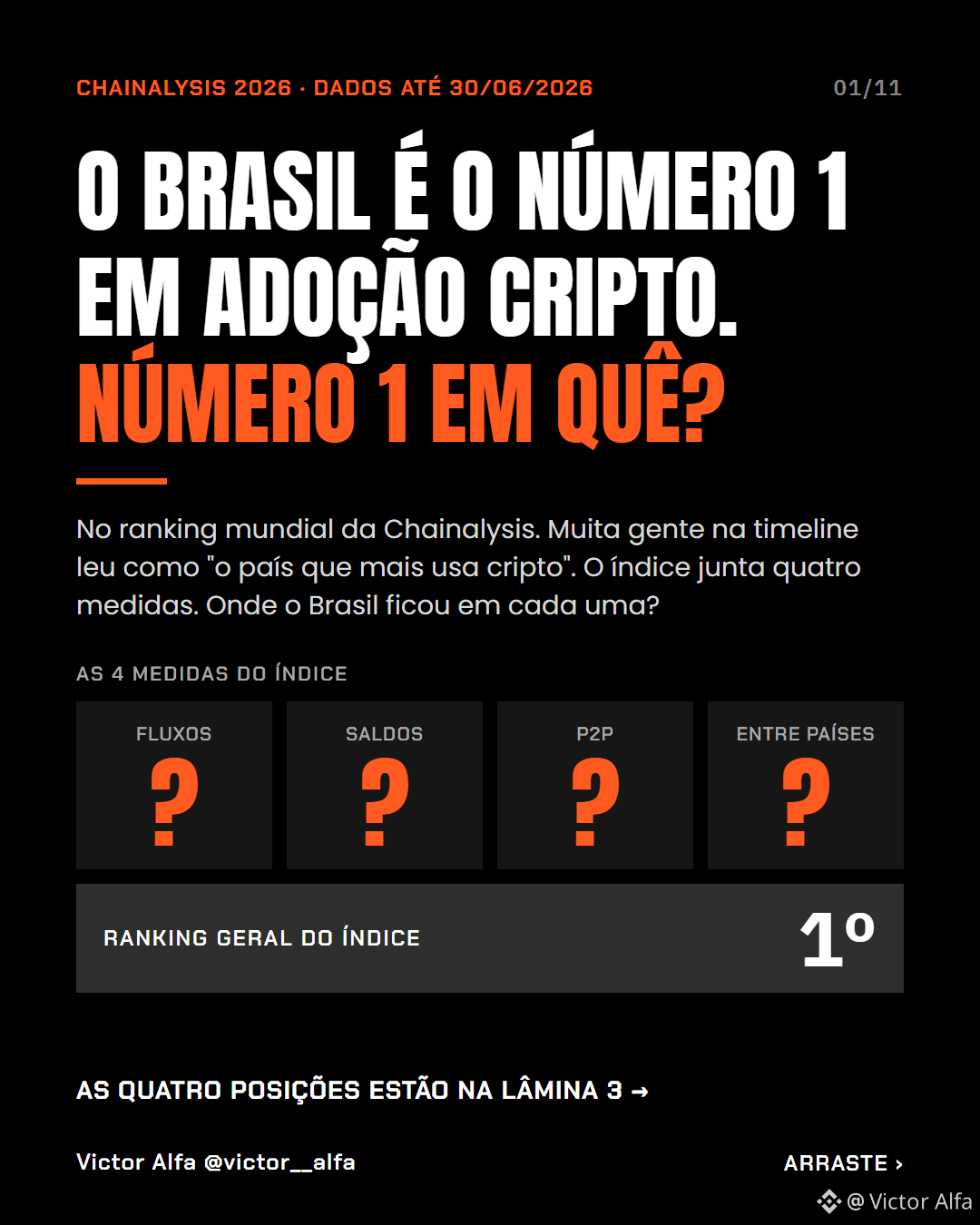
#Brazil is No. 1 in the world for crypto adoption in Chainalysis’s 2026 report. No. 1 in what, exactly? Brazil doesn’t rank first in any of the index’s four measures: it ranks 3rd, 4th, 3rd, and 2nd. First place is a reward for consistency, not size... 🤔🔎 So I opened the tables in “The 2026 Geography of Crypto Report” to show what that No. 1 measures.
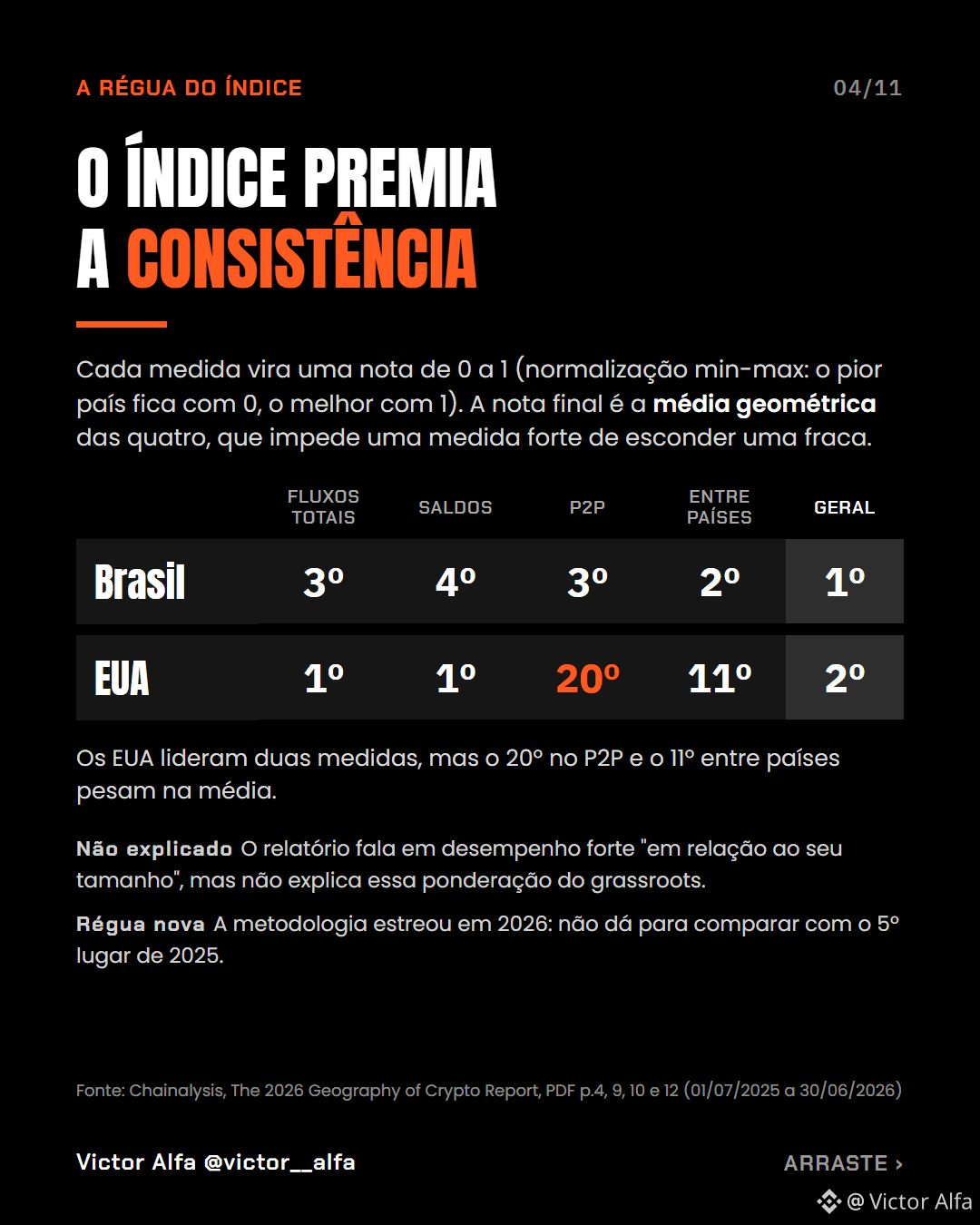
📝 The “grassroots” adoption index combines four measures from July 1, 2025, to June 30, 2026: total flows, balances, domestic P2P, and cross-border flows. Each measure is converted to a score from 0 to 1 (min-max normalization), and the final score is the geometric mean of the four: a strong measure can’t hide a weak one.
📊 Among 117 countries, Brazil ranks 3rd in total flows, 4th in balances, 3rd in P2P, and 2nd in cross-border flows. The U.S. leads in flows and balances, but ranks 20th in P2P and 11th in cross-border flows: it comes in 2nd overall.
📝 Take note! What No. 1 doesn’t mean:
• It doesn’t measure users: the index is relative and doesn’t count how many people use #crypto.
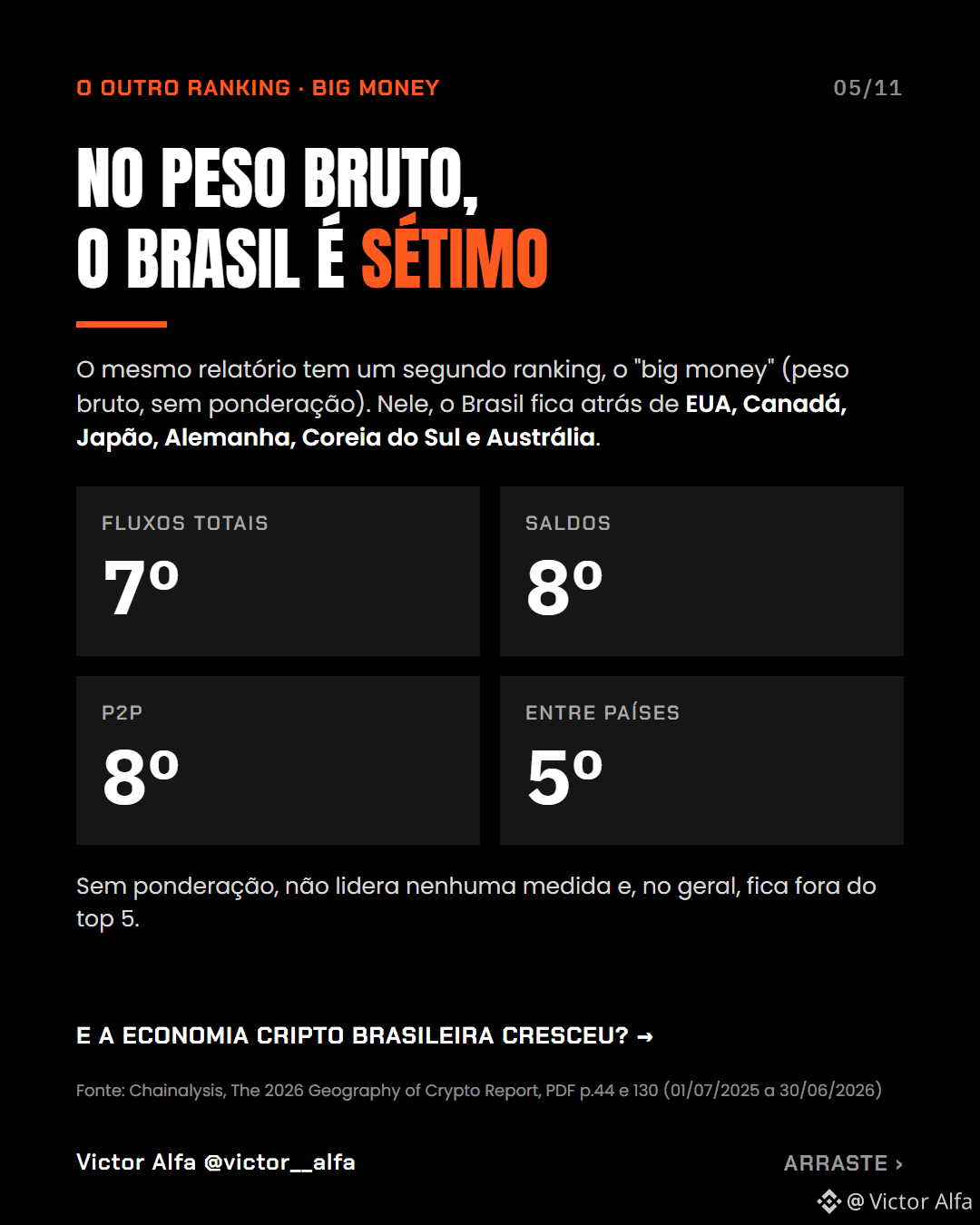
• It doesn’t mean size: in the “big money” ranking in the same report (gross volume, unweighted), Brazil ranks 7th, behind the U.S., Canada, Japan, Germany, South Korea, and Australia.
• It doesn’t mean growth: in dollar terms, Brazil’s crypto economy shrank by 1.6% to a total of US$252.5 billion, while Latin America, including Brazil, grew by 9.8%, led by Mexico (+25.5%), Argentina (+15.3%), and Colombia (+13.8%). In the report’s chart, Brazil’s share of the region fell from 49.3% to 43.7%.
🧙♂️ My take: Brazil is No. 1 in consistency, not in size or growth. Placing in the top 4 across all four measures is a real achievement, but it doesn’t mean Brazilians use more crypto than Americans. The story changes if Brazil leads in one of the measures, climbs in big money, or regains share in Latin America in the next report. Data > Narrative.
💎🤲 Stay humble, stack sats. #Bitcoin $BTC Follow @wesearch_dao