Understanding the TRON Super Representative mechanism: the core of decentralized governance supporting tens of millions of daily transactions
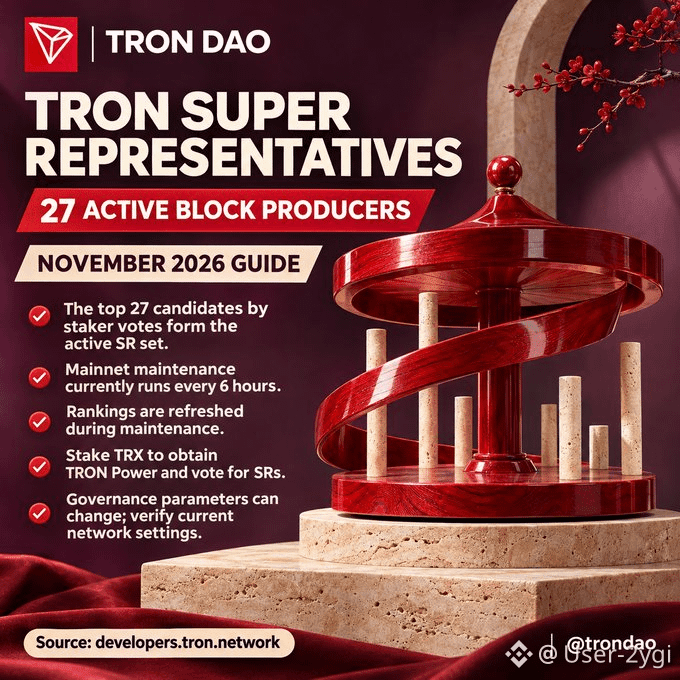
Whether a public blockchain can maintain zero downtime and produce blocks within seconds during years of high-concurrency operation depends primarily on its underlying consensus architecture. TRON uses a Delegated Proof of Stake (DPoS) mechanism, in which the global community elects 27 Super Representatives (SRs) through staking votes. Together, they are responsible for block production, transaction packaging, and on-chain parameter governance.
The four pillars of the Super Representative system
➠ 𝟮𝟳 core block-producing nodes: The top 27 candidates by vote count are elected as Super Representatives. They take turns generating blocks and validating network-wide transactions, ensuring a 3-second block time and stable high throughput.
➠ 𝟲-hour dynamic election rotation: Votes across the network are automatically tallied and rankings refreshed every 6 hours. Any underperforming or offline node is immediately replaced, creating a strong system of competition and turnover.
➠ On-chain proposal governance: Core parameters, such as the network energy unit price, staking unbonding period, and protocol upgrades, can only be implemented after a proposal is submitted by Super Representatives and approved by a majority vote.
➠ Shared rewards from staking votes: Ordinary users can stake TRX through Stake 2.0 to obtain TRON Power voting rights and vote for their preferred SRs, then share block production and voting rewards proportionally.
Why the 𝗗𝗣𝗼𝗦 architecture suits high-frequency payment networks
Compared with the high energy consumption and lengthy confirmation times of proof of work, TRON’s Super Representative mechanism strikes a practical balance between decentralized governance and commercial-grade performance, enabling more than ten million USDT transfers to be settled smoothly every day.
Personal perspective
The Super Representative system puts the power to maintain and govern the network directly in the hands of token holders who vote. Voting for SRs with reliable block production and transparent commissions is not only a way to earn staking rewards, but also an important way for every holder to help maintain the security of the TRON network.
When voting for TRON Super Representatives, which metric matters most to you—annualized yield, block production reliability, or the node’s contribution to ecosystem development?
@TRON DAO @Justin Sun孙宇晨 #TRONEcoStar