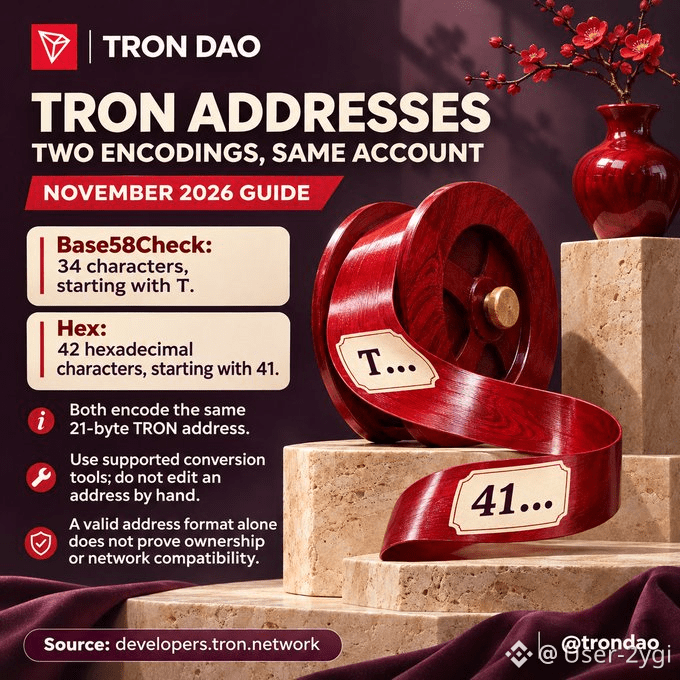
Understand TRON Address Formats at a Glance: Why Do They Start with the Letter 𝗧? What’s the Difference Between 𝗕𝗮𝘀𝗲𝟱𝟴 and 𝗛𝗲𝘅 Formats?
New users encountering the TRON network for the first time can usually recognize the distinctive feature of TRON wallet addresses at a glance: almost all addresses used for everyday transfers begin with a capital “T” and are 34 characters long. In fact, at the underlying system level, each TRON account corresponds to two address encoding formats that can be converted between one another.
An Overview of TRON’s Two Core Address Formats
➠ 𝗕𝗮𝘀𝗲𝟱𝟴𝗖𝗵𝗲𝗰𝗸 format (the everyday address that starts with “𝗧”): Consists of 34 uppercase and lowercase letters and numbers, and always uses “T” as its version prefix. This format excludes easily confused characters (such as the number 0, uppercase O, uppercase I, and lowercase l) and includes a 4-byte checksum. If even one character is entered incorrectly, the wallet immediately blocks the transaction and displays an error, helping prevent funds from being sent to the wrong address.
➠ 𝗛𝗲𝘅 hexadecimal format (used for smart contracts and low-level development): 42 characters long and always starts with “41”, followed by a 20-byte public key hash. When calling low-level node APIs or writing smart contract interaction scripts, the system typically uses this format for efficient computation.
➠ Seamless mapping from the same private key: Whether it’s a Base58 address starting with “T” or a Hex address starting with “41”, both are derived from the same private key using cryptographic algorithms and point to exactly the same on-chain account and assets. They can be converted between formats at any time without loss using tools such as TRONSCAN or TronWeb.
Tips for Making Secure Transfers
When withdrawing from an exchange or sending TRC-20 USDT to a friend, always make sure the recipient address is 34 characters long and starts with a capital “T”. Never enter an Ethereum or BSC “0x” address into the TRON network channel.
Personal Opinion
The Base58Check address format that starts with “T” not only strengthens the TRON network’s brand recognition, but also greatly reduces the risk of mistakes when manually copying and pasting thanks to its built-in checksum. It’s a thoughtful detail that balances security and ease of use.
When you first sent TRC-20 USDT, did you also confirm the address by checking that it started with “T” and verifying the first and last few characters?
@TRON DAO @Justin Sun孙宇晨 #TRONEcoStar