
For those looking for alternatives to cloud storage giants Google and Dropbox, Encrypted Networks offers a Web3 solution.
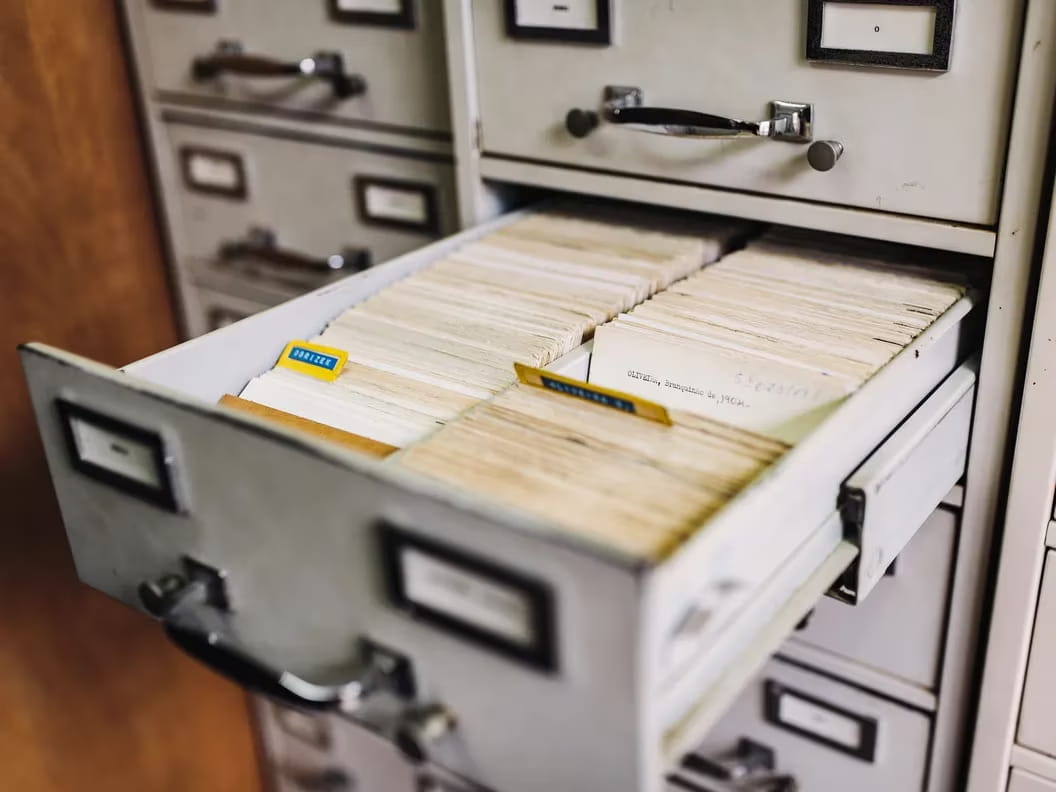
Cloud storage services like Dropbox and Google Cloud have changed the way we store and share large files of videos and photos online. They allow anyone to store terabytes of data for a fraction of the price of a new hard drive and access files on-demand from any device. But there's a catch: Users must rely on a centralized entity's risk management system, which can revoke access to their accounts at any time, share their files with snooping government agencies, or even go bankrupt, leaving customers scrambling to find another one before they do. A solution file disappeared.
Web3 offers an alternative: decentralized file storage networks such as Filecoin, Storj, and Arweave. Instead of storing your data in a cloud company, decentralized file storage protocols split your data into small chunks and then store the packets on pseudonymous computers (nodes) connected to a decentralized network. Decentralization means that files are protected by a network of many different stakeholders rather than a single company.
The decentralized network in question is usually (but not always) a blockchain. Instead of processing transactions for crypto, the validator handles the file space for crypto - typically the native token of the protocol's file sharing service. For example, with Filecoin, FIL is used as a reward for participants who provide file storage.
In order to earn cryptocurrency, validators must prove that they stored files on their hard drive in a consensus mechanism commonly known as proof of storage. This virtual currency is designed to keep validators honest and trustworthy, providing incentives for those running nodes to maintain data.
Unlike centralized file-sharing services (usually monthly subscriptions) where you pay in fiat currency, decentralized file services run on cryptocurrency. Space is rented and paid for in cryptocurrency — usually the native token of the decentralized file-sharing protocol. So again, if you use Filecoin to store your files, you’ll pay in FIL based on how much storage space you need.
Note that decentralized file storage networks are different – but similar! – to peer-to-peer file storage networks, such as torrent services or Napster. They work by having a group of people (called seeders) host the file, while another group of people (called leechers) download pieces of the file from many leechers. This is how torrent sites like ThePirateBay work. The benefit is similar: censorship-resistant file sharing. This is why they are so popular as platforms for illegally downloading movies and music.
Advantages and Disadvantages of Decentralized Storage
One benefit of a decentralized storage system is that it is political—or, more accurately, it is designed to be apolitical. Files stored on decentralized file services are resistant to the decisions of any central authority, such as governments wishing to control and censor content. It also prevents private companies from enforcing their own policies by denying service or taking other action on files they hold, such as sharing them with law enforcement.
One thing to note about decentralized storage is that there is no single authority that can prevent certain types of files, even illegal material, from being stored on these networks. These networks are also private. Data stored on these networks is encrypted before being stored on the network, and no single computer has enough pieces of the file to piece together the puzzle and infer what is contained in the file.
One of the big advantages of decentralized storage is that it is often much cheaper than storing the same amount of data on a cloud provider like AWS or Azure.
Practical applications of decentralized file storage networks
So, where can you find one of these decentralized file sharing networks? One of the most popular such networks is called IPFS, short for Interplanetary File Network. It is also used to host non-fungible tokens (NFTs) and websites, claiming that these media are censorship-resistant and cannot be deleted by the protocol’s creators.
IPFS was developed by Protocol Labs and launched in 2015. Data on IPFS is stored in multiple locations and then pieced together when anyone needs to download a file contained within its network. IPFS is not based on a blockchain, but its hash can be included in the metadata of a blockchain transaction.
Protocol Labs is also the creator of Filecoin, although Filecoin operates independently from IPFS while sharing several of the same ideas; in fact, all Filecoin nodes are IPFS nodes. The main difference is that IPFS is built for short-term data retrieval, while Filecoin is built for long-term persistence of data. A competitor called Arweave is doing the same thing. One of the main differences is the payment structure: data is deleted from Filecoin if the monthly bill remains unpaid, while Arweave stores data permanently. Other competitors in the market include Sia, Akash, and Storj.