
小家日记
217 Posts

小家日记
Report
Block User
为交易而活,在这个市场挨打的第8年。每天更新一些交易思路和心得,希望对你有帮助🌹
7 Following
9 Followers
77 Liked
Posts
PINNED
·
--
Thank you all so much for watching! If you'd like to chat, you can join the group chat pinned on my profile or add the contact below. I'll share any promising trades or strategies 🙂
@XJ001
Thank you all so much for watching! If you'd like to chat, you can join the group chat pinned on my profile or add the contact below. I'll share any promising trades or strategies 🙂
@小家日记
@小家日记

1
85
·
--
When many beginners hear about leverage, their eyes light up. “10x leverage? That means my 10,000 can be used like 100,000, and I can earn 10 times as much!”
Sounds wonderful, right? But the reality is that your losses are also multiplied by 10.
Let me do the math for you. Say you have 10,000 in capital and open a 10x leveraged long position. In effect, you’re using 10,000 as margin to control a 100,000 position. If the price drops just 10%, your 100,000 position loses 10,000—wiping out your entire margin and liquidating your account.
Keep in mind, the price only needs to drop 10%. Not 50%, not 30%—just 10%. In the cryptocurrency market, a 10% move in a single day is practically routine. In other words, if you go all in with 10x leverage, you could face 3–4 potentially account-liquidating price swings every month on average. It’s like standing on the edge of a cliff: even a slight gust of wind could blow you over.
In short, don’t just focus on how much leverage can amplify your gains. First, consider how much you can afford to lose.
Feel free to join the discussion: @XJ001 $PORTAL
When many beginners hear about leverage, their eyes light up. “10x leverage? That means my 10,000 can be used like 100,000, and I can earn 10 times as much!”
Sounds wonderful, right? But the reality is that your losses are also multiplied by 10.
Let me do the math for you. Say you have 10,000 in capital and open a 10x leveraged long position. In effect, you’re using 10,000 as margin to control a 100,000 position. If the price drops just 10%, your 100,000 position loses 10,000—wiping out your entire margin and liquidating your account.
Keep in mind, the price only needs to drop 10%. Not 50%, not 30%—just 10%. In the cryptocurrency market, a 10% move in a single day is practically routine. In other words, if you go all in with 10x leverage, you could face 3–4 potentially account-liquidating price swings every month on average. It’s like standing on the edge of a cliff: even a slight gust of wind could blow you over.
In short, don’t just focus on how much leverage can amplify your gains. First, consider how much you can afford to lose.
Feel free to join the discussion: @小家日记 $PORTAL

2
551
·
--
A lot of people in the community make compounding positions seem way too complicated. In fact, some of them don’t even understand how they got liquidated.
For example, you have only 10 USDT and open a 150x long on BTC when it’s at 60,000.
Let’s say the market rises steadily from 60,000 to 80,000. For every 2,000-point rise, you add the profits from the previous move to your position. Starting with 10 USDT, you keep reinvesting your profits, and the more you earn, the more margin you can use for the next move.
That’s how many people understand compounding positions: using profits to increase the position size and accumulate returns move by move.
But there’s one especially dangerous problem: every time, you put all your profits back in and use 150x leverage. You simply can’t withstand a pullback.
With 150x leverage, even a slight move in the wrong direction can leave you short of margin. The actual liquidation price also depends on maintenance margin, fees, and funding rates. Even a normal BTC retracement could wipe out both the profits you’ve accumulated and your original capital.
So don’t focus only on those figures of hundreds of thousands or millions in the spreadsheet. They’re based on the ideal assumption that the market keeps rising exactly as expected and that you can successfully add to your position at every stage. In reality, things won’t line up perfectly for you at every step.
Compounding positions doesn’t mean reinvesting every penny you earn, and it certainly doesn’t mean going all in at 150x leverage all the way up. You can use profits to increase your position, but you need to leave room for drawdowns. Otherwise, after winning ten times in a row, one final pullback could wipe everything out. Feel free to discuss: @XJ001 $PORTAL
A lot of people in the community make compounding positions seem way too complicated. In fact, some of them don’t even understand how they got liquidated.
For example, you have only 10 USDT and open a 150x long on BTC when it’s at 60,000.
Let’s say the market rises steadily from 60,000 to 80,000. For every 2,000-point rise, you add the profits from the previous move to your position. Starting with 10 USDT, you keep reinvesting your profits, and the more you earn, the more margin you can use for the next move.
That’s how many people understand compounding positions: using profits to increase the position size and accumulate returns move by move.
But there’s one especially dangerous problem: every time, you put all your profits back in and use 150x leverage. You simply can’t withstand a pullback.
With 150x leverage, even a slight move in the wrong direction can leave you short of margin. The actual liquidation price also depends on maintenance margin, fees, and funding rates. Even a normal BTC retracement could wipe out both the profits you’ve accumulated and your original capital.
So don’t focus only on those figures of hundreds of thousands or millions in the spreadsheet. They’re based on the ideal assumption that the market keeps rising exactly as expected and that you can successfully add to your position at every stage. In reality, things won’t line up perfectly for you at every step.
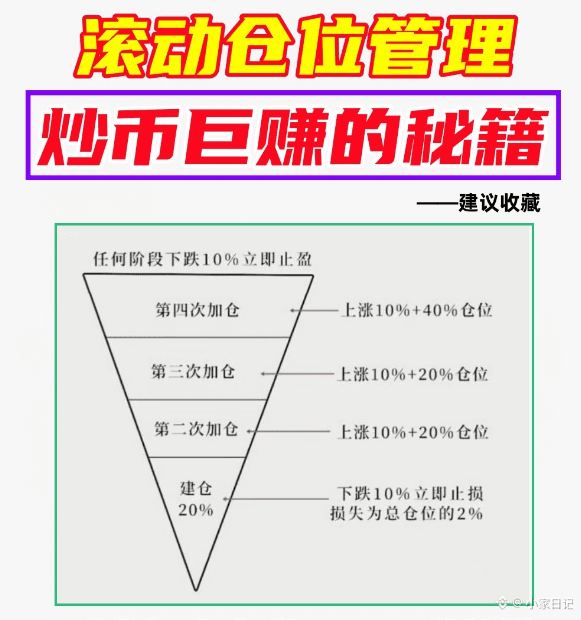
Compounding positions doesn’t mean reinvesting every penny you earn, and it certainly doesn’t mean going all in at 150x leverage all the way up. You can use profits to increase your position, but you need to leave room for drawdowns. Otherwise, after winning ten times in a row, one final pullback could wipe everything out. Feel free to discuss: @小家日记 $PORTAL
1
2
1.1k
·
--
If you can’t bring yourself to hit the stop-loss, sooner or later one trade will make you question your whole life.
Don’t just talk a good game about strict stop-losses and keeping losses under control. When your own account is deep in the red, your finger suddenly feels glued to the screen.
It drops, and you wait for a bounce.
It drops again, and you wait some more.
It drops until you’re almost liquidated, and you’re still thinking: What if the next candle takes it back up?
Tell me, isn’t that just setting yourself up to fail?
The crypto market doesn’t care whether you can handle it. A drop of ten-plus percentage points in a few minutes is nothing unusual. You might get lucky and see it recover once, but if you ride it out ten or twenty times, eventually one of those trades will wipe you out. By then, forget making your money back—you’ll barely have any of your principal left.
I’ve always thought there’s nothing complicated about stop-losses. Plan your exit before you place the trade. If you’re down around 2% of your capital, get out; or if a key support level breaks, don’t hesitate—close the position. The exact settings depend on your position size and leverage, so don’t treat 2% as a magic number.
The worst thing is being full of confidence before opening a trade, then relying entirely on prayer afterward. You don’t own the market. Just because you want it to go up doesn’t mean it has to. Don’t fight the market. If the trade was wrong, admit it. Take a small loss and you can keep playing; hold on until you’re liquidated, and then you really can’t play anymore. Feel free to chat: @XJ001 $PORTAL
If you can’t bring yourself to hit the stop-loss, sooner or later one trade will make you question your whole life.
Don’t just talk a good game about strict stop-losses and keeping losses under control. When your own account is deep in the red, your finger suddenly feels glued to the screen.
It drops, and you wait for a bounce.
It drops again, and you wait some more.
It drops until you’re almost liquidated, and you’re still thinking: What if the next candle takes it back up?
Tell me, isn’t that just setting yourself up to fail?
The crypto market doesn’t care whether you can handle it. A drop of ten-plus percentage points in a few minutes is nothing unusual. You might get lucky and see it recover once, but if you ride it out ten or twenty times, eventually one of those trades will wipe you out. By then, forget making your money back—you’ll barely have any of your principal left.
I’ve always thought there’s nothing complicated about stop-losses. Plan your exit before you place the trade. If you’re down around 2% of your capital, get out; or if a key support level breaks, don’t hesitate—close the position. The exact settings depend on your position size and leverage, so don’t treat 2% as a magic number.
The worst thing is being full of confidence before opening a trade, then relying entirely on prayer afterward. You don’t own the market. Just because you want it to go up doesn’t mean it has to. Don’t fight the market. If the trade was wrong, admit it. Take a small loss and you can keep playing; hold on until you’re liquidated, and then you really can’t play anymore. Feel free to chat: @小家日记 $PORTAL

118
·
--
If you’re stuck holding a losing crypto position, don’t do anything foolish! The more you lose, the harder you hold on—and you could end up losing your entire principal.
A lot of people start making excuses to themselves as soon as they make a bad buy. When the price first drops, they say it’s just a shakeout. If it drops a little further, they say a rebound is just around the corner. When they can’t take any more, they think about adding to their position to bring down their average cost. But the market never recovers, and their position just keeps getting bigger.
After you’re stuck in a losing position, the first thing to do isn’t to panic-sell or immediately add more. First, look at why you entered the trade in the first place. If it’s just a normal pullback, your position isn’t large, and your stop-loss hasn’t been hit, don’t let a few bearish candles scare you into trading back and forth. Check whether the market trend has actually deteriorated. Don’t panic at the first sign of an unrealized loss. But if the price has already fallen below the stop-loss level you set, stop trying to reassure yourself. You can’t abandon the discipline you agreed on when you entered just because you’re losing money. If it’s time to get out, get out—a small loss is better than letting it deepen. This is especially true for short-term trades: if you’re on the wrong side, exit quickly. Short-term trading is about making money from price movements. If you stubbornly hold a losing trade for days, you may eventually forget whether you meant it to be a short-term or long-term trade.
One more thing to remember: don’t turn a losing trade into a prolonged battle. You can earn back lost money, but losing control of your position is the real problem. Feel free to discuss: @XJ001 $PORTAL
If you’re stuck holding a losing crypto position, don’t do anything foolish! The more you lose, the harder you hold on—and you could end up losing your entire principal.
A lot of people start making excuses to themselves as soon as they make a bad buy. When the price first drops, they say it’s just a shakeout. If it drops a little further, they say a rebound is just around the corner. When they can’t take any more, they think about adding to their position to bring down their average cost. But the market never recovers, and their position just keeps getting bigger.
After you’re stuck in a losing position, the first thing to do isn’t to panic-sell or immediately add more. First, look at why you entered the trade in the first place. If it’s just a normal pullback, your position isn’t large, and your stop-loss hasn’t been hit, don’t let a few bearish candles scare you into trading back and forth. Check whether the market trend has actually deteriorated. Don’t panic at the first sign of an unrealized loss. But if the price has already fallen below the stop-loss level you set, stop trying to reassure yourself. You can’t abandon the discipline you agreed on when you entered just because you’re losing money. If it’s time to get out, get out—a small loss is better than letting it deepen. This is especially true for short-term trades: if you’re on the wrong side, exit quickly. Short-term trading is about making money from price movements. If you stubbornly hold a losing trade for days, you may eventually forget whether you meant it to be a short-term or long-term trade.
One more thing to remember: don’t turn a losing trade into a prolonged battle. You can earn back lost money, but losing control of your position is the real problem. Feel free to discuss: @小家日记 $PORTAL

171
·
--
Are ordinary people destined to spend their whole lives working for someone else? If you want to turn your fortunes around in crypto, first get rid of the urge to make money fast.
I've been in the market for many years, and I've noticed something interesting: quite a few people who chase every bit of news and react extremely quickly have left the market early. Meanwhile, some people who don't seem especially clever and simply trade at their own pace have slowly seen their accounts improve.
They don't have any secret tricks; they just don't make needless moves.
When prices are soaring and everyone is shouting about buying, they hold back a little. When the market is falling and everyone is panicking and afraid to get involved, that's when they start looking for opportunities.
One more thing: if you have limited funds, never put everything in at once. Keeping some money on hand isn't cowardly—it means you'll still have funds to buy if a real opportunity comes along during a market dip. Don't rush into a position, either. Enter in several batches, so you still have room to adjust if you get it wrong.
And don't get restless during a sideways market. A price bouncing around for a few days doesn't mean there's money to be made every day. Some markets look exciting, but getting in just means working to pay the fees.
There are a few things I believe in:
When everyone is going crazy, be extra cautious. When nobody wants to talk about the market, that may be the time to start looking into opportunities.
During a sharp drop, don't rush to sell at the bottom. And when prices surge, don't chase them.
A rebound after a sudden drop is worth watching, but a bigger drop doesn't guarantee a bigger rise.
Don't try to buy at the absolute bottom when building a position. Enter in batches and leave yourself some room to maneuver.
After a series of sharp rises and falls, take a few days off from trading and wait for the market to show a clear direction.
Ordinary people trading don't need to prove every day how good they are. The market won't give you another chance just because you're in a hurry.
If you hope to change your life by trading crypto, don't expect to turn things around overnight. Chase fewer pumps, hold fewer losing positions, and keep your principal in the game—that's more practical than anything else.$PORTAL

215
·
--
What’s most frightening about withdrawing funds isn’t a large amount, but the bank asking where the money came from and you not being able to explain it at all.
A lot of people make money from crypto trading and think that as long as a bank card can receive the money, that’s enough. But when a bank actually checks, they realize they didn’t save the transaction records, don’t know who the counterparty was, and can’t even explain which accounts the money passed through.
I personally think there are a few things that must be done well when withdrawing funds.
First, try to use formal channels.
If you can trade through a legitimate platform, don’t look for strangers to exchange U privately. For C2C, you should also check the merchant’s transaction history, reputation, and platform protections. In particular, if someone asks you to leave the platform to chat or transfer money privately, don’t take that risk just for a small price difference.
Second, separate trading accounts from daily accounts.
Try not to mix salary cards and living-expense accounts with frequently used trading funds. Manage accounts separately so it’s easier to organize cash flow and verify records. But don’t think switching to a different bank card will help you avoid risk controls; banks will still review suspicious funds.
Third, keep proof for every transaction.
Platform orders, buy/sell records, transfer screenshots, deposit and withdrawal records—save everything you can. If a bank ever asks, at least you can clearly explain the transaction process and the source of the funds.
Fourth, don’t believe in so-called safe limits.
Some people say it’s fine under ten thousand, others say even one hundred thousand can be withdrawn casually. Don’t take any of that seriously. Whether a bank reviews it depends not only on the amount, but also on the source of funds, transaction frequency, account flow, and specific circumstances.
Fifth, don’t treat Hong Kong as a withdrawal safe haven.
Hong Kong has a regulatory regime for virtual assets, and licensed platforms also have corresponding operating requirements, but that does not mean all crypto funds can directly enter bank accounts. In the end, it still depends on the source of funds, the transaction channel, and the bank’s review requirements.
There is no universal trick for withdrawing funds. Don’t touch money from unknown sources, don’t help others receive or transfer funds on their behalf, and keep your own transaction records complete.$PORTAL @XJ001
What’s most frightening about withdrawing funds isn’t a large amount, but the bank asking where the money came from and you not being able to explain it at all.
A lot of people make money from crypto trading and think that as long as a bank card can receive the money, that’s enough. But when a bank actually checks, they realize they didn’t save the transaction records, don’t know who the counterparty was, and can’t even explain which accounts the money passed through.
I personally think there are a few things that must be done well when withdrawing funds.
First, try to use formal channels.
If you can trade through a legitimate platform, don’t look for strangers to exchange U privately. For C2C, you should also check the merchant’s transaction history, reputation, and platform protections. In particular, if someone asks you to leave the platform to chat or transfer money privately, don’t take that risk just for a small price difference.
Second, separate trading accounts from daily accounts.
Try not to mix salary cards and living-expense accounts with frequently used trading funds. Manage accounts separately so it’s easier to organize cash flow and verify records. But don’t think switching to a different bank card will help you avoid risk controls; banks will still review suspicious funds.
Third, keep proof for every transaction.
Platform orders, buy/sell records, transfer screenshots, deposit and withdrawal records—save everything you can. If a bank ever asks, at least you can clearly explain the transaction process and the source of the funds.
Fourth, don’t believe in so-called safe limits.
Some people say it’s fine under ten thousand, others say even one hundred thousand can be withdrawn casually. Don’t take any of that seriously. Whether a bank reviews it depends not only on the amount, but also on the source of funds, transaction frequency, account flow, and specific circumstances.
Fifth, don’t treat Hong Kong as a withdrawal safe haven.
Hong Kong has a regulatory regime for virtual assets, and licensed platforms also have corresponding operating requirements, but that does not mean all crypto funds can directly enter bank accounts. In the end, it still depends on the source of funds, the transaction channel, and the bank’s review requirements.
There is no universal trick for withdrawing funds. Don’t touch money from unknown sources, don’t help others receive or transfer funds on their behalf, and keep your own transaction records complete.$PORTAL @小家日记
2
2
439
·
--
Which is more cost-effective: using 1,000 U at 10x leverage or 2,000 U at 5x leverage?
First, let’s look at the most direct result:
At 10x leverage, 1,000 U gives you a position worth 10,000 U. At 5x leverage, 2,000 U also gives you a position worth 10,000 U.
In other words, with all other conditions being equal and excluding fees and funding rates, if the coin price rises by 1%, both positions gain 100 U; if it falls by 1%, both lose 100 U.
If the gains and losses are the same, what’s the difference?
The difference lies in the margin and the account’s buffer.
Using 1,000 U at 10x leverage means using less capital to control a 10,000 U position. It ties up less capital, but the leverage is higher, so the risk of liquidation is usually more sensitive to adverse price movements.
Using 2,000 U at 5x leverage doesn’t change the nominal position size, but you put up more margin and use less leverage. However, using the entire 2,000 U as margin doesn’t mean there’s no risk.
One more thing you need to keep in mind: don’t assume that with 10x leverage, the price has to move 10% against you before you’re liquidated. The actual liquidation price also depends on maintenance margin, whether you’re using isolated or cross margin, and other funds in your account. Liquidation is usually triggered sooner.
What I really want to remind everyone is this: with the same 10,000 U position, don’t just focus on how much you could earn—consider how much you can afford to lose.
For example, if you can only afford to lose 100 U, you should calculate your position size based on your stop-loss distance first, instead of choosing 10x or 5x leverage and then forcing yourself into a trade.
Leverage is just a tool. What really determines whether your account can withstand market movements is your position size and stop-loss.
Don’t keep focusing on which setup can make money faster. First, work out how much you’d lose if one trade goes wrong. Could your account keep trading after three consecutive losing trades? That’s the question worth considering. $HAEDAL

35
·
--
So you’ve made money in crypto—what next? Cashing out is the real hurdle!
Many people work hard to make tens or even hundreds of thousands of USDT, thinking they can finally put the money in their pockets. But as soon as they try to withdraw, their bank card gets frozen, the platform requests a review, or the bank calls to verify where the funds came from. The money is theirs, yet they’re stuck at the last step, desperately unsure what to do.
So don’t focus only on how to make money—prepare ahead of time for cashing out, too.
1. Don’t withdraw a large amount without thinking it through.
Before withdrawing, find out what the platform and bank require, and prepare the relevant documents in advance for large sums. Don’t assume splitting the amount into several transfers will help you avoid a review; deliberately splitting it up may also draw attention.
2. Double-check transfer details.
For on-chain transfers, carefully check the address and network. Choose the wrong network or enter the wrong address, and your assets may be impossible to recover.
3. Don’t accept funds from strangers without thinking.
Don’t collect or transfer money on someone else’s behalf, and never let others use your bank card to move money. You may not know where their money came from.
4. Keep records of every transaction.
Keep purchase and sale orders, deposit and withdrawal records, transfer receipts, and chat screenshots. If your transactions are reviewed, these can help explain where the funds came from and how the transactions took place.
5. Don’t make things up if your account is reviewed.
Provide documents that reflect the facts. Don’t invent an explanation, and don’t trust claims about special ways to unfreeze your account. If your account is frozen, your funds are implicated in a case, or you have a legal issue, consult a lawyer promptly.
6. Make a plan for your funds after making a profit.
Don’t leave all your assets in a trading account long term. Manage them sensibly based on your needs, and don’t let your on-screen profits disappear when the market falls.
Don’t end up in a panic over a single transfer from an unknown source or because you failed to keep one receipt. Making money takes skill, but being able to withdraw it legally and compliantly is what lets you truly keep it.@XJ001 $HAEDAL
So you’ve made money in crypto—what next? Cashing out is the real hurdle!
Many people work hard to make tens or even hundreds of thousands of USDT, thinking they can finally put the money in their pockets. But as soon as they try to withdraw, their bank card gets frozen, the platform requests a review, or the bank calls to verify where the funds came from. The money is theirs, yet they’re stuck at the last step, desperately unsure what to do.
So don’t focus only on how to make money—prepare ahead of time for cashing out, too.
1. Don’t withdraw a large amount without thinking it through.
Before withdrawing, find out what the platform and bank require, and prepare the relevant documents in advance for large sums. Don’t assume splitting the amount into several transfers will help you avoid a review; deliberately splitting it up may also draw attention.
2. Double-check transfer details.
For on-chain transfers, carefully check the address and network. Choose the wrong network or enter the wrong address, and your assets may be impossible to recover.
3. Don’t accept funds from strangers without thinking.
Don’t collect or transfer money on someone else’s behalf, and never let others use your bank card to move money. You may not know where their money came from.
4. Keep records of every transaction.
Keep purchase and sale orders, deposit and withdrawal records, transfer receipts, and chat screenshots. If your transactions are reviewed, these can help explain where the funds came from and how the transactions took place.
5. Don’t make things up if your account is reviewed.
Provide documents that reflect the facts. Don’t invent an explanation, and don’t trust claims about special ways to unfreeze your account. If your account is frozen, your funds are implicated in a case, or you have a legal issue, consult a lawyer promptly.
6. Make a plan for your funds after making a profit.
Don’t leave all your assets in a trading account long term. Manage them sensibly based on your needs, and don’t let your on-screen profits disappear when the market falls.
Don’t end up in a panic over a single transfer from an unknown source or because you failed to keep one receipt. Making money takes skill, but being able to withdraw it legally and compliantly is what lets you truly keep it.@小家日记 $HAEDAL

91
·
--
800U grew to 57,000U in 42 days.
At first, this follower’s favorite thing to do was chase rallies and sell into dips. Whenever coin prices surged, he’d chase after them; when they fell, he’d buy the dip. His account didn’t have much money, but his ambitions were big—he was always hoping one trade would turn things around.
I told him that 800U wasn’t something to gamble with. Before thinking about how much he could make, the key was to understand every trade he made. He gradually started breaking his old habits. If he couldn’t read the market, he stayed out. When prices moved sideways, he didn’t force a trade. Before entering, he planned where to exit. If his losses reached the level he’d set in advance, he accepted them instead of stubbornly holding on and hoping for the best.
He made 100U on his first trade, but didn’t immediately double his position. He kept his later profits in the account and waited to use them gradually when a clear opportunity came along.
Once, the market suddenly became extremely volatile. People in the group were calling out bullish and bearish opportunities everywhere, and he wanted to jump in again. I told him to wait. That market swing ended up whipsawing a lot of people. He only found a suitable entry after the direction had become clear...
The biggest danger with a small account is impatience. When you’re always hoping to double your money quickly, you often end up losing even what you started with. First break the habit of placing trades recklessly; then think about how to increase your returns. The first step to growing an account isn’t taking a bigger position—it’s avoiding mistakes you could have prevented. $HAEDAL

94
·
--
Brothers who trade crypto: having your bank card frozen or suddenly getting a call asking you to assist with an investigation may be closer to home than you think.
Some people trade over the counter and focus only on the price difference. As soon as the money arrives, they think the transaction is over. It’s only when their bank card suddenly stops working that they start to worry: Have I gotten myself into trouble? Can I get the money in my account back? Could my other accounts be affected too?
These are questions you should understand before anything happens.
1. Is trading crypto always illegal?
Not necessarily.
Cryptocurrency transactions are not protected by law. That doesn’t mean every transaction is illegal, nor does it mean you can always recover your losses if a dispute arises. It depends on how the transaction took place, where the funds came from, and whether any illegal activity was involved.
If you’re asked to assist with an investigation, explain the actual circumstances truthfully. Keep records of when the trades took place, the amounts, who you traded with, and any relevant chat logs, orders, and proof of transfer. Don’t make up a story just to make yourself look innocent.
2. If I sold crypto legitimately, why might I still have to return the money I received?
The issue may lie in where the money came from.
You sell crypto and the other party transfers money to you. It may look like an ordinary transaction, but if the funds are later found to be connected to a case involving fraud or another offense, they may be investigated.
Even if you don’t know the person who originally sent the funds, that doesn’t mean you can necessarily keep them. Whether you need to return the money or bear responsibility depends on the nature of the funds and the evidence. You can’t assume that returning the money automatically means you’re in the clear.
3. If one bank card is frozen, could my other cards be affected too?
Not necessarily.
In some cases, only one bank card is restricted. In others, the situation may involve other bank cards in your name, or even your WeChat Pay or Alipay accounts. It depends on the authority that imposed the freeze, the circumstances of the case, and the measures taken. Don’t assume that all your accounts will be affected just because you hear that one has been frozen.
If your card is frozen, first check with your bank to find out which authority imposed the freeze and why, then cooperate with the investigation as required. If the matter involves funds connected to a case, compensation, or determining liability, consult a lawyer promptly. Don’t guess, and don’t trust anyone claiming to offer a way to unfreeze your account.@XJ001
Brothers who trade crypto: having your bank card frozen or suddenly getting a call asking you to assist with an investigation may be closer to home than you think.
Some people trade over the counter and focus only on the price difference. As soon as the money arrives, they think the transaction is over. It’s only when their bank card suddenly stops working that they start to worry: Have I gotten myself into trouble? Can I get the money in my account back? Could my other accounts be affected too?
These are questions you should understand before anything happens.
1. Is trading crypto always illegal?
Not necessarily.
Cryptocurrency transactions are not protected by law. That doesn’t mean every transaction is illegal, nor does it mean you can always recover your losses if a dispute arises. It depends on how the transaction took place, where the funds came from, and whether any illegal activity was involved.
If you’re asked to assist with an investigation, explain the actual circumstances truthfully. Keep records of when the trades took place, the amounts, who you traded with, and any relevant chat logs, orders, and proof of transfer. Don’t make up a story just to make yourself look innocent.
2. If I sold crypto legitimately, why might I still have to return the money I received?
The issue may lie in where the money came from.
You sell crypto and the other party transfers money to you. It may look like an ordinary transaction, but if the funds are later found to be connected to a case involving fraud or another offense, they may be investigated.
Even if you don’t know the person who originally sent the funds, that doesn’t mean you can necessarily keep them. Whether you need to return the money or bear responsibility depends on the nature of the funds and the evidence. You can’t assume that returning the money automatically means you’re in the clear.
3. If one bank card is frozen, could my other cards be affected too?
Not necessarily.
In some cases, only one bank card is restricted. In others, the situation may involve other bank cards in your name, or even your WeChat Pay or Alipay accounts. It depends on the authority that imposed the freeze, the circumstances of the case, and the measures taken. Don’t assume that all your accounts will be affected just because you hear that one has been frozen.
If your card is frozen, first check with your bank to find out which authority imposed the freeze and why, then cooperate with the investigation as required. If the matter involves funds connected to a case, compensation, or determining liability, consult a lawyer promptly. Don’t guess, and don’t trust anyone claiming to offer a way to unfreeze your account.@小家日记
59
·
--
《The 500U Comeback Plan: You Can Make It Work Even with Little Capital》
Don’t trade your 500U recklessly. With the right approach, even a small amount of capital can gradually grow.
A lot of people see they only have 500U and think they don’t have much room to trade. So they either go all in or open highly leveraged contracts, hoping to make enough in one shot. But before the market even gives them a chance, their account is already wiped out.
I’ve always felt that the best use of 500U isn’t to gamble on the market, but to get really good at a strategy you can use over the long term.
For example, you could put 200U toward short-term trades, focusing on coins with relatively good liquidity, such as BTC and ETH, and avoiding unfamiliar altcoins. Set aside another 200U for swing-trading opportunities. You don’t need to trade every day—wait for the market to show a clear move before considering an entry. Keep the remaining 100U in reserve, and leave it untouched if no suitable opportunity comes along.
Before entering each trade, work out your stop loss. Try to limit each loss to 1%–2% of your capital. If you get it wrong two or three times in a row, stop and review your trades. Don’t rush into the next trade to win the money back.
One more important point: once your account is in profit, don’t immediately increase your position size. First, keep repeating your original strategy successfully. Only consider adding more capital once you can follow it consistently.
There’s no magic shortcut from 500U to 1,000U, or from 1,000U to a bigger number. What determines how far you go isn’t how much you make on a single trade, but whether you can keep repeating an effective approach. It’s understandable to hope that a small amount of capital can turn your fortunes around, but don’t stake all your hopes on a single leveraged contract. $SSV

116
·
--
For people who trade crypto, after making a quick buck once, getting back to a normal life like before really isn’t easy.
I know someone who had just entered the crypto world and didn’t know anything. He put 1,500 U into futures trading and, to his surprise, turned it into 30,000 U in just two days. He was over the moon, thinking he’d finally found a way to make money. He used to work hard all month for a few thousand yuan, and now he’d made that much in two days. Who would still care about that salary?
But things changed after that.
After making 30,000 U, he started to feel that trading with small positions was pointless, and even a few hundred U in profit seemed like too little. He kept opening bigger and bigger positions. When he lost money, he didn’t want to close them, thinking he could just hold on and make it back. In the end, his 30,000 U dwindled until only a few hundred U remained.
You’d think he would have stopped after losing that much, right? But he just couldn’t.
He checked the market while eating and prices before going to bed. If he woke up in the middle of the night, the first thing he did was reach for his phone. He’d say he’d never touch futures again, but as soon as he saw a coin’s price suddenly surge, he couldn’t help opening the app.
Why is it so hard to quit?
Because futures trading delivers such an intense rush. You might make half a month’s salary in just a few minutes, or lose several months’ savings in a matter of minutes. After making money like that, ordinary income feels painfully slow, and small profits lose their appeal. Worse, after taking a loss, you keep thinking the next trade will make it all back. The more you try to break even, the more likely you are to open positions recklessly, until the market ends up controlling your whole life.
What I want to say is that crypto trading can be an investment, but it shouldn’t become the only thing you think about when you wake up each day. Making quick money doesn’t mean you’re skilled, and you don’t need to prove yourself with another trade after losing money. Sometimes, closing the app and living a normal life for a few days matters much more than continuing to stare at those candlesticks. $SSV

107
·
--
If you want to turn a few thousand yuan into a million, what you should really spend time studying is how to catch a major market move—not how to trade every little fluctuation.
I’ve blown up my account before, too. I used to pore over 5-minute and 15-minute charts more than anyone, eager to jump in whenever the price of a coin moved even slightly. In the end, I didn’t make much from the market, paid plenty in fees, and my account was constantly on a roller coaster. Later, I switched to swing trading and focused only on weekly charts, mainly looking at these few things.
First, check the weekly KDJ. If a coin turns up from a low and forms a golden cross, I’ll add it to my watchlist. I won’t rush to buy; I’ll wait for the subsequent price action to confirm the signal.
Second, check the 20-week moving average. If the price stays above it, keep watching the trend. If it breaks below convincingly, the trend may have changed—get out if you need to, and don’t stubbornly hold on.
Third, wait for a breakout on rising volume. Consider entering only when the price breaks through a key level, trading volume increases noticeably, and the price manages to hold above that level. Once it rises, don’t rush to sell everything at once. When it reaches your target, take some profit off the table and manage the rest based on how the trend develops.
Fourth, don’t sit on a bad trade. If the price action still looks wrong a few days after you enter and it keeps failing to reclaim a key level, exit first. Don’t keep holding a losing position just to prove that your call was right.
The most important thing about this approach isn’t how accurate the indicators are. It’s that it helps you spend less time watching charts, make fewer impulsive buys, and stop chasing hot trends every day. Turning a few thousand yuan into a million takes the right market conditions and time; no handful of rules can guarantee it. But at the very least, don’t burn through your capital on trades you’re unsure about. When a major market move comes, you’ll have a chance to take part only if you still have money to invest. $SSV

75
·
--
I grew 2,000U to 42,000U in 9 weeks. I didn’t double my money on a single trade along the way.
.
When I first got into crypto, I lost a lot too. In the end, I had just 2,000U left in my account. During that period, it was easy to lose control. Whenever I lost money, I wanted to make it back fast. One day I’d chase a rally, the next I’d try to buy the dip. The more I traded, the more lost I felt. Later, I changed my approach and focused on just two things.
First, I only trade when there’s a clear trend.
When the market is moving up, I look for opportunities in strong coins. When it’s clearly weakening, I consider shorting in the direction of the trend. I don’t try to guess the top or expect to buy the exact bottom every time. If the direction isn’t clear, I’d rather stay on the sidelines.
Second, don’t give back your profits too easily.
I don’t like taking on positions that are too large. Before entering a trade, I decide where I’ll get out if I’m wrong. If the market moves in my favor, I take profits in stages. If it doesn’t, I don’t keep holding on just because I hate taking a loss.
This approach didn’t come together in a day. I spent three years refining it, starting in 2022. In this market cycle, a few friends who traded alongside me also did well. Some caught the rally, while others made the most of the downturn by shorting. You don’t have to trade every day, and you definitely don’t have to be right every time. If you understand what’s happening, trade; if you don’t, step aside. If you want to gradually grow a small account, first make sure a few impulsive trades don’t wipe it out.$SSV


51
·
--
Compounding is an important way to grow a small amount of capital. Growing tens of thousands into a million isn’t about placing trades every day—it’s about catching a few truly major market moves.
Many people misunderstand compounding. They think that whenever they make money, they should keep adding to their positions, and they try to put every bit of profit back in. That can bring quick gains, but losses can pile up just as quickly.
People who really know how to compound don’t usually make rash moves. When market conditions are ordinary, they might test the waters with a small position; if they’re unsure, they stay out altogether. Only after a sharp drop followed by a prolonged sideways period, when the price breaks out on strong volume and the trend starts to strengthen, do they consider increasing their position.
There are three key points:
First, keep your hands off the controls most of the time. You won’t make money every day. If there’s no opportunity, wait—don’t risk your capital on every market fluctuation.
Second, trade only in markets you understand. A sideways period after a sharp drop followed by a high-volume breakout is worth watching closely, but don’t assume the trend has arrived just because you see one big bullish candle. You also need to see whether the price can hold its gains.
Third, don’t put all your profits back in. You can use some of your profits for the next round and take the rest off the table. If you’re wrong, exit promptly. Don’t assume you’ll win this time just because you’ve made money before.
For example, you might grow tens of thousands to 100,000, then gradually build from there. At each step, you have more room to work with than when you started. But the larger your account gets, the less you can afford to take careless risks—a single major drawdown could wipe out your earlier profits.
Compounding isn’t going all in, and it doesn’t guarantee a turnaround. What it really tests is whether you can wait when there’s nothing to do, act when an opportunity comes along, and hold on to your profits once you’ve made them.$SSV


96
·
--
Some people in crypto make a quick buck once, and after that, find it hard to make money steadily again.
I once knew someone who put in 2,500U and turned it into 40,000U in just two days. You’d think that was a pretty great result, but for some reason, he changed after that.
He used to earn a few thousand yuan a month at his job and thought that was fine. But after making 40,000U, his salary started to seem pointless. It was the same with trading: he thought a few hundred U wasn’t enough, and even after making one or two thousand U, he wanted to keep holding, always thinking the next trade could double his money.
Gradually, he started wanting to get involved in every market move. Whenever a coin started pumping, he chased it. When he made money, he couldn’t bring himself to sell; when he lost money, he added to his position, thinking he could make it all back quickly.
The 40,000U he made at first gradually dwindled away, and in the end, only a few hundred U remained in his account.
What made it worse was that even after losing so much, he still wouldn’t stop. He couldn’t focus at work during the day, and at night he would lie in bed checking the market. He’d put his phone down, then pick it up again a little while later to take another look.
I’ve seen this happen a lot. Making a big profit for the first time should be a good thing, but if it makes you feel that small profits aren’t worth pursuing, your trading can easily go off track.
So when you make a big profit, don’t rush straight back in. Withdraw some of it first, and trade the rest the way you did before. Don’t increase your position on the next trade just because you made a lot on the last one; and if you have a string of losses, don’t rush to win it all back. A few hundred U in profit is still money. Don’t make one big win and then start thinking none of the rest matters. If you’ve made a lot of money but now keep wanting to take big positions and can never lock in your profits, don’t rush to look for the next huge pump. Rein in that urge to double your money, or no matter how much you make, you may not be able to hold on to it.$SSV

146
·
--
He saved up 1,500 U by delivering food. He really wanted to turn his life around through crypto trading, but he never expected that what would help him in the end wasn’t some altcoin that skyrocketed—it was a habit he’d developed while working as a delivery rider.
I met a guy who delivers food last month. He rode during the day and watched the charts at night, spending twelve or thirteen hours a day out on the road. He’d saved that 1,500 U by scrimping and saving, so he was especially cautious every time he placed a trade.
Some people see a hot coin suddenly take off and jump in right away, afraid of missing out on a profit. He was different. If he didn’t understand the market, he wouldn’t touch it, even if prices kept rising for days.
Once, he made a bad trade and lost 200 U. In the past, he would’ve immediately opened another position, hoping to win the money back quickly. This time, though, he simply closed the app and went back to delivering food the next day.
He said, “If I mess up a delivery, I might earn a few dozen yuan less at most. But if I make a mistake trading crypto and refuse to admit it, I could lose months of hard-earned money.”
That stuck with me.
After that, he started trading by his own rules: don’t chase coins that suddenly surge; if you don’t understand it, don’t buy it. Set a stop-loss before every trade and get out when it hits that level. If things go badly several times in a row, stop and take a break instead of rushing to win it all back. And when you make a profit, sell in batches rather than expecting to sell at the very top every time.
He never quit his delivery job. Whether trading makes money is one thing; everyday life shouldn’t rise and fall with your account balance. $SSV

130
·
--
He turned 2,400U into 170,000U. What set him apart most was that he didn’t immediately start betting bigger after making money.
When many people see their account making a profit, they get bolder. They used to risk only 100U per trade, but after making a few hundred U, they immediately double their position. Two losses in a row, and all their earlier profits are gone.
This young guy, who had just entered the scene, was different. For two months, he stuck to his original plan and didn’t make random changes just because he was making money.
He used 700U for short-term trades, with a maximum of one trade per day; set aside 700U to wait specifically for swing-trading opportunities, leaving it untouched if the conditions weren’t right; and kept 600U in reserve, without dipping into it to bail himself out after a temporary loss.
He had another habit: he never held onto winning trades until the very end. When the market reached his expected target, he sold part of his position first, then decided what to do with the rest based on how the market moved. If he got the direction wrong, he exited at his stop-loss level instead of trying to make it back by adding to his position.
Turning 2,400U into 170,000U in two months certainly involved some market conditions and luck. It’s not something everyone can replicate just by following the same approach.
But there’s a question worth considering: Why do some people find their accounts more likely to lose money after they’ve made a profit? Because as soon as they make money, they start changing their approach recklessly. The most dangerous time in trading often isn’t during the days when you’re losing money, but right after you’ve had your first taste of success. $SSV

49
·
--
To grow 3,000U into 30,000U, first protect your account.
A while ago, a guy reached out to me. He said he’d been losing trades in a row, and now only had 3,000U left in his account. These days, he was anxious every time he traded, afraid of missing a move. As soon as he lost a little, he’d rush to make it back, and ended up making an even bigger mess of things.
I didn’t tell him to learn some complicated trading strategy. Instead, I told him to divide up his funds.
Use one portion for short-term trades, with no more than two opportunities a day. Set your stop-loss before every entry, and get out when the price reaches it. Don’t add to a position just because the price drops, and definitely don’t keep opening trades to chase your losses.
Set aside another portion for trend trades. Focus mainly on the daily and weekly charts, and keep waiting until a clear direction emerges. Don’t buy and sell over and over in a choppy market—buy because you’re bullish today, then sell because you’re bearish tomorrow. That kind of back-and-forth is a great way to lose money to fees and eat into your capital.
Keep the rest of your funds in reserve, and don’t touch them casually. Even if you have a string of losses, don’t rush to use this money to plug the hole.
Also, before every trade, think through these three questions: What’s the most I can lose on this trade? At what price will I start reducing my position? If the market moves against me, where will I exit?
I’ve always thought that the biggest pitfall for traders with small accounts is wanting to grow them too quickly. They see other people making money and get anxious; when they lose, they want to win it back right away. Don’t let the urge to move faster make you burn through the little capital you have left.$SSV

212
Log in to explore more content
Join global crypto users on Binance Square
⚡️ Get latest and useful information about crypto.
💬 Trusted by the world’s largest crypto exchange.
👍 Discover real insights from verified creators.
Email / Phone number
Trending Topics
MoneroFalls13%OnDelistings
38,704 views
424 Discussing
The Crypto Paradox: Everyone Wants "Decentralization" Until It Actially Works
AzraCiv
·4 Likes
·3.1k views
EvolveAtBinanceBlockchainWeek
1.3M views
14,457 Discussing
EthereumGlamsterdamKeepsStorageFeeChange
18,819 views
210 Discussing