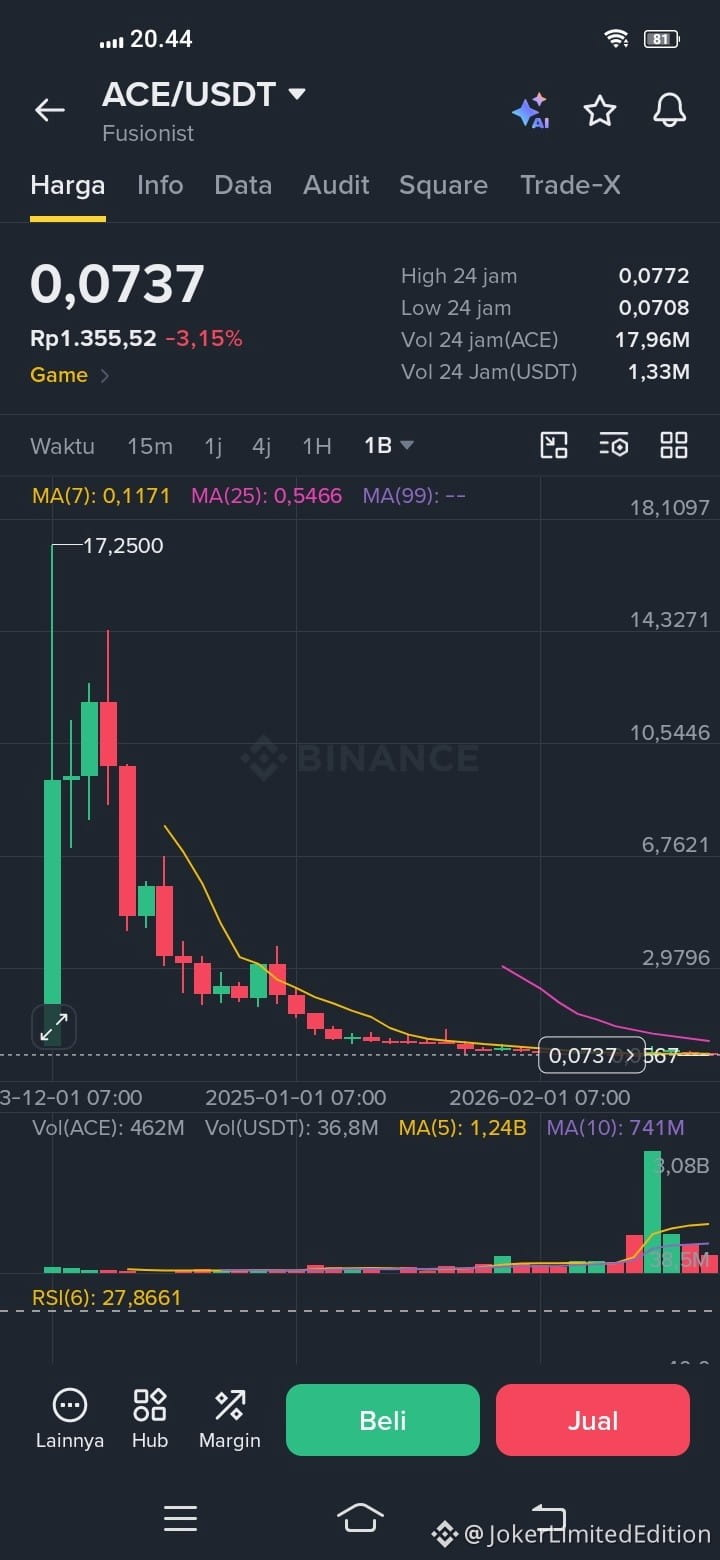
$ACE
Many people didn’t understand the previous post. This time, I’ll explain it more clearly. First, ACE on the blockchain has become a coin with no value. Its price rises when someone pours money into it and falls when someone sells a large amount. There is no project team or support from any real-world entity. Second, the ACE project on the exchange is still active; only its contract will be replaced, turning it into a different coin. This coin is not the same as the one on the blockchain, and they cannot be transferred between each other. For traders dealing in this coin’s contracts or spot market on the exchange, the main thing to watch is the new coin’s total supply. Will the original circulating supply of more than 100 million coins, priced at 0.07, become 1 billion after the contract upgrade? If so, the coin’s price will certainly fall. There are several things to consider. 1. It has been confirmed that counterfeit coins did enter the exchange at the time of the initial additional issuance to make a profit. This means those counterfeit coins have turned into real coins. So, when the new coins are mapped at a 1:1 ratio, the total supply will certainly increase, and the price of the relevant coin will be affected and fall. 2. Before the additional issuance, some real coins were also held on the blockchain. After the additional issuance, these real coins will become counterfeit coins and will not be mapped at a 1:1 ratio. As a result, the number of coins in circulation will also decrease, so the price may actually rise. 3. The project team itself still holds some locked, uncirculated coins. Whether these coins will also be mapped remains an open question. In short, those following the valueless coin on the blockchain should treat it like buying a lottery ticket. Those following the new project on the exchange should keep monitoring the total