

#couldspacex’sorbitaldatacentersboostaichipdemand? 🌍 #PositiveMindsGlobalResults
BINANCE SQUARE | INVEST • LEARN • GROW • TOGETHER
NOVEMBER 26, 2026 | SPACE TECHNOLOGY • AI • GLOBAL INNOVATION • FUTURE ECONOMY
The Next AI Revolution May Leave Earth: Space Data Centers Could Redefine the Future of Computing
The AI race is entering a new dimension—literally. As demand for artificial intelligence, cloud computing, high-performance chips, and enormous computing infrastructure continues to expand, technology companies are beginning to explore a concept that once belonged exclusively to science fiction: moving data centers into space.
The idea is gaining attention as Elon Musk's space ambitions intersect with the growing demand for AI infrastructure, energy, computing capacity, and next-generation satellite networks. If orbital data centers become commercially viable, they could fundamentally change how the world builds, powers, connects, and operates its digital infrastructure.
But this is not simply about launching computers beyond Earth's atmosphere. It could trigger an entirely new competition involving aerospace engineering, semiconductor manufacturing, solar power, telecommunications, robotics, cybersecurity, government regulation, and the economics of space.
The bigger question is not whether technology companies can send computing hardware into orbit. It is whether they can make space-based computing economically practical, reliable, scalable, and sustainable.
1. Why Technology Companies Are Looking Beyond Earth
The AI boom has created an extraordinary infrastructure challenge. Training advanced AI models and operating large-scale AI services require enormous amounts of electricity, powerful accelerators, cooling systems, networking equipment, and physical space.
Traditional data centers are increasingly facing pressure from several directions:
Rising electricity demand and limited grid capacity.
Expensive land and construction costs.
Competition for water and cooling resources.
Lengthy permitting processes.
Local opposition to large infrastructure developments.
Growing pressure on energy infrastructure.
Increasing demand for computing capacity from AI companies.
Space offers a radically different environment.
Space offers a radically different environment.
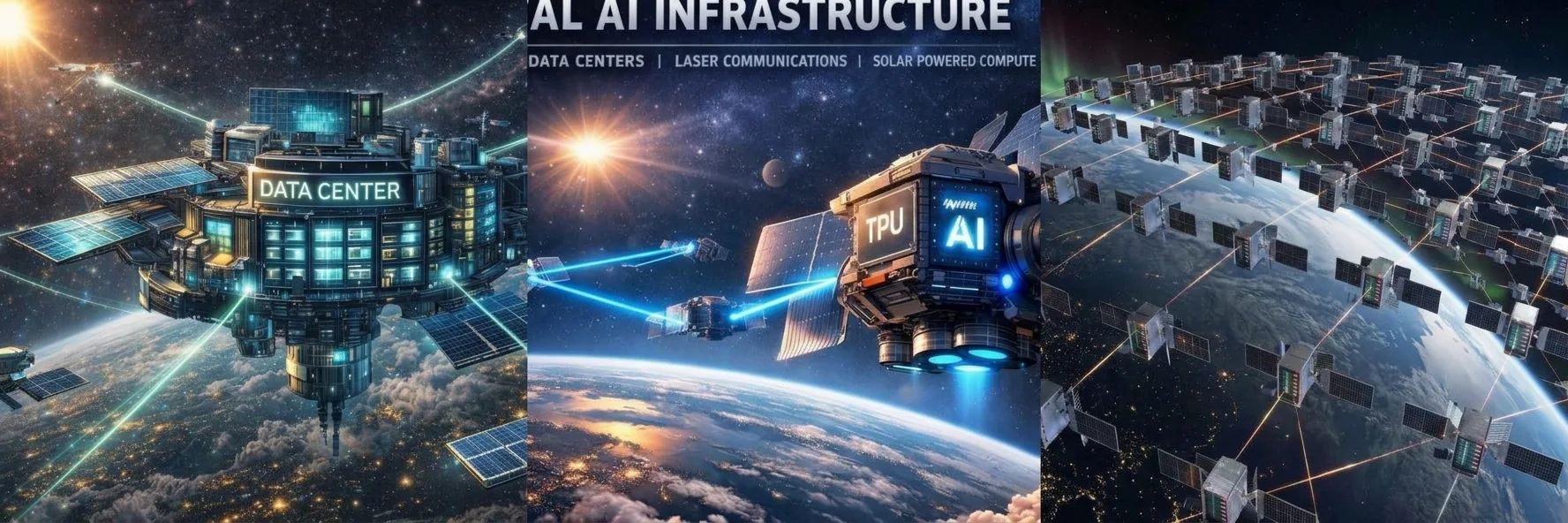
Orbital infrastructure could potentially use extensive solar energy, operate above many terrestrial infrastructure constraints, and eventually connect computing networks across the planet through satellite communications. In certain orbital configurations, solar power availability could be attractive compared with terrestrial energy systems, although achieving continuous, dependable power remains a major engineering challenge.
The vision is to move at least part of the world's computing infrastructure away from traditional ground-based facilities and into an orbital environment where solar energy, satellite networking, and specialized computing hardware could work together.
This concept is attracting attention from companies that believe the future of AI will require infrastructure beyond what Earth's energy and physical systems can comfortably provide.
2. Elon Musk's Space Computing Ambition Could Open a New Industry
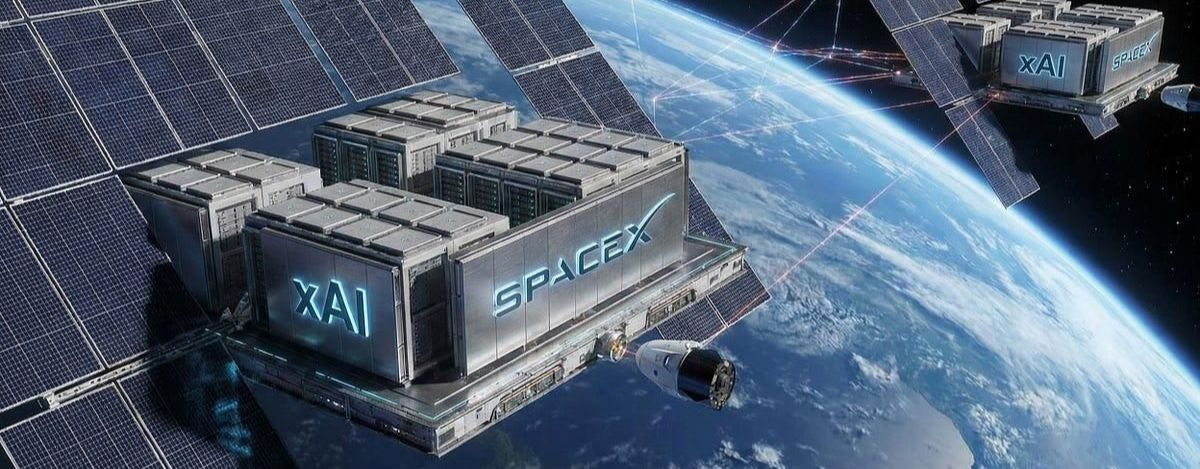
Elon Musk's vision extends beyond rockets, satellite internet, and transportation. His companies are positioned around several technologies that could potentially converge into a new space-based computing ecosystem.
SpaceX's launch capabilities, Starlink's satellite infrastructure, and the rapidly expanding demand for AI computing create an unusual combination of technological advantages.
If orbital data centers eventually become viable, SpaceX could potentially benefit from multiple layers of the industry:
Launch infrastructure: Delivering computing satellites and equipment into orbit.
Satellite networking: Connecting orbital computing systems with users and terrestrial networks.
Space-based infrastructure: Developing platforms that could support computing, communication, and energy systems.
AI infrastructure demand: Supporting the growing need for processing capacity.
Manufacturing and deployment: Building systems designed to operate autonomously in space.
The potential scale of Musk's ambitions has attracted attention, but the technology is still far from proving that massive orbital computing networks can compete economically with Earth-based data centers.
The most important challenge will be execution—not the vision itself.
3. What Could Space Data Centers Actually Do?
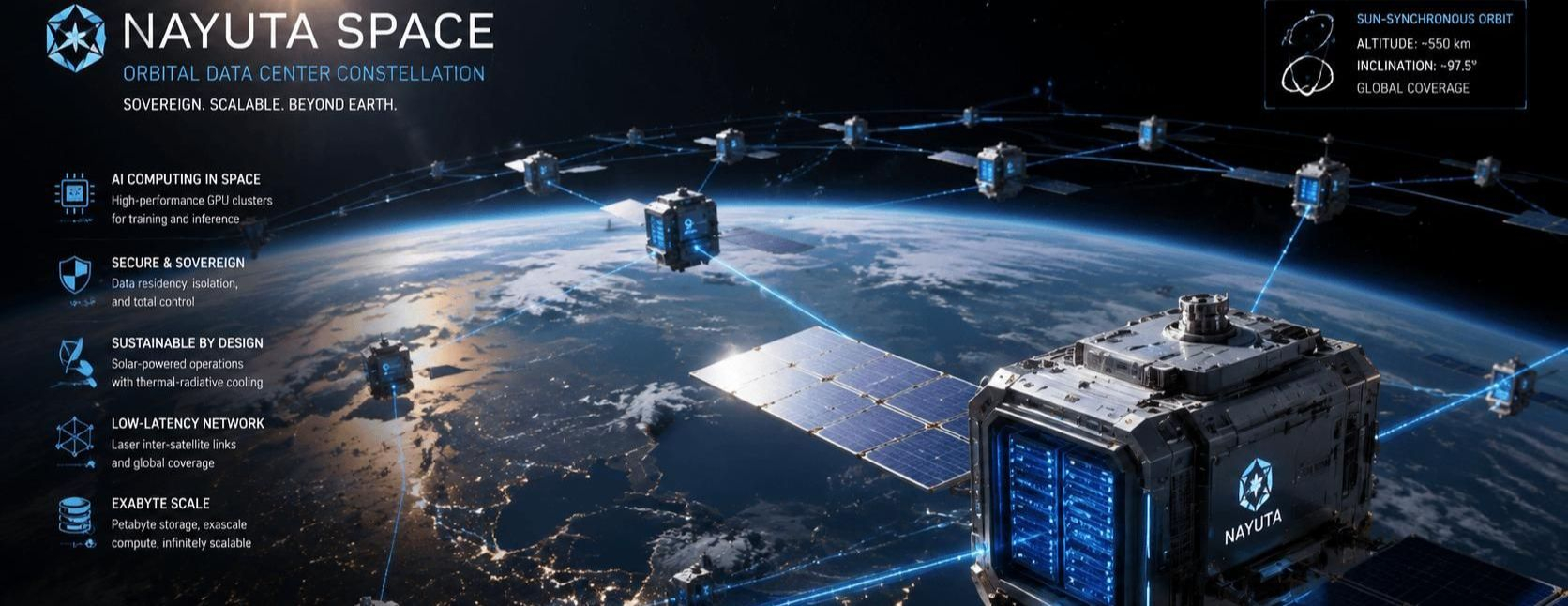
A space-based data center would essentially be a computing platform operating in orbit, equipped with processors, storage, communications systems, solar panels, thermal management systems, and autonomous control technology.
Possible applications could include:
AI computing and data processing
Future orbital systems might process data directly in space rather than transmitting every piece of information back to Earth. This could become valuable for satellite imagery, weather observation, defense applications, scientific research, and autonomous space missions.
Satellite network intelligence
Instead of sending information through multiple satellite links and then back to ground-based facilities for processing, future satellites could potentially analyze information locally and distribute only relevant results.
Earth observation
Satellite imagery generates enormous quantities of data. Space-based computing could potentially analyze images, identify patterns, detect environmental changes, monitor infrastructure, and deliver insights more quickly.
Global communications
Computing and communications could eventually become more tightly integrated, allowing orbital networks to act not only as transmission systems but also as distributed computing platforms.
Advanced AI applications
The long-term vision could involve AI systems operating across interconnected orbital and terrestrial infrastructure, allowing workloads to be distributed depending on computing capacity, connectivity, energy availability, and latency requirements.
This could create a new computing architecture—one that does not depend exclusively on centralized data centers located on Earth.
4. The Next Dimension: Other Technology Companies May Follow
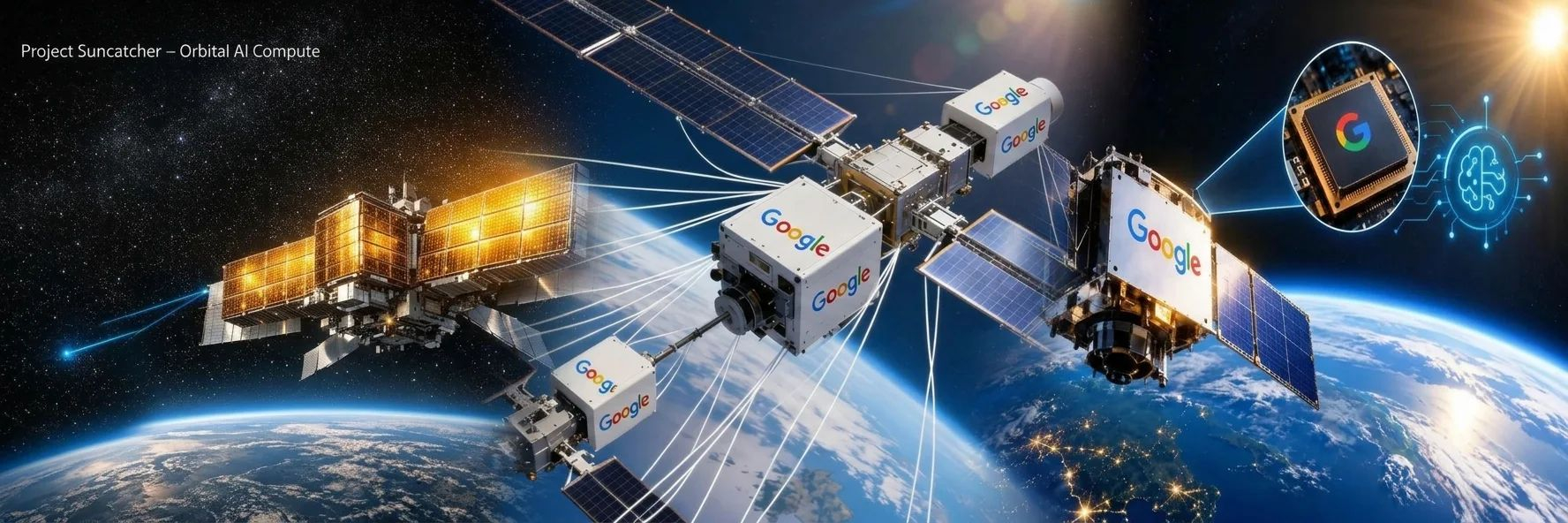
SpaceX may have received the regulatory green light, but it is unlikely to remain the only major company interested in this emerging market. The orbital computing industry could become a new competitive battlefield between the world's largest technology companies.
Google — AI computing beyond Earth's infrastructure
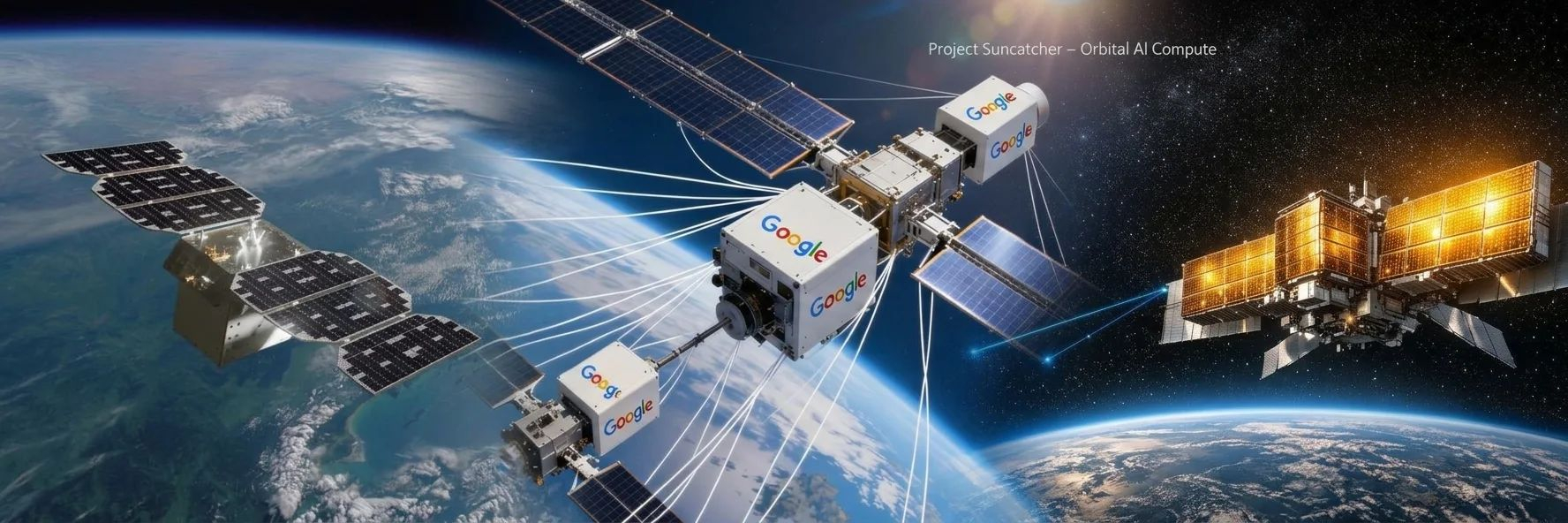
Google is exploring the concept of space-based AI computing through its Project Suncatcher initiative, which investigates how interconnected satellites equipped with solar-powered computing systems could support future AI workloads.
Google's approach highlights the potential combination of specialized AI chips, solar energy, satellite communications, and machine-learning infrastructure.
If successful, the company could eventually explore new ways to deploy AI computing without depending entirely on traditional terrestrial data centers.
The key advantage would not simply be moving servers into space. It would be developing an entirely new architecture capable of connecting solar-powered computing satellites into a scalable network.
Amazon — satellite connectivity and cloud computing
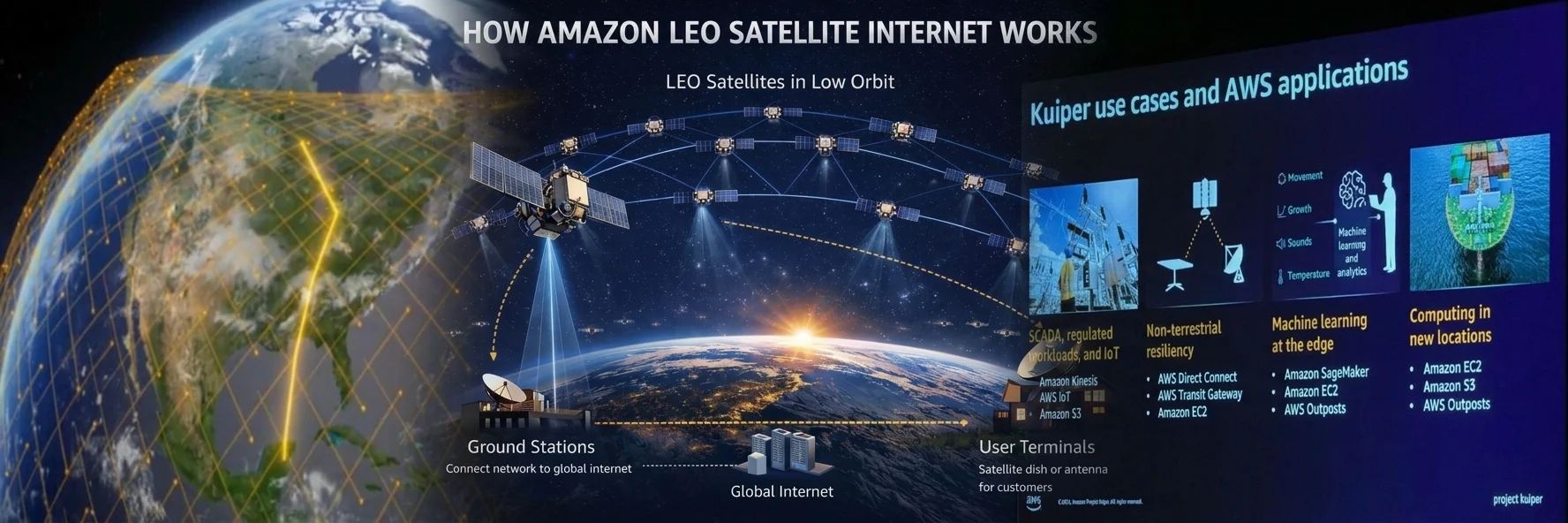
Amazon already has a major presence in cloud computing through Amazon Web Services (AWS), while its satellite ambitions through Amazon Leo could strengthen its global connectivity strategy.
Although satellite internet and orbital data centers are not the same technology, the combination of global connectivity, cloud services, AI infrastructure, and space-based networks could create opportunities for future integration.
Amazon's potential advantage is its established cloud ecosystem. The company already serves businesses, developers, governments, and AI customers that require enormous amounts of computing and data infrastructure.
If orbital computing becomes commercially viable, Amazon could be positioned to investigate how space-based communications and cloud computing complement one another.
Blue Origin — competing in the orbital infrastructure race
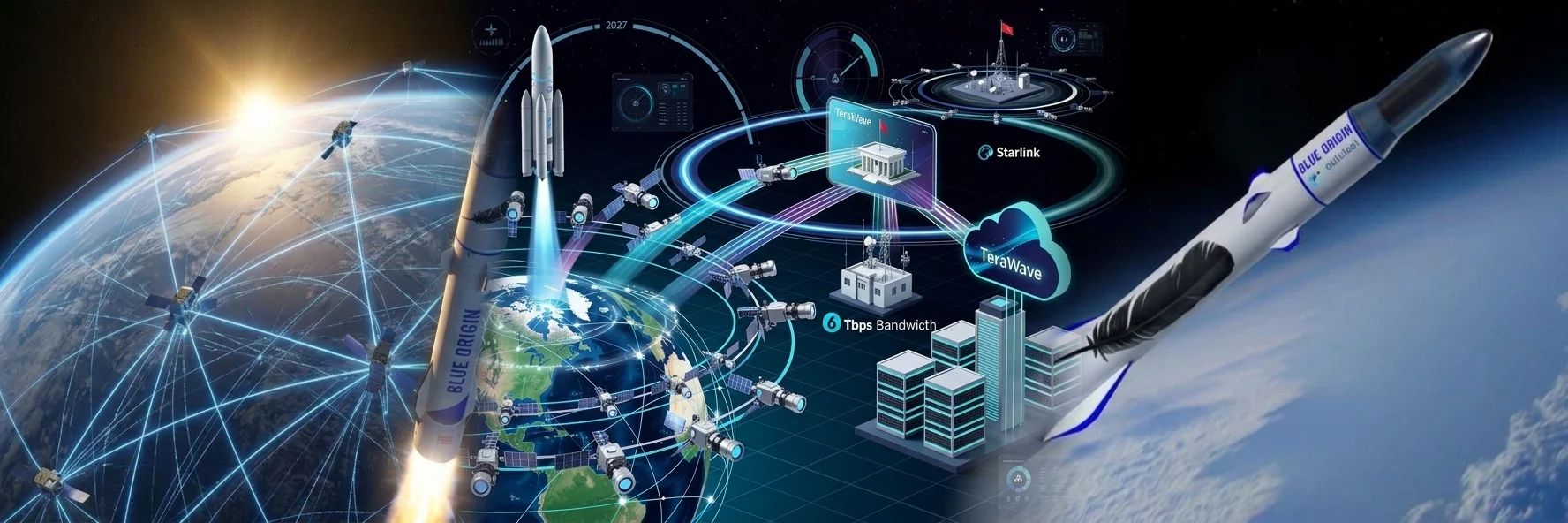
Blue Origin, founded by Jeff Bezos, could also become an important player in the expanding orbital infrastructure economy.
Its heavy-lift launch ambitions, long-term space development vision, and investments in reusable launch technology could potentially support future projects involving orbital manufacturing, energy systems, satellite networks, and computing infrastructure.
The future competition may not be limited to who can build the most powerful rocket. It could depend on who can transport equipment into orbit at the lowest cost, manufacture hardware efficiently, maintain systems remotely, and establish reliable infrastructure that operates for years.
Nvidia — the computing power behind the space AI revolution
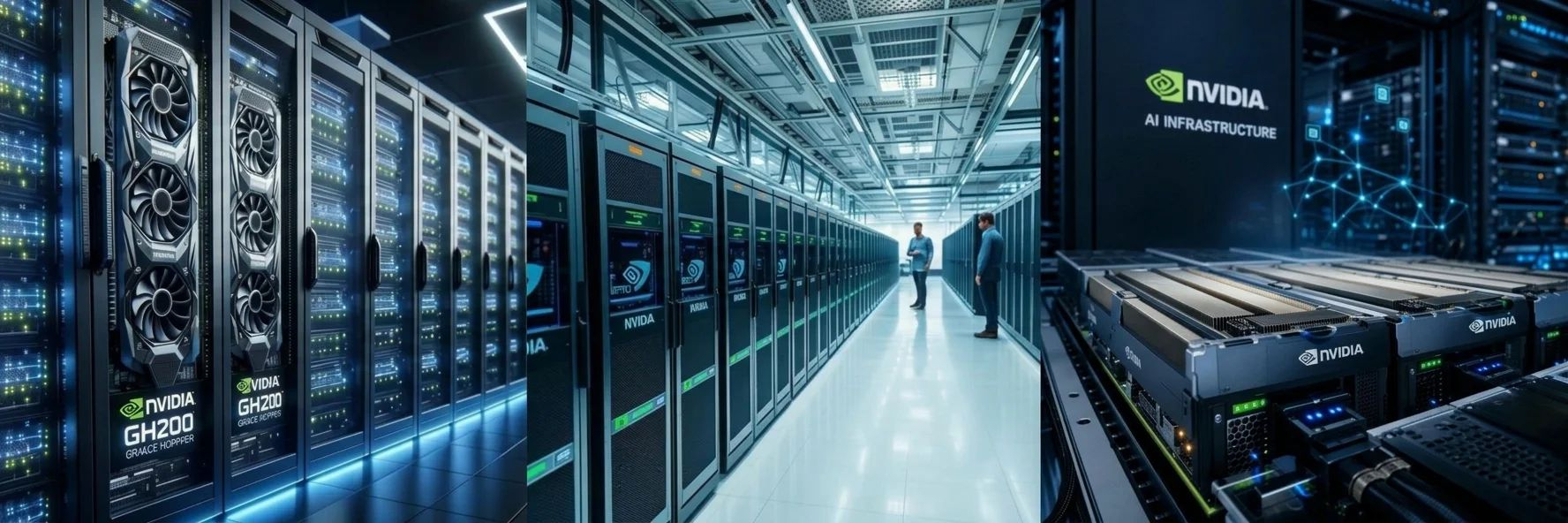
Nvidia may not need to own satellite constellations to benefit from the development of orbital AI infrastructure.
The company could potentially supply specialized computing hardware, AI accelerators, networking technology, and software platforms used in future space-based computing systems.
However, space creates a different hardware environment from terrestrial data centers. Radiation exposure, limited maintenance access, thermal management, power restrictions, and hardware reliability could require specialized processors and redesigned computing systems.
This creates opportunities for semiconductor companies to develop a new category of space-capable AI hardware.
The orbital AI race could eventually expand the market for advanced chips beyond conventional servers, data centers, autonomous vehicles, and robotics.
5. The Biggest Opportunity Could Be a New Space Economy
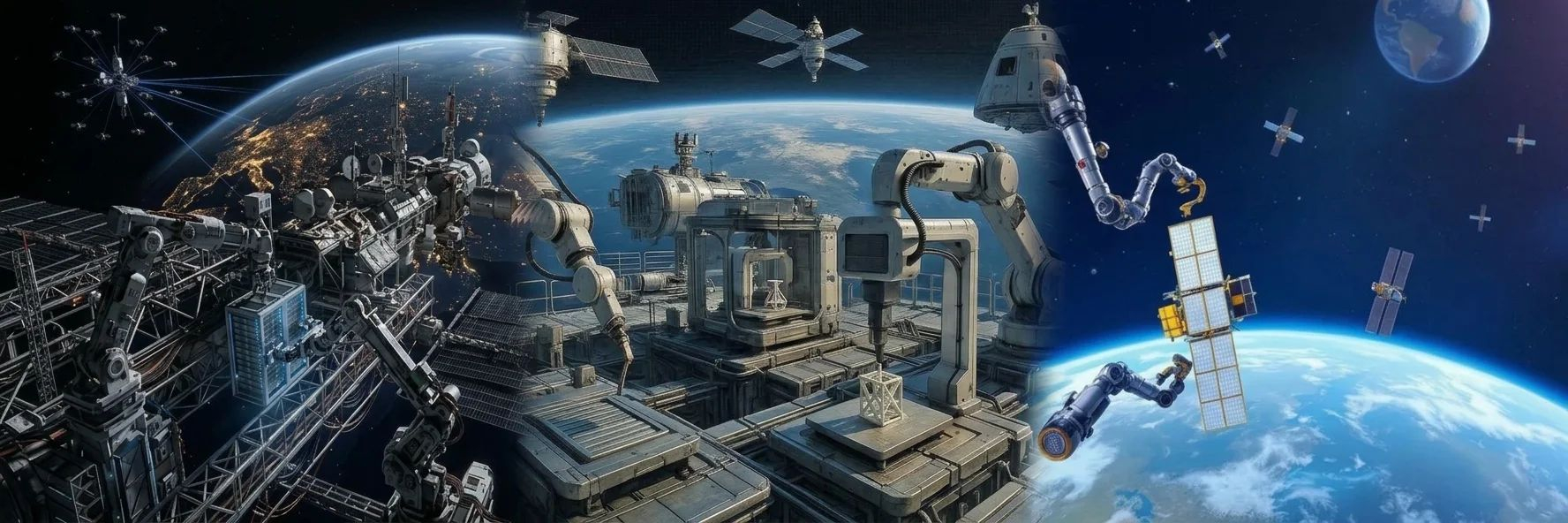
The most important consequence of space-based data centers may not be the data centers themselves.
They could become the first major commercial demand driver for a much broader orbital economy.
If companies successfully establish large-scale computing platforms in space, additional industries could emerge around them:
Emerging industry Potential role
Space manufacturing Producing or assembling hardware in orbit
Satellite servicing Repairing, upgrading, refueling or extending satellite
lifetimes
Orbital robotics Autonomous inspection, maintenance and
construction
Space solar energy Capturing and distributing energy for future
infrastructure
Advanced semiconductor systems Radiation-resistant and space-optimized computing
hardware
Laser communications High-speed connections between orbital platforms
Space cybersecurity Protecting satellites, computing systems and
communications
Launch logistics Lower-cost transportation of hardware and equipment
The development of these industries could create a new economic ecosystem, where space becomes more than a destination for scientific missions or telecommunications.
It could become a commercial operating environment.
If the technology advances, the companies supplying the infrastructure may eventually become as strategically important as the companies operating the data centers themselves.
6. Could Space Become the Next AI Infrastructure Battleground Between the United States and China?
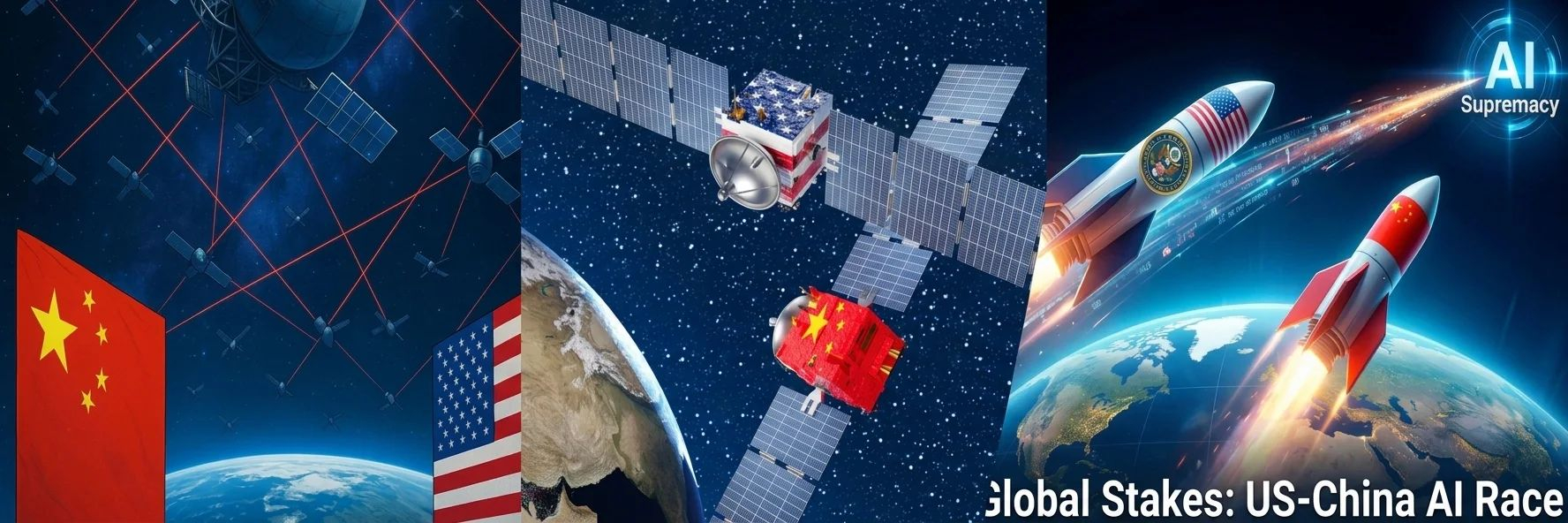
Space computing could also introduce a new dimension to global technology competition.
The United States is already competing with China in artificial intelligence, semiconductor manufacturing, advanced computing, satellite communications, military technology, and space exploration.
Orbital AI infrastructure could become another strategic area where technological leadership carries economic, security, and geopolitical importance.
The competition may involve:
AI computing capacity in orbit.
Advanced satellite communication networks.
High-performance space processors.
Autonomous orbital systems.
Solar energy technologies.
Reusable launch vehicles.
Space-based surveillance and data processing.
Secure and resilient global communications.
China could pursue its own approaches to space-based computing, potentially accelerating investment in satellite constellations, AI infrastructure, launch systems, and orbital networking.
As these technologies become strategically important, space infrastructure may increasingly be viewed as an extension of national technological competitiveness.
The next generation of competition may not only be about who produces the most AI chips or builds the largest data center on Earth. It could also be about who controls the infrastructure that enables computing beyond Earth.
7. The Reality Check: Space Is Not Automatically Cheaper
Despite the excitement, orbital data centers face enormous challenges that could delay the industry for years—or prevent it from becoming commercially competitive.
The cost of launching hardware
Computing equipment, solar panels, communication systems, and structural components must be transported into orbit. Even with reusable rockets, deploying thousands or hundreds of thousands of satellites would require massive manufacturing capacity and launch operations.
SpaceX's strategy is heavily dependent on lowering launch costs through its next-generation Starship system. If launch costs remain high, the economics of orbital computing could become extremely difficult.
Cooling computers in space
One of the biggest misconceptions is that space is naturally cold, meaning computers can be cooled easily.
Space is a vacuum, meaning conventional air-based cooling systems cannot operate normally. Computing hardware produces substantial heat, and that heat must be transferred and radiated away using specialized thermal systems.
As computing power increases, managing heat could become one of the industry's most difficult engineering challenges.
Radiation and hardware reliability
Electronic systems in orbit face radiation exposure that can damage components, cause errors, and shorten hardware lifetimes.
Space-based AI infrastructure would need highly reliable processors, protective systems, fault tolerance, and the ability to operate with limited maintenance.
Replacing defective equipment could be far more expensive than servicing a conventional data center.
Space debris and orbital congestion
A constellation containing enormous numbers of satellites would raise serious questions about orbital traffic management, collision avoidance, satellite disposal, and long-term sustainability.
A single collision could generate debris capable of damaging other satellites, creating cascading risks for communications, navigation, weather monitoring, scientific research, and future space missions.
Astronomy and environmental concerns
Astronomers have expressed concerns that increasingly large and numerous satellites could interfere with ground-based observations and alter the appearance of the night sky.
Environmental questions also remain concerning launch emissions, atmospheric impacts from satellite re-entry, and the long-term consequences of dramatically increasing orbital activity.
These issues will need to be addressed if space-based computing is to become a sustainable industry rather than another infrastructure race with costs that emerge later.
The approval is a regulatory milestone—not proof that a million orbital data centers will be built.
The FCC has authorized the ambitious constellation, but its construction, financing, technological development, deployment schedule, and commercial viability remain unproven.
8. What the Approval Actually Means
The FCC authorization is significant because it moves SpaceX's orbital computing ambitions from a regulatory proposal toward a permitted development pathway.
The approved plan allows a constellation of up to one million orbital computing satellites, with deployment milestones extending into the late 2030s and 2040.
SpaceX StarMind: Regulatory Milestones
2033 Initial deployment deadline
At least one satellite must be deployed by November 25, 2033.
2035 10% deployment target
100,000 satellites by November 25, 2035.
2038 50% deployment target
Half of the authorized constellation by November 25, 2038.
2040 Full deployment deadline
Completion of the authorized constellation by November 25, 2040.
These deadlines represent regulatory deployment requirements, not guaranteed commercial operating dates for a fully functional AI computing network.
9. Who Could Benefit From the Next Space Technology Revolution?
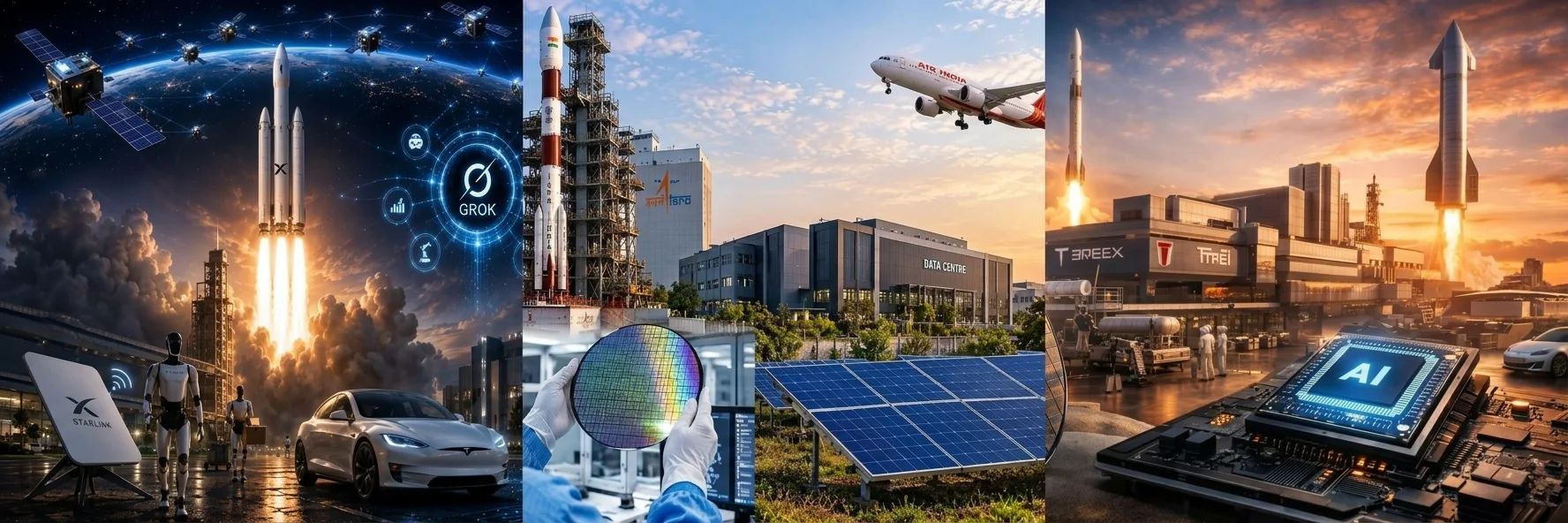
If orbital data centers become a real commercial industry, the opportunity could extend well beyond SpaceX.
The potential beneficiaries could include:
Semiconductor companies
AI processors, radiation-resistant chips, networking silicon, memory, and advanced computing hardware.
Aerospace and launch companies
Reusable rockets, satellite deployment, orbital transportation, propulsion and spacecraft manufacturing.
Energy and solar technology
High-efficiency solar cells, energy systems, power management and next-generation thermal technology.
Telecommunications
Satellite connectivity, optical communications, networking infrastructure and data transmission.
Robotics and automation
Autonomous maintenance, satellite inspection, orbital assembly and intelligent spacecraft operations.
The investment story may ultimately be bigger than the companies launching satellites. It could involve an entire supply chain supporting the development of computing infrastructure in space.
However, investors should distinguish companies that are already generating revenue from established products from companies whose business models depend on technologies that may take years or decades to commercialize.
A compelling vision does not automatically translate into profitable business.
10. What Happens Next? The Five Developments Worth Watching
The next phase of this story will depend on whether the industry can move from ambitious announcements to measurable technological progress.
1. The first operational orbital AI computing systems
The first real test will be whether companies can successfully operate computing hardware in orbit, process meaningful workloads, and demonstrate reliable communication with Earth.
2. The cost of launching satellites
The economics of space-based computing depend heavily on launch costs. Reusable launch systems and improved manufacturing efficiency could determine whether orbital data centers become a niche experiment or a large-scale industry.
3. Google, Amazon, Blue Origin and other competitors
Competition could accelerate research into solar-powered computing, satellite networks, AI processors, orbital communications, and alternative designs.
4. Regulatory and environmental pressure
Governments will need to balance innovation against orbital congestion, astronomy, satellite interference, environmental concerns, and the long-term sustainability of Earth's orbital environment.
5. The economics of AI infrastructure
Ultimately, companies will need to prove that processing data in space offers measurable advantages over building more efficient AI facilities on Earth.
The strongest business model may not be replacing terrestrial data centers entirely. Instead, it could be developing specialized orbital infrastructure for workloads where space-based processing, connectivity, energy, or data collection provides a genuine advantage.
11. The Bigger Picture: From Earth-Based AI to an Orbital Digital Economy
For decades, the internet has depended on infrastructure built on Earth—fiber-optic cables, mobile networks, servers, cloud facilities, electricity grids, and telecommunications towers.
Artificial intelligence is now pushing that infrastructure toward its physical limits.
The next generation of computing may not remain confined to buildings filled with servers. It could gradually expand into distributed networks combining terrestrial data centers, satellite communications, autonomous systems, space-based computing, and energy infrastructure.
This transition would not happen overnight.
The first orbital data centers could be small, specialized, and expensive. Early applications may focus on processing satellite data, scientific workloads, communications, and other tasks where the benefits of operating in orbit outweigh the costs.
If those early systems succeed, improvements in reusable rockets, advanced chips, solar power, robotics, and autonomous maintenance could eventually change the economics of the entire industry.
The space economy could then begin moving beyond launch services and satellite connectivity toward a new category of infrastructure: computing systems that operate beyond Earth's atmosphere.
FINAL THOUGHTS
The Trump administration's approval of SpaceX's ambitious orbital data center proposal is more than a headline about Elon Musk. It represents a potential turning point in the relationship between artificial intelligence, energy, computing, aerospace, and the future of global infrastructure.
The race for AI supremacy has already transformed semiconductor manufacturing, electricity demand, cloud computing, investment strategies, and global competition. Now, some of the world's most ambitious technology companies are exploring whether the next generation of computing infrastructure could be built beyond our planet.
SpaceX may be attempting to open the door to an entirely new industry, but the road ahead will be difficult. Engineering challenges, launch costs, radiation, heat management, orbital debris, environmental concerns, and commercial profitability will determine whether this vision becomes reality.
Google, Amazon, Blue Origin, semiconductor manufacturers, aerospace companies, and emerging space startups could all become part of this next technological chapter.
The future of AI may not be limited by what we can build on Earth. The next frontier could be how much computing power humanity can build, connect, and sustain beyond it.
Today, orbital AI data centers remain an ambitious emerging technology—not an established commercial reality. But the competition to make them possible has officially entered a new phase.
The next AI infrastructure race may not be fought only on Earth. It could be fought in orbit.
Disclaimer: This article is for informational and educational purposes only. It is not financial or investment advice. Technology developments, projections, and commercial outcomes are uncertain. Always conduct your own research before making investment decisions.
#SpaceAI #SpaceX #ElonMusk #ArtificialIntelligence #DataCenters #Technology #Google #Amazon #Nvidia #BlueOrigin #SpaceEconomy #Innovation #GlobalMarkets #PositiveMindsGlobalResults

