Why does a 10,000 U market order sometimes execute smoothly, while other times you find yourself buying at a higher price or selling at a lower one?
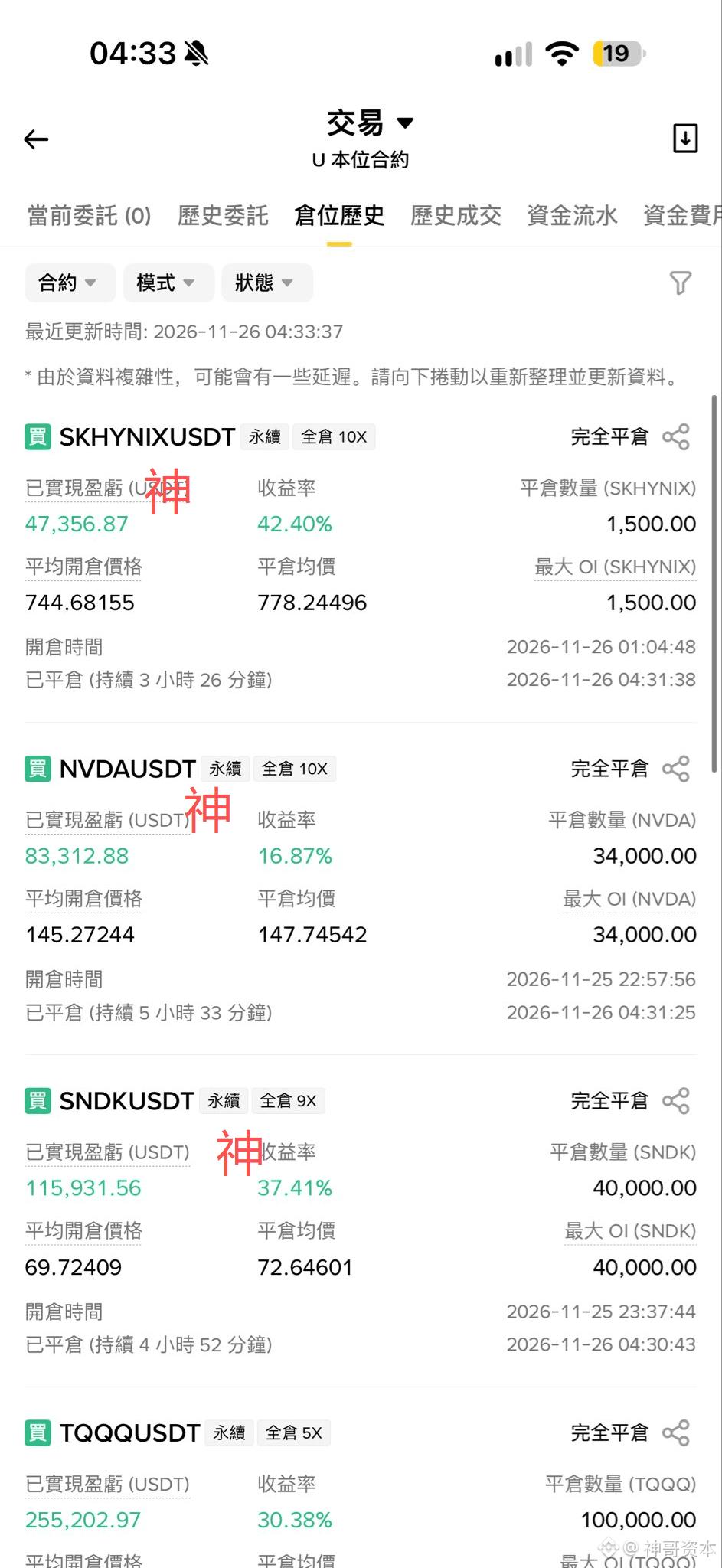
$NVDA
It’s not necessarily a market issue. You may be overlooking two important factors: the bid-ask spread and order book depth.
① Bid-ask spread
In the order book, there is a gap between the best bid and the best ask. This is called the bid-ask spread.
For example: the best bid is 99,990 U, and the best ask is 100,010 U—a difference of 20 U. The wider the spread, the higher the implicit trading costs you typically incur when buying and selling.
② Order book depth
A market order doesn’t execute at the latest price you see. Instead, it matches directly with existing orders in the order book.
$SKHYNIX
If there aren’t enough orders at the current price level, your order may execute across multiple price levels, resulting in slippage.
This is especially likely during sharp market fluctuations or when market liquidity is low. Even a 10,000 U order can experience a significant difference between the expected and actual execution price.
So, what makes up trading costs? In addition to the fees charged by the platform, you also need to consider the bid-ask spread and slippage.
Remember: low fees don’t necessarily mean low trading costs.
Sometimes, what really affects your trading results isn’t just whether the market goes up or down, but the price at which your order ultimately executes.$SNDK
Before your next trade, don’t rush to click Buy or Sell. Take a moment to check the order book depth and bid-ask spread.
Understanding the order book is key to managing your trading costs.
Follow @神哥资本 to learn practical trading concepts in a simple way!
#特朗普拟重启关税攻势,比特币和美股再度走弱