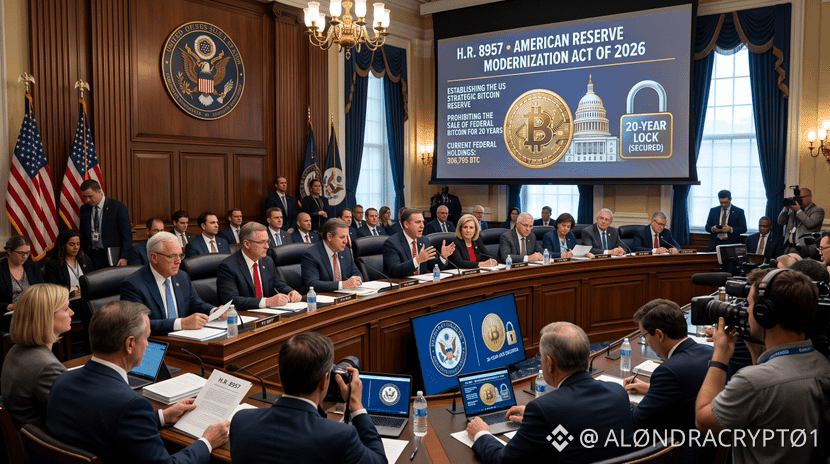

The United States has just taken a key legislative step regarding its cryptocurrency reserves: the House Financial Services Committee sent H.R. 8957 (the American Reserve Modernization Act of 2026) to the full House, a bill that seeks to protect the country's Strategic Bitcoin Reserve by law and prohibit the sale, auction, or disposal of its bitcoins for at least 20 years.
The proposal, based on the executive order signed by President Donald Trump in March 2025, would direct the Treasury Department to establish this reserve along with a separate fund for other cryptocurrencies within 180 days. It would also require periodic proof-of-reserves audits to account for all digital assets held by federal agencies. Currently, addresses linked to the U.S. government hold nearly 306,795 BTC, valued at more than $18.7 billion.
The main obstacle to this measure is the political clock: the current Congress adjourns on January 3, leaving just five weeks (in the middle of the holiday season) for the bill to pass the full House, be approved by the Senate, and receive the president's signature before legislative control changes in January.
In fact, prediction markets such as Polymarket currently assign less than a 5% probability that the law will be enacted before 2027, although the reserve established by presidential decree would remain in effect unless modified by a future administration.
For those of us closely following the institutional impact on the market, this development shows that Bitcoin is now being discussed in Washington as a strategic national asset, although the legislative calendar calls for keeping our feet on the ground amid short-term media hype.
If the United States managed to protect more than 300,000 $BTC by law and prevent them from being sold for two decades, do you think this would significantly reduce selling pressure in the market over the long term?